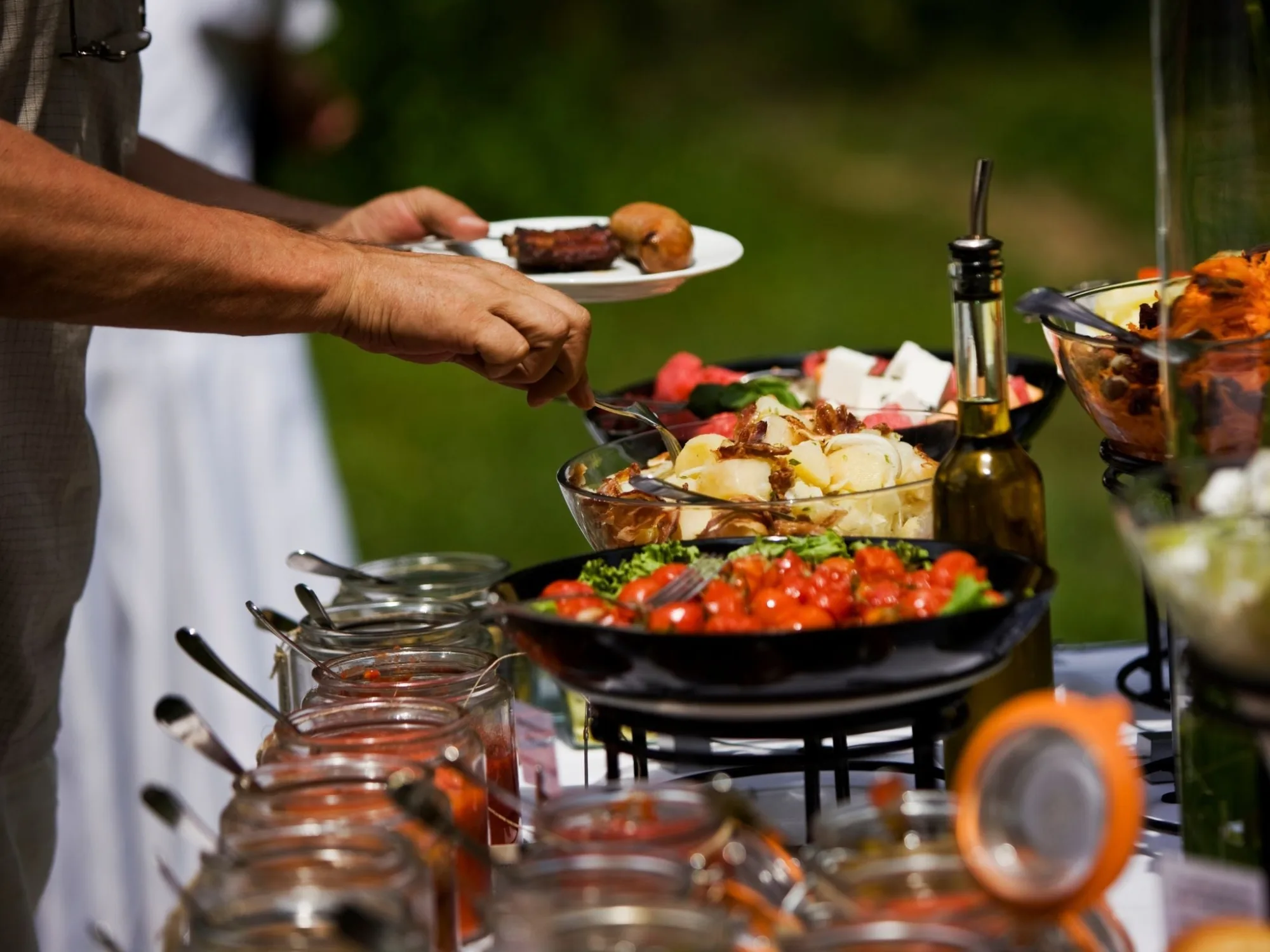
Catering is rarely just about the food. Done well, it shapes how the whole event feels, from the first coffee at registration to the last plate cleared away. Done badly, it is the thing guests remember for the wrong reasons.
If this is your first time organising it, here is the order that keeps it manageable.
Start with the basics
Before choosing a single dish, lock in the decisions that shape everything else:
- Set a budget. It determines your menu, your service style and how many staff you can bring in.
- Confirm guest numbers. Get as accurate a count as you can, and build in a buffer for late changes.
- Book early. Good caterers fill their calendar months out.
- Bring in an event planner if the event is large. Someone coordinating catering alongside the run sheet catches problems earlier than someone managing it as an afterthought.
Match the service style to the event
A formal plated dinner, a relaxed buffet and interactive food stations all suit different events, and the right choice depends on the tone you are going for and how long the event runs. A half-day conference needs a different approach to food than a three-hour cocktail function, so think about duration as much as headcount when you brief your caterer.
Build a menu that actually works on the day
A good menu balances what looks appealing on paper with what holds up under service pressure:
- Vary the flavours and textures, rather than defaulting to the safest option across the board.
- Cover the common dietary needs: vegetarian, vegan, gluten-free and nut-free, as a baseline rather than an afterthought.
- Check the venue's rules before you plan anything involving open flames or extra kitchen equipment.
- Choose finger food for standing events, sized and paced for how long guests will be there.
- Add a morning tea or afternoon break for all-day events. A mobile coffee cart hire alongside it keeps delegates engaged through a long agenda.
Get the logistics right
The parts nobody notices when they work, and everybody notices when they do not:
- Confirm the date, time and venue with every vendor well ahead of time.
- Build a checklist and keep every task on it, however small.
- Visit the venue before the event to spot problems while there is still time to fix them.
- Write a full event schedule, with clear timing for setup, service and pack-down.
Look after dietary requirements properly
Guests with dietary needs remember whether they were looked after or an afterthought:
- Ask early, with a dedicated field on the RSVP.
- Offer real variety, not one token dish for every restriction.
- Brief your caterer clearly and confirm they have received the details.
Sort the equipment before the week of the event
Confirm whether your caterer supplies their own equipment or whether you need to hire separately, and check the venue can support it: power access, kitchen facilities, and enough staff on hand for food preparation and service. Beverage dispensers, serving utensils and ice buckets are easy to forget until the morning of the event, so put them on the checklist now.
On the day
By the time the event starts, the hard work is mostly done. Stick to the timeline you built, walk the setup with the venue team, and run a short briefing with your catering crew so everyone knows the schedule before the first guest arrives.
Good catering is not just food on a table. It is one of the things that makes an event feel considered, and guests notice the difference even when they cannot name what it was.