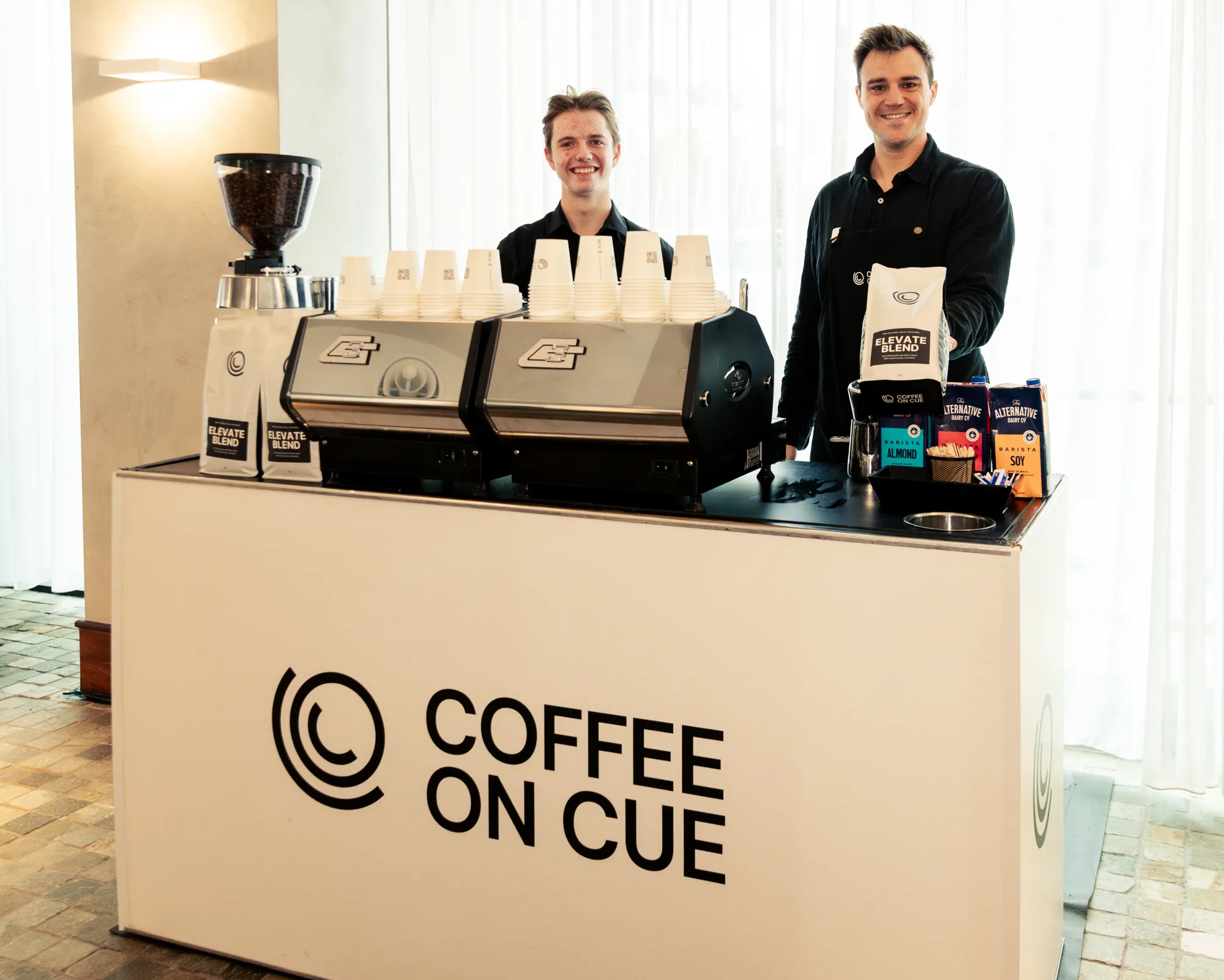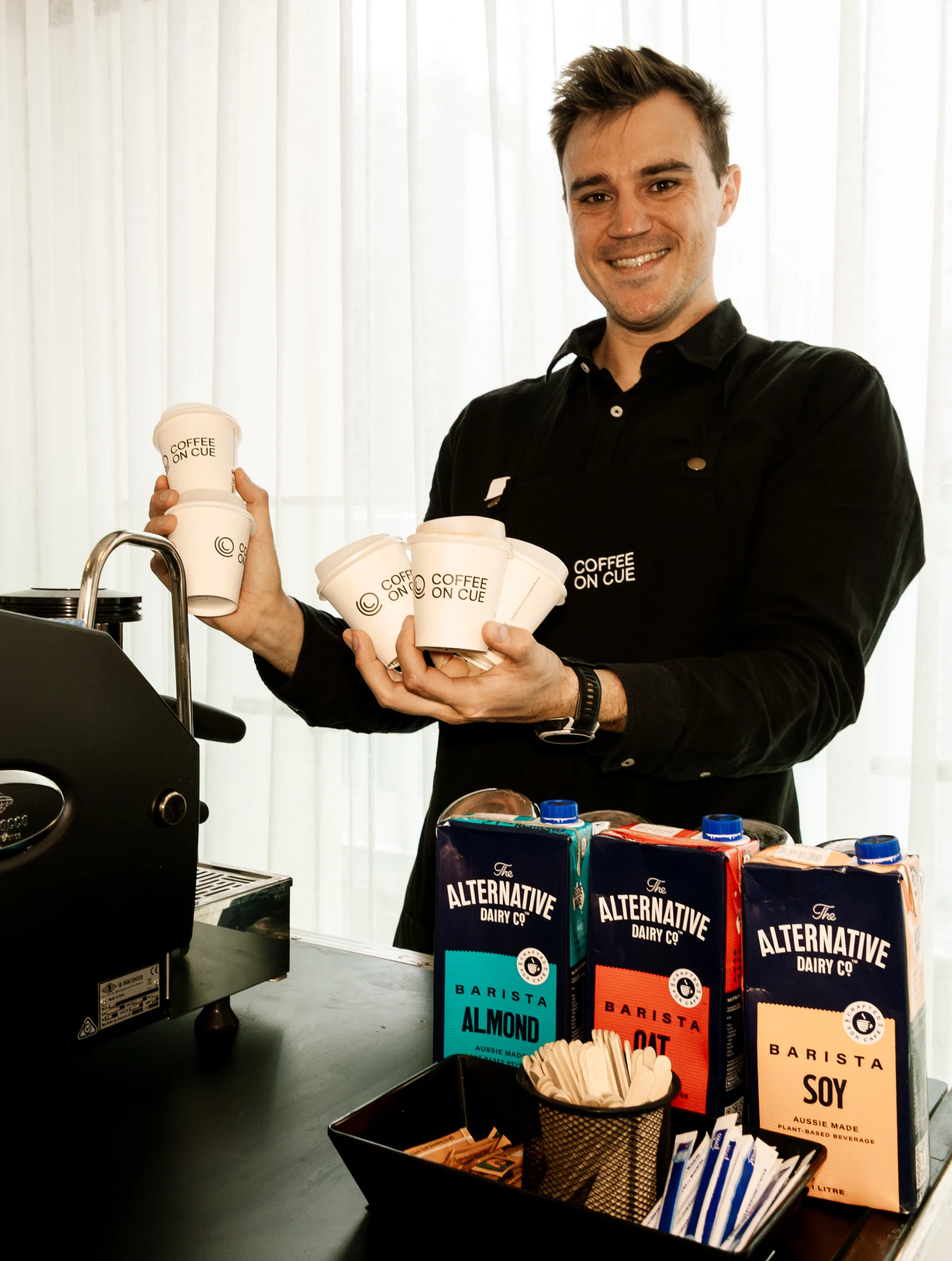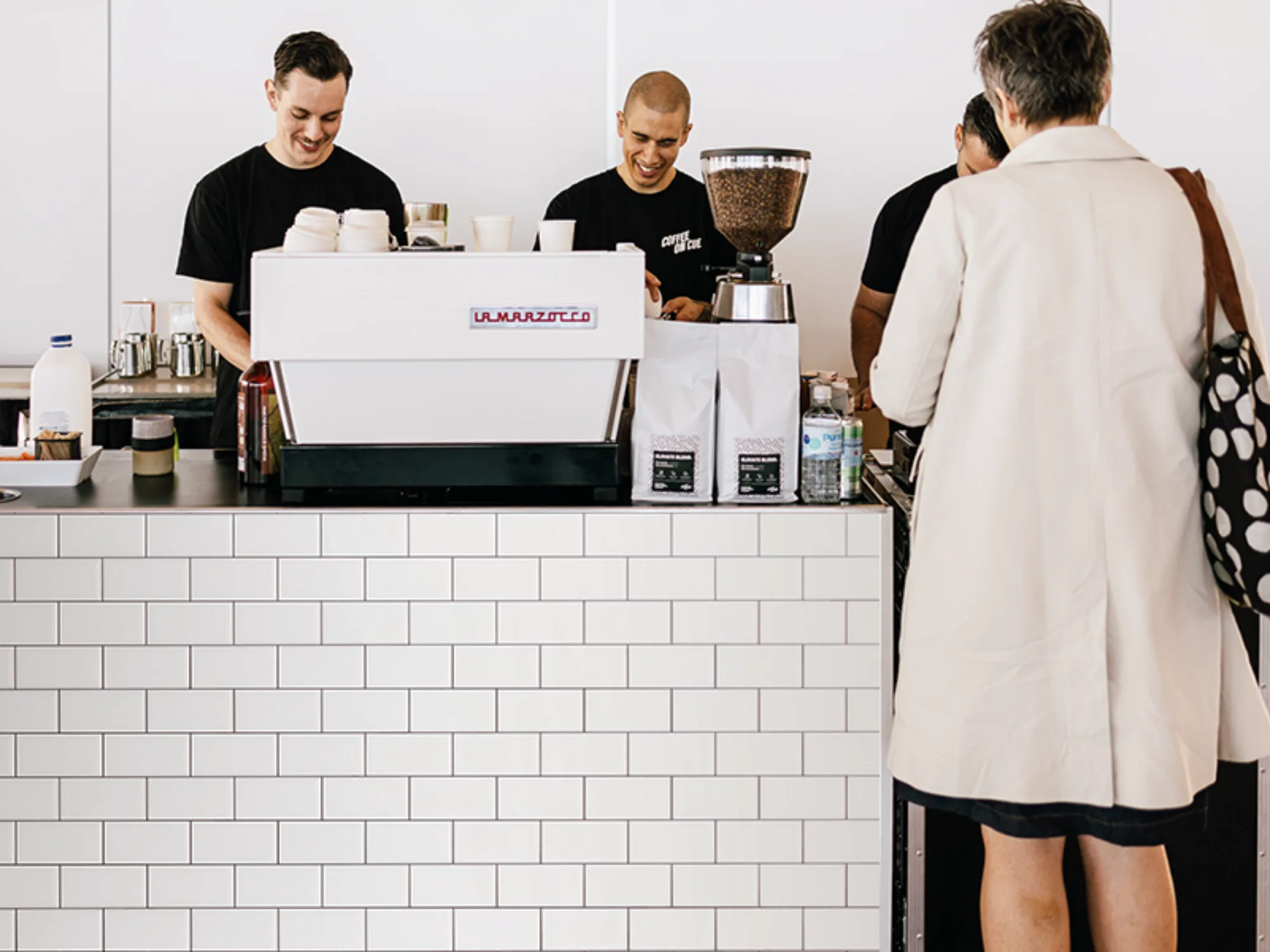
At a conference, the coffee cart is rarely just about coffee. It is where delegates slow down, meet someone new and actually talk. Plan it well and it becomes the warmest corner of the room. Plan it badly and you get a long queue and a cold agenda.
We run carts at conferences most weeks of the year. These are the decisions that make the difference, in the order worth thinking about them.
Size the service to your peak, not your average
The number that matters is not how many people are at the event. It is how many want a coffee at the same moment. That moment is almost always the morning arrival and the first long break, when the whole room wants one at once.
A single experienced barista serves up to 80 coffees an hour, and a second barista doubles that to 160. So a 300 delegate conference with a tight 30 minute morning break needs more than one cart if you want the queue gone before the next session starts.
Put the cart where people already flow
The best spot is on the natural path between sessions: near the main doors, the registration desk or the exit to the break area. People should walk past it, not hunt for it.
Keep a clear metre or two in front of the cart for the queue to form without blocking a doorway or a fire exit. If the venue has a preferred service point, walk it with them first. A good position does half the work of keeping things moving.
Decide the menu before the day
A shorter menu is a faster menu. At a busy conference we usually recommend keeping it to the drinks most people order: flat whites, lattes, cappuccinos, long blacks, and a good option for anyone who does not want dairy or caffeine. Guests still get what they want, and the queue keeps moving.
If branding matters, this is the moment to sort it. Printed cups, a wrapped cart or a small menu board all need lead time, so raise them with your coffee partner early rather than the week before.
The events that run smoothest are the ones where the coffee was planned with the run sheet, not added to it at the end.
Talk power, water and access
The unglamorous details are the ones that trip people up on the day. Before you lock the plan, confirm three things with the venue:
- Power. A cart needs a dedicated power point nearby. Ask what is available at the service point.
- Water. Confirm access to fill and empty water, and where.
- Access and bump-in. Agree an arrival time that gives the crew room to set up and dial in before doors open.
Share these with your coffee partner and they will tell you quickly whether the spot works or needs a rethink.
Brief the crew on the shape of the day
Finally, give your baristas the run sheet. If they know the 10:30 break is the crush and the afternoon is a gentle trickle, they can pace the service, prep ahead and be ready when the doors open. A crew that knows the plan is a calm crew, and calm is contagious across a room.
Get these five decisions right and the coffee stops being a logistics worry and starts being the part of the day people remember.