Bypass brewing, associated with coffee consultant Scott Rao, solves a specific and common problem: a filter coffee brewed strong enough to taste properly extracted often comes out too intense to drink comfortably. The fix isn't to change the brew, it's to separate strength from extraction and adjust them independently.
The problem it solves
Extraction (how much has been pulled from the grounds) and strength (how concentrated the final cup is) usually get controlled by the same lever, your brew ratio. Push more water through to weaken a cup and you also under-extract it, pulling less flavour out. Bypass brewing decouples the two.
How it actually works
Brew normally, at a stronger-than-usual ratio. Use a lower water volume than you'd drink straight, something like 1:12 to 1:14 rather than a typical 1:15 to 1:17, letting the coffee fully extract at that concentration.
Add water afterward, off to the side. Once brewing is complete, add hot water directly to the finished coffee, not through the grounds, diluting it to your preferred final strength without affecting how much was already extracted from the coffee itself.
Taste and adjust the dilution to preference. Because extraction is already locked in from the brew itself, this step is pure strength adjustment, add more water for a lighter cup, less for a bolder one, without ever risking under-extraction.
Why this matters more for some brewers
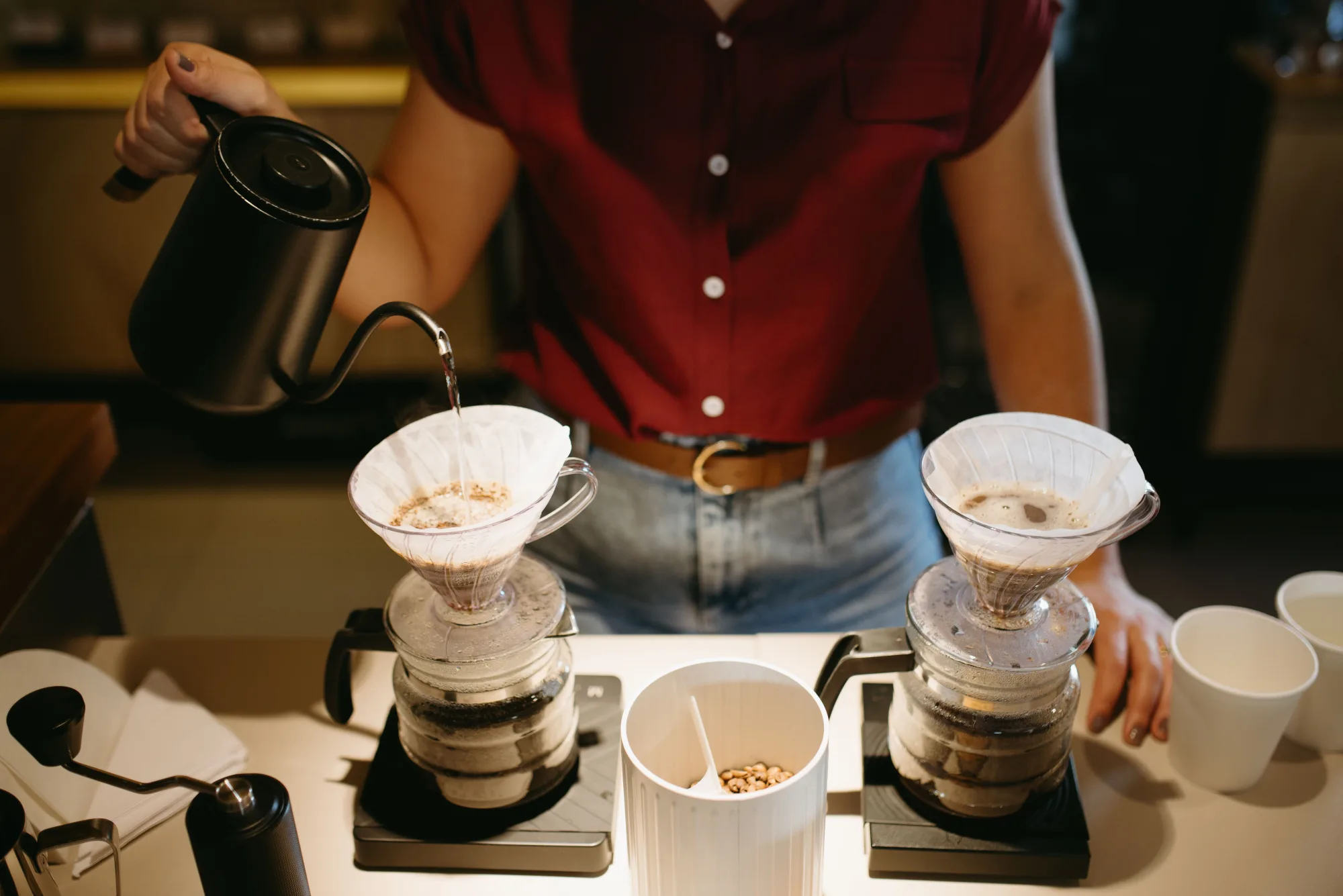
Bypass brewing is particularly useful for batch brewers and some pour- over methods where a properly extracted ratio produces a cup stronger than most people want to drink undiluted. It's less relevant for methods already brewed at a drinking-strength ratio.
The takeaway
Bypass brewing is a genuinely useful way to stop treating strength and extraction as the same problem. Brew strong enough to extract properly, then dilute to taste afterward, and you get full extraction and your preferred strength instead of having to compromise on one to get the other.