Melbourne's corporate calendar runs from half-day workshops to multi-day conferences and product launches across the city. The scale changes event to event, but the planning sequence that gets you there does not. Here is the order worth working through.
Start with the goal, not the guest list
Before anything else, decide what the event actually needs to achieve. Ticket sales, a bigger database, stronger client relationships, or simply a well-run internal gathering all point to different decisions later, from venue size to the run sheet. Naming the goal upfront keeps every later choice easier to make.
Set a realistic budget early
A workable budget covers venue hire, speakers if you have them, food and beverage, and a contingency line for the things you did not plan for. Sponsorship can offset some of this and raise your brand's visibility at the same time, but treat it as a bonus on top of a budget that works without it.
Choose a venue that matches the day, not just the headcount
Melbourne's CBD grid and tram network make city venues genuinely easy to reach from almost anywhere, which is one advantage worth factoring into the decision rather than assuming a laneway venue will feel harder to find than a big-name hotel. What matters more here is fit: a heritage laneway space suits an intimate client dinner in a way a convention centre floor never will, and the reverse is just as true for a 300-person product launch. Match the venue's character to the event's tone, then check capacity and amenities.
Build the run sheet around the breaks
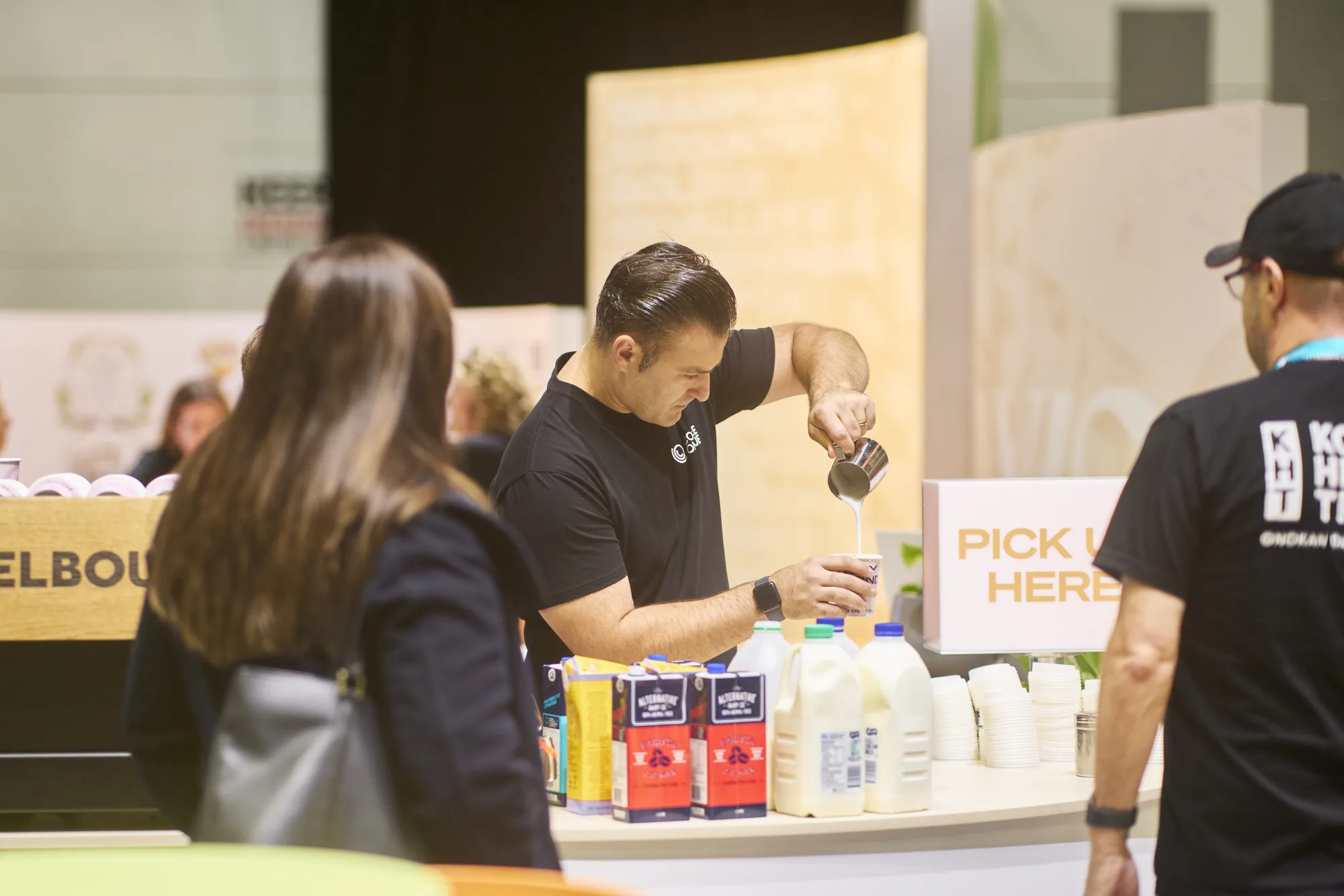
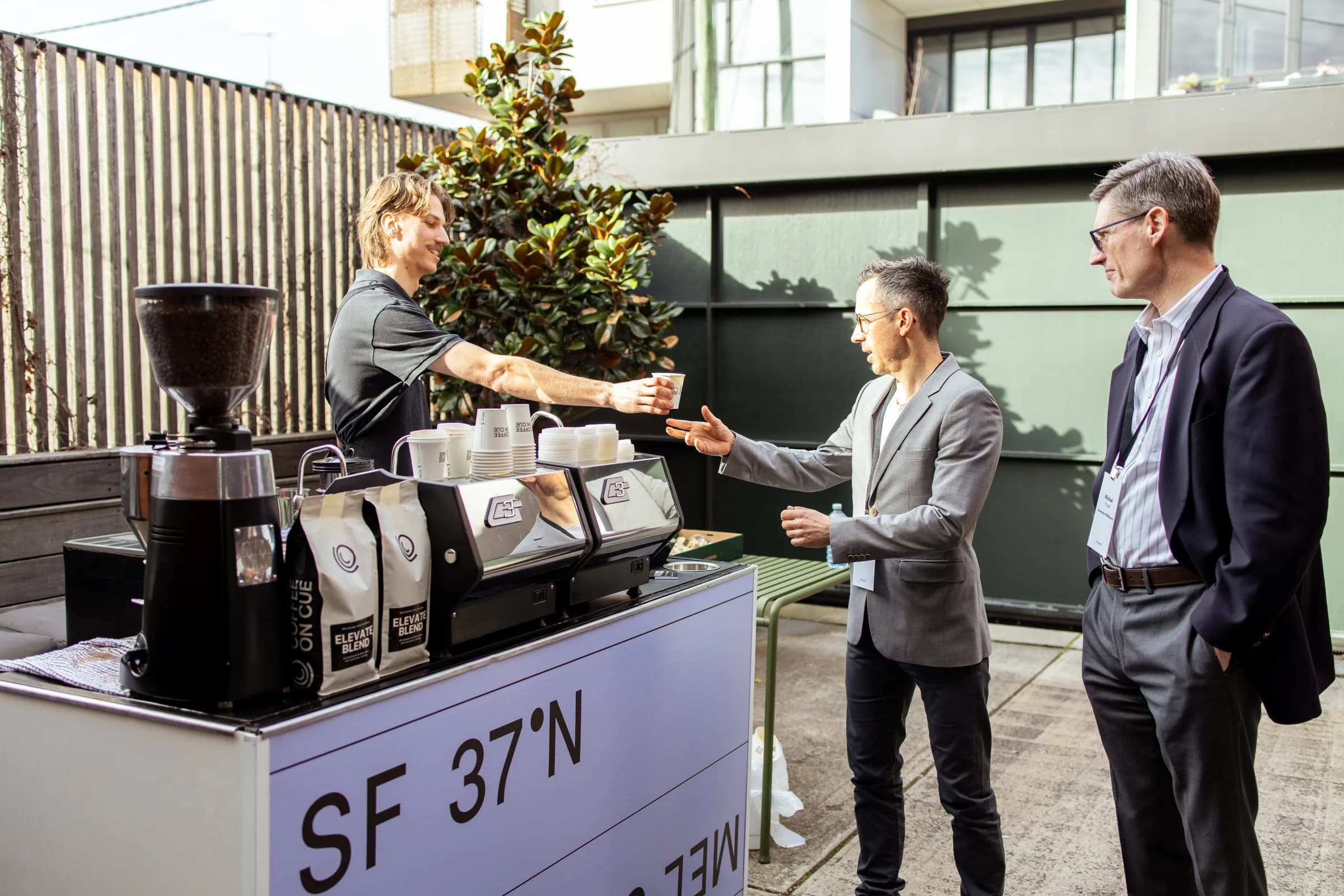
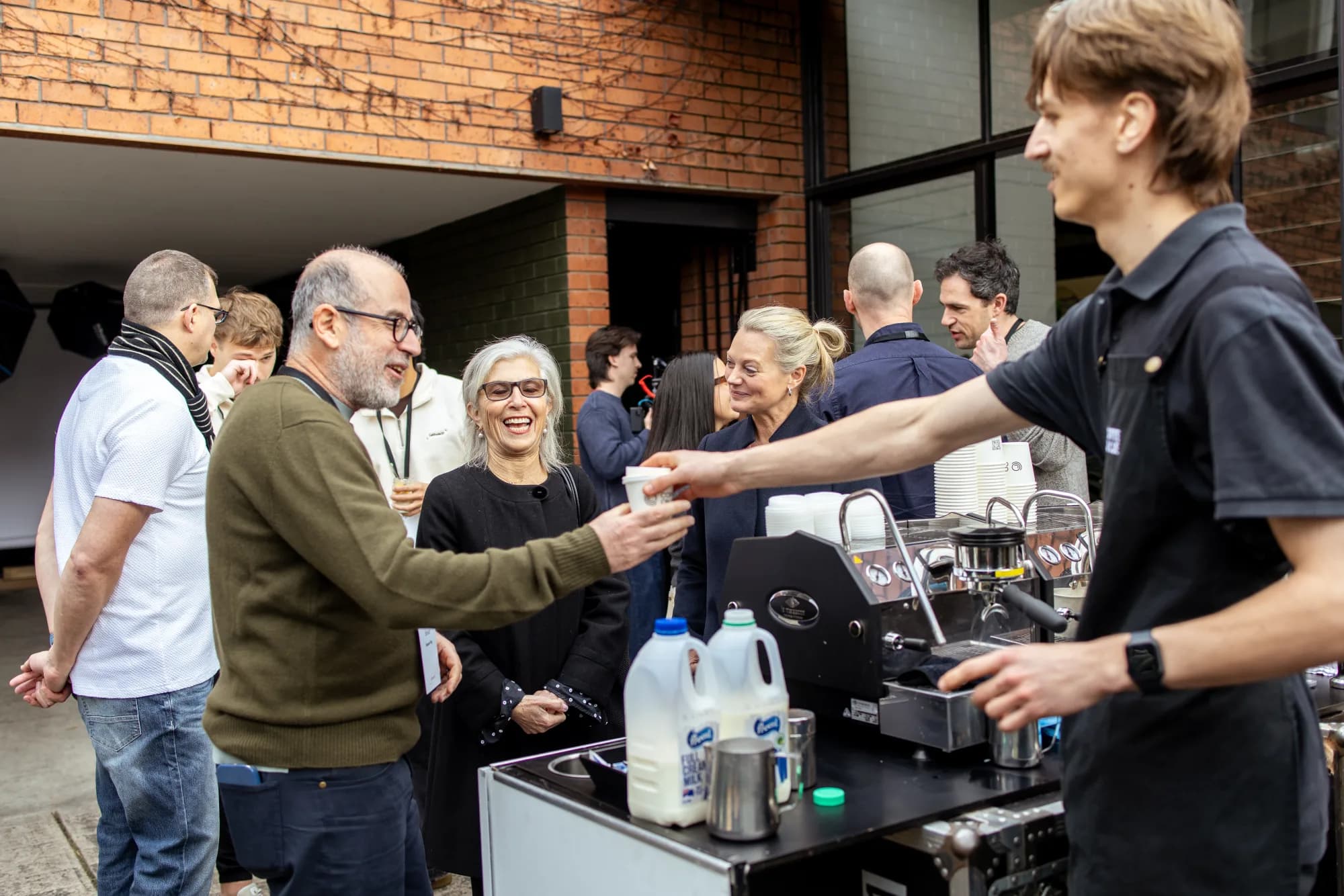
Breakfast, morning tea, lunch, afternoon tea: these are not filler between the content, they are where most of the actual networking happens. A coffee cart at the break period gives guests a reason to linger and talk rather than scatter to check their phones. Build breaks into the schedule deliberately, not as leftover time.
Lock in catering and suppliers early
Cover dietary requirements properly, vegetarian, vegan and gluten-free options should be standard, not an afterthought. Pre-portioned items keep service moving at scale. Confirm loading dock and delivery access early too, Melbourne's laneway venues in particular are prized for character but often have narrow or restricted access points, so a caterer needs the exact delivery instructions well before the day, not a general address. And Melbourne's corporate events run on coffee as much as any city in the country: budget for it as part of the catering line, not as a separate add-on decided last.
Promote with a clear, targeted plan
A well-designed invitation, a contact list built from real job titles and departments rather than a generic mailing list, and a social presence that starts well before the day all compound. Start promotion earlier than feels necessary, momentum takes longer to build than most planners expect, and check your date against Melbourne's own calendar first. Grand Final week and the Melbourne Cup public holiday both reshape the city's attention for several days each, and a corporate event competing against either tends to feel the gap in RSVPs. Plan around them rather than into them where you can.
On the day, plan for the small things to go sideways
Efficient registration keeps the first impression positive. Have a backup microphone, spare batteries, and a plan B for anything AV-dependent. None of this is exciting to prepare, but it is the difference between a hiccup nobody notices and one that derails the morning.
After the event, close the loop
Gather feedback and NPS scores while the event is still fresh in guests' minds. Review the numbers against the goal you set at the very start, not against a generic benchmark. That comparison is what actually tells you whether the event worked.
The short version
Set the goal first, budget realistically, choose a venue for more than its capacity, build real breaks into the schedule, and close the loop with feedback once it is over. Everything else is detail work around that sequence.