Most offices treat the coffee break as an accident. Someone wanders off when they hit a wall, gets a cup alone, and wanders back. There is nothing wrong with that, but it leaves a lot on the table. A coffee break that happens at the right moment, in the right place, with other people around, does more than caffeinate one person. It resets a room.
We watch this play out at in-house barista bars every week. The teams that get the most out of their coffee are not drinking more of it. They are drinking it on purpose.
Time it to the slump, not the clock
Energy dips at fairly predictable points in the day, usually mid-morning and mid-afternoon. That is the moment a coffee break earns its keep: it catches people before focus falls off a cliff, not after they have already checked out. A break scheduled around lunch, when most people are naturally about to pause anyway, does far less work.
Keep it short on purpose
A break that drags on stops being a reset and starts being a distraction from the distraction. Ten minutes is enough time for a proper conversation and a decent cup, without the momentum of the morning draining away. Long breaks feel generous in the moment and cost more than they give back.
Put the bar where people already walk
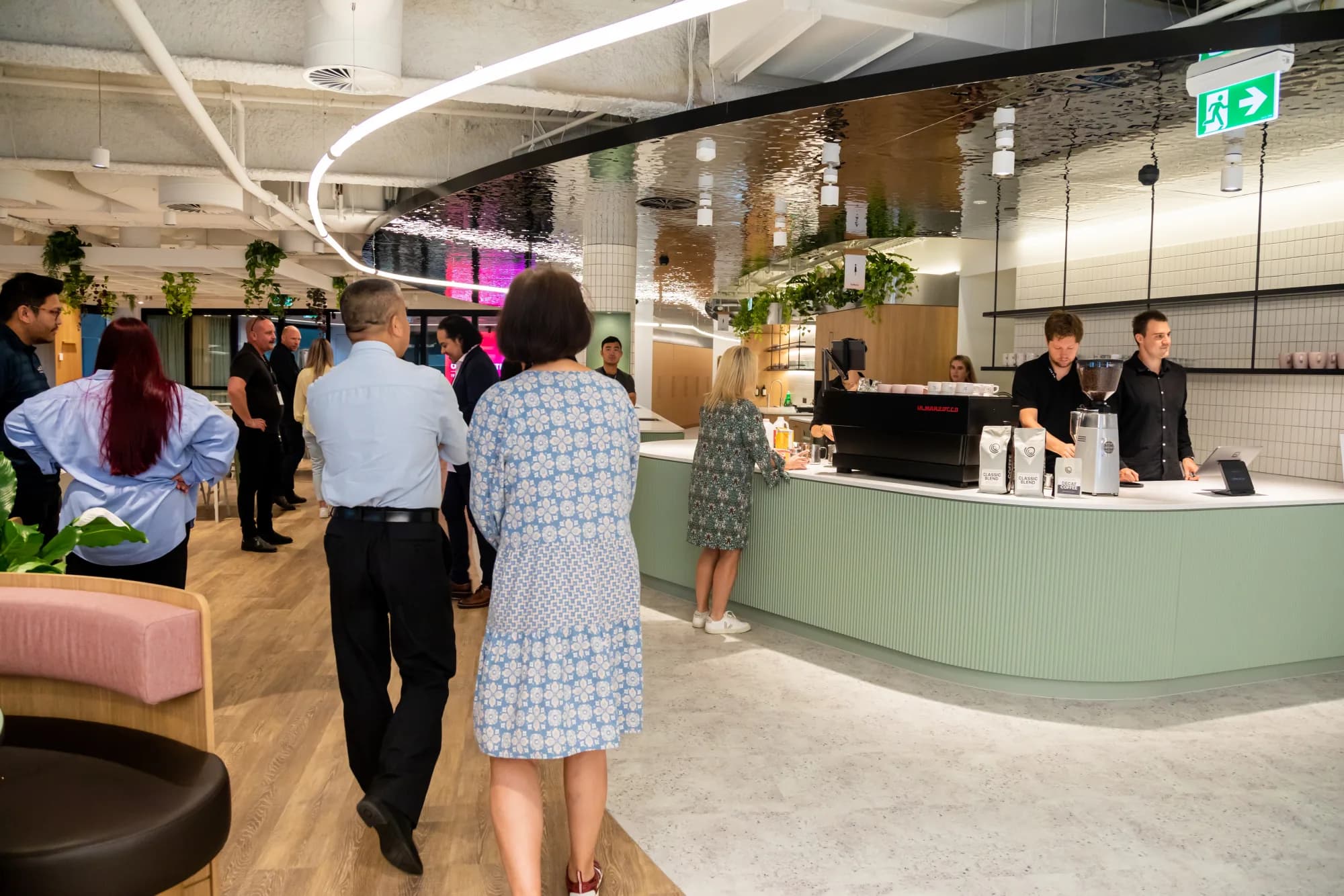
Location does more for participation than any announcement. A bar near the lift, the main thoroughfare or the kitchen gets used without anyone having to decide to go out of their way for it. Tuck it into a back corner and only the committed few will bother, which defeats the point of a shared break in the first place.
Let the conversation be the point
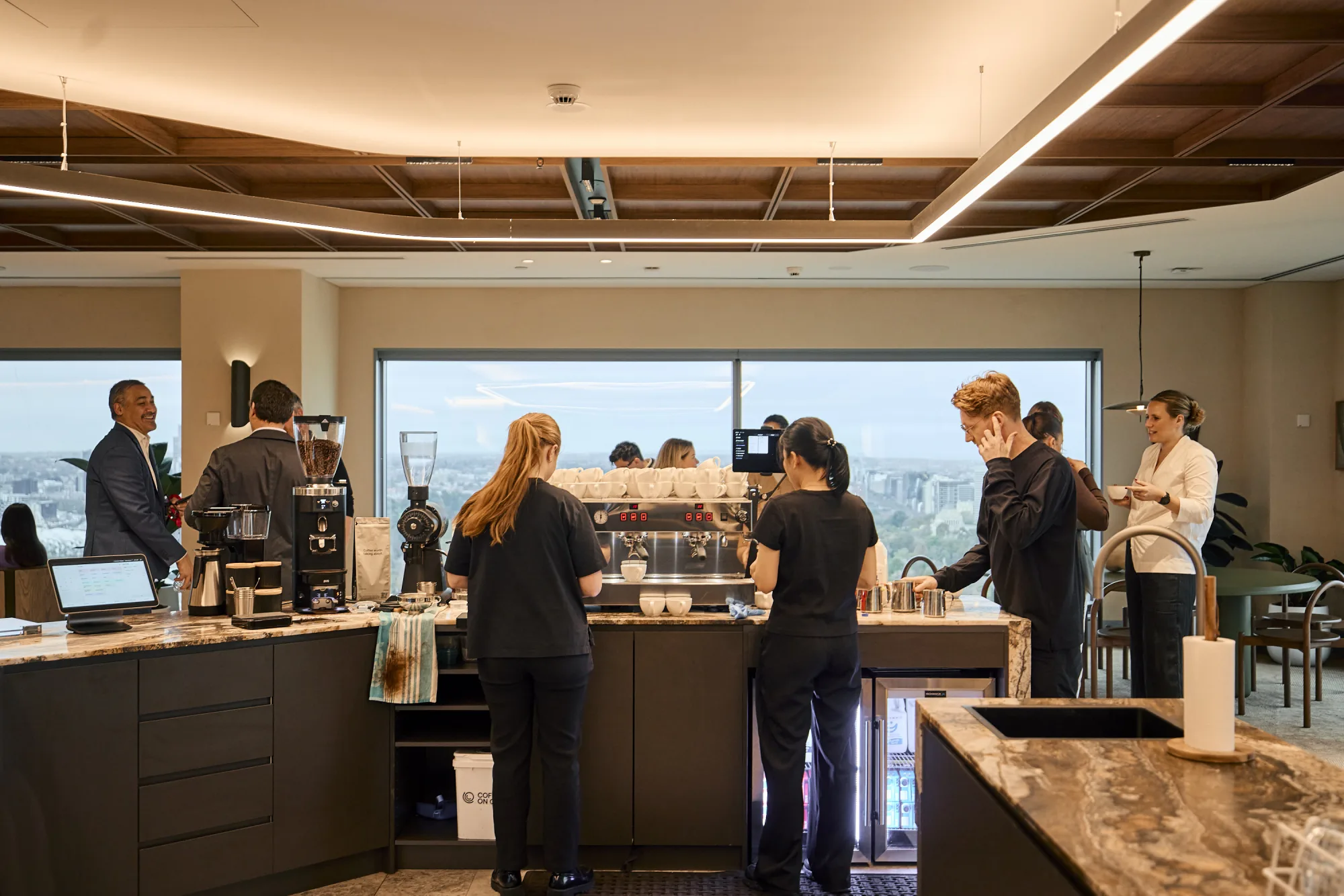
The coffee itself is only half of what people are actually after. The other half is five minutes with someone from a different team, away from a screen, talking about something that is not on the agenda. That is where a lot of the informal problem-solving and relationship-building in a workplace actually happens, and it does not happen over Slack.
A coffee bar in the right spot does more for cross-team conversation than most collaboration tools ever will.
What we would actually recommend
If you are rethinking how coffee breaks work in your office, start with these:
- Put the bar on the path people already walk, not a spot they have to detour for
- Anchor breaks near the natural energy dips, not an arbitrary time
- Keep it to ten minutes so it stays a reset, not a distraction
- Make it social. A break taken alone at a desk is not the same thing
- Keep the coffee itself genuinely good. People notice, and it is why they come back
None of this needs a research paper behind it. It is the same logic we use when we place a bar for a client: put good coffee somewhere people actually pass, time it to when they need it, and let the conversation do the rest.