Baristas make consistent coffee for hundreds of people by deciding everything they can before the first guest arrives. They lock in one espresso recipe, pour every drink in one standard size, texture milk to the same temperature and feel each time, and split the work across two baristas once demand passes what one person can pour well. One barista serves up to 80 coffees an hour; two serve up to 160.
Consistency at volume is less about talent on the day and more about removing the decisions that cause drift. Here is how that works behind the cart.
A fixed recipe, set before service starts
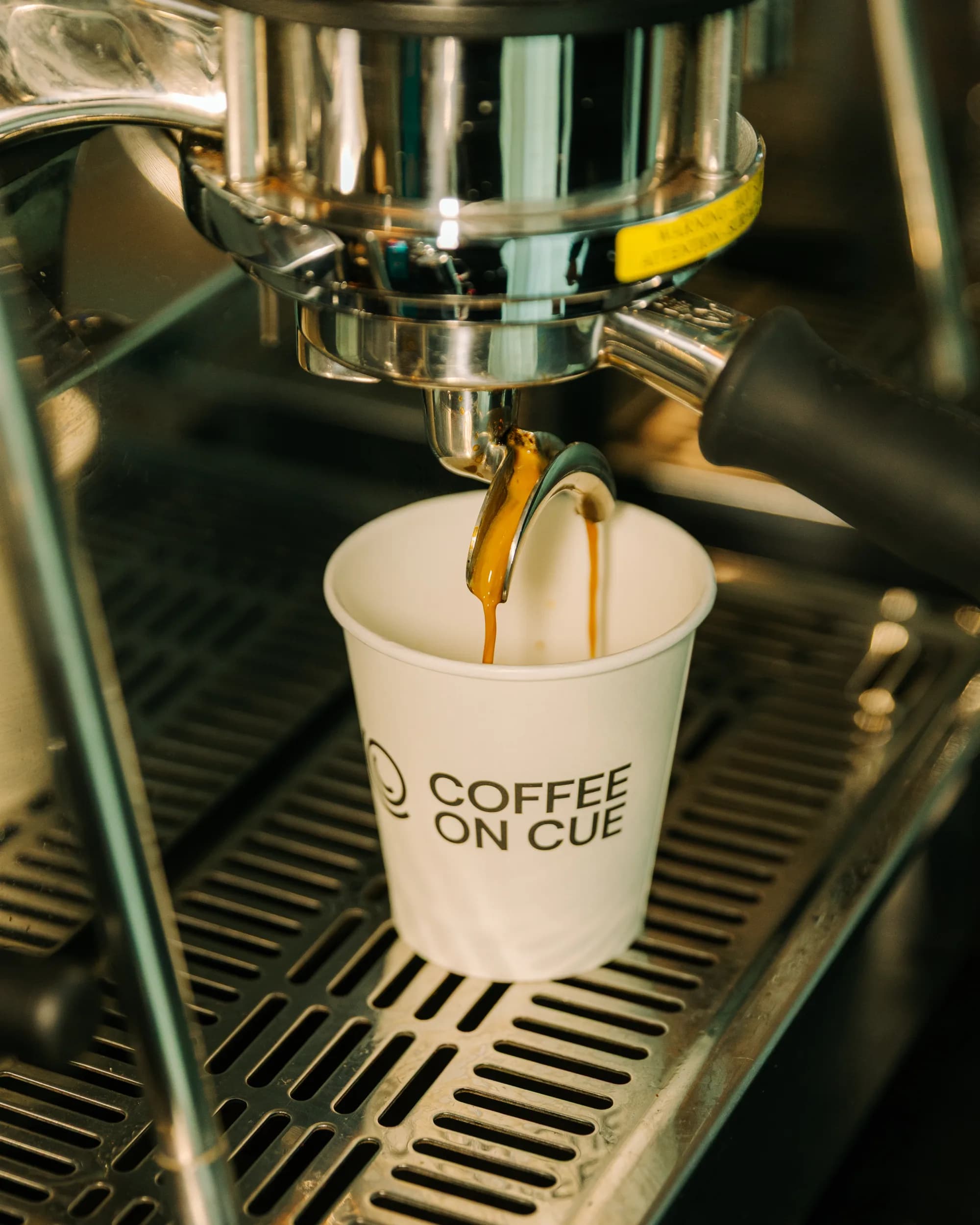
Every espresso is a recipe: a set amount of ground coffee in, a set weight of liquid out, inside a set time window. At home you can get away with eyeballing it. Behind an event bar, eyeballing it is how cup forty tastes different from cup four.
Before service, the barista dials in. They pull test shots, taste them, and adjust the grind until the shot runs inside the recipe and tastes balanced in milk. Then they keep checking. Grind needs small corrections through a long service, because the room warms up, the hopper empties and the beans behave differently as the day goes on. A barista who checks the shot every so often catches that drift before a guest does.
If you want to practise the same discipline on your own machine, our guide on how to dial in espresso at home walks through it step by step.
Milk is where consistency usually slips
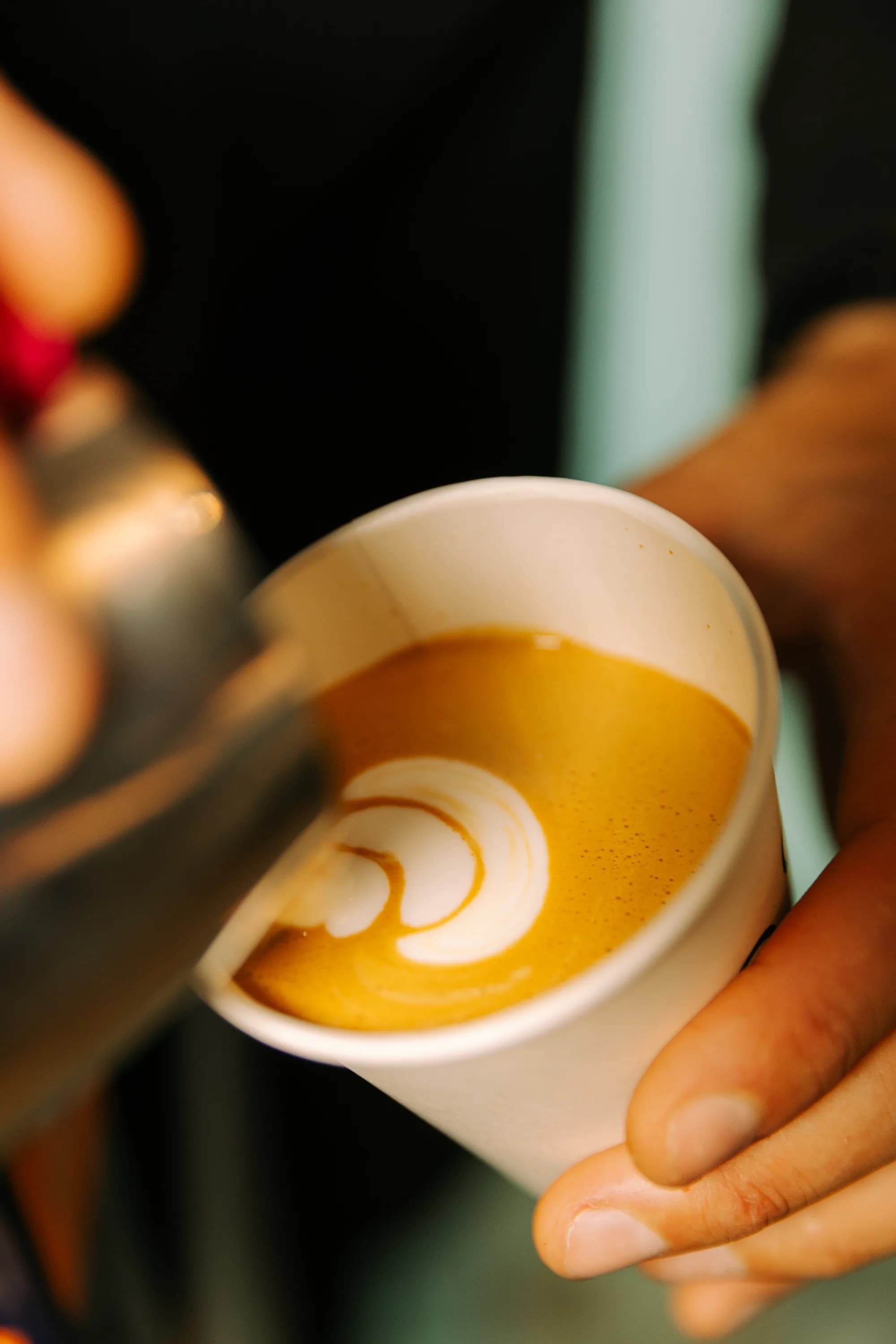
Most coffees ordered at a corporate event are milk-based: flat whites, lattes, cappuccinos. Milk is harder to keep consistent than espresso, because it depends on hand, ear and timing rather than a scale.
What professional baristas do to hold it steady:
- Right jug for the drink. Filling the jug to the same level each time gives the same amount of foam each time.
- Same temperature, every cup. Hot enough to be pleasant, never so hot the milk turns flat and loses its sweetness. Experienced baristas judge it by the feel of the jug and check it with a thermometer when they reset.
- Separate jugs for alternative milks. Oat, soy and almond each stretch differently from dairy, so they get their own jugs and a gentler hand.
- A clean steam wand between drinks. Purge and wipe, every time, so nothing from the last drink ends up in the next one.
The science of why texture matters, and why baristas tap and swirl the jug, is in our piece on perfect microfoam.
One size, one workflow, a pace that holds
The third part of consistency is the workflow around the machine.
At our events every serve is a standard 6oz size. That sounds like a small detail, and it does a lot of work. One size means one shot, one jug fill and one rhythm, so the barista is never recalculating mid-rush. It also keeps the line moving, because the order is the drink and the milk, nothing else.
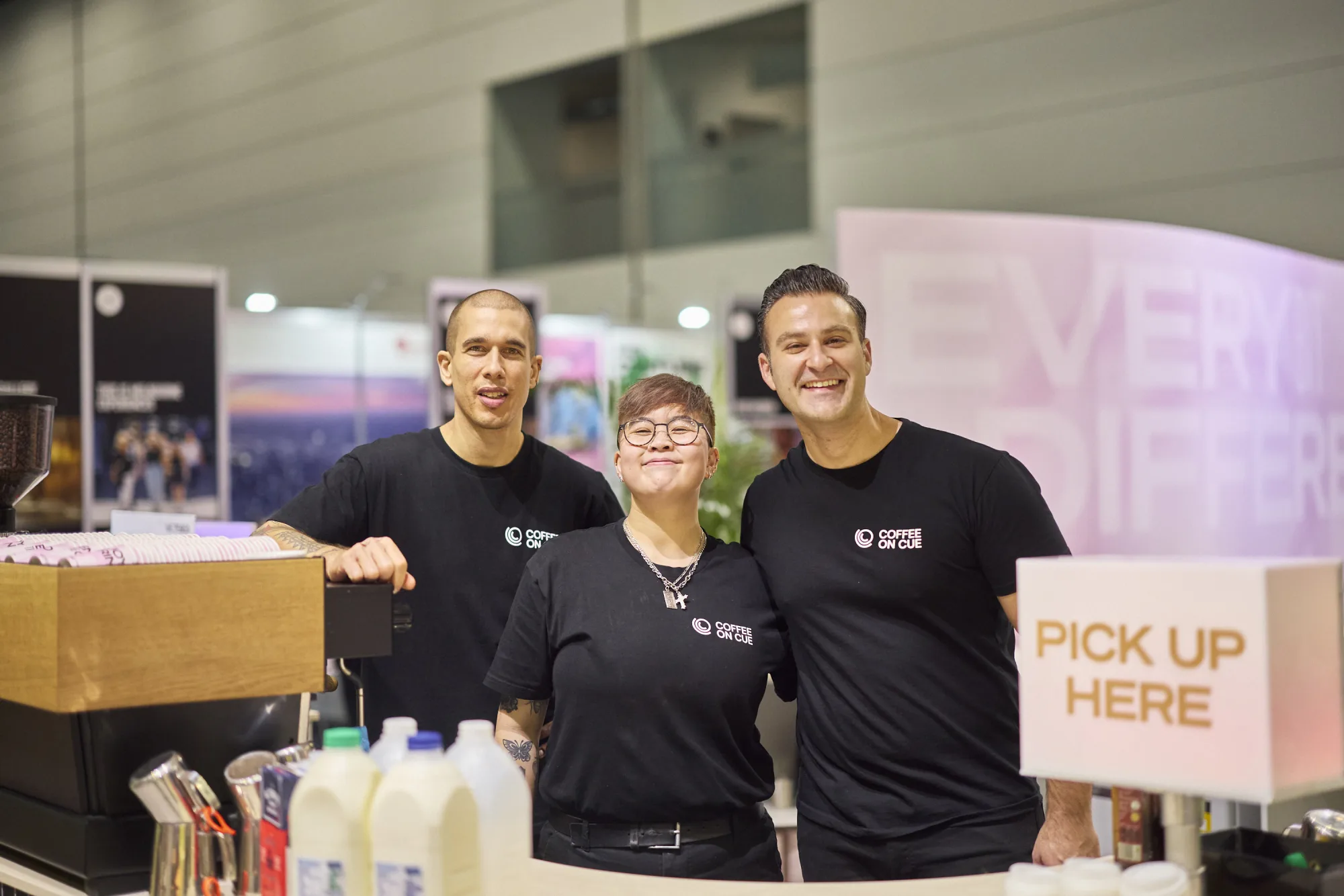
The other half is pace. One barista serves up to 80 coffees an hour. With a second barista on the same cart the work splits: one takes orders and pulls shots, the other textures milk and hands drinks over, and output doubles to 160 an hour. Splitting the roles matters as much as the extra hands, because each person repeats one task and repeats it the same way.
For event planners, that turns into a simple question: how many guests reach the cart in your busiest fifteen minutes? Our guide to how much coffee to plan per person helps you estimate it, and our coffee cart hire page sets out what a cart and crew include.
How we see it
The usual advice is that consistency comes from the equipment: buy a better machine, automate the milk, take the person out of it. We see it differently. A good machine holds temperature and pressure, and that matters. The barista is the one who holds the standard, and the standard is what guests taste.
What our crews see at conferences and activations is that coffee rarely goes wrong in the quiet moments. It goes wrong in the rush, when one barista is asked to pour faster than they can pour well and starts skipping steps. The wand does not get purged, the shot does not get checked, the milk runs a little hotter to save seconds. Each shortcut is small. Together they are the difference between a great coffee and an ordinary one.
So we plan for the rush rather than hope the barista outruns it. Every barista on our carts is employed by Coffee on Cue directly and trained to the same recipe, on the same commercial equipment, with the same blend. When a program has a big morning break, we would rather recommend a second barista before the event than apologise for a queue during it. Your guests notice the twentieth cup of the break far more than the first, and that is the one we plan around.