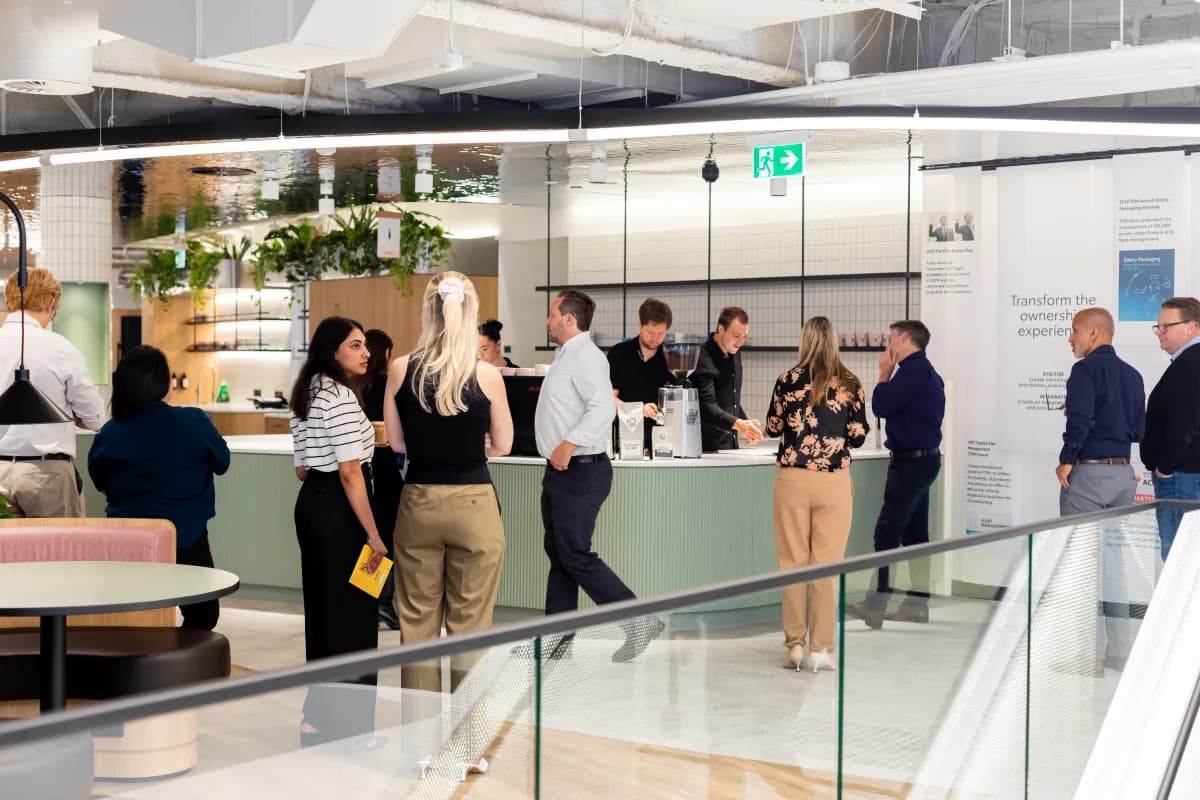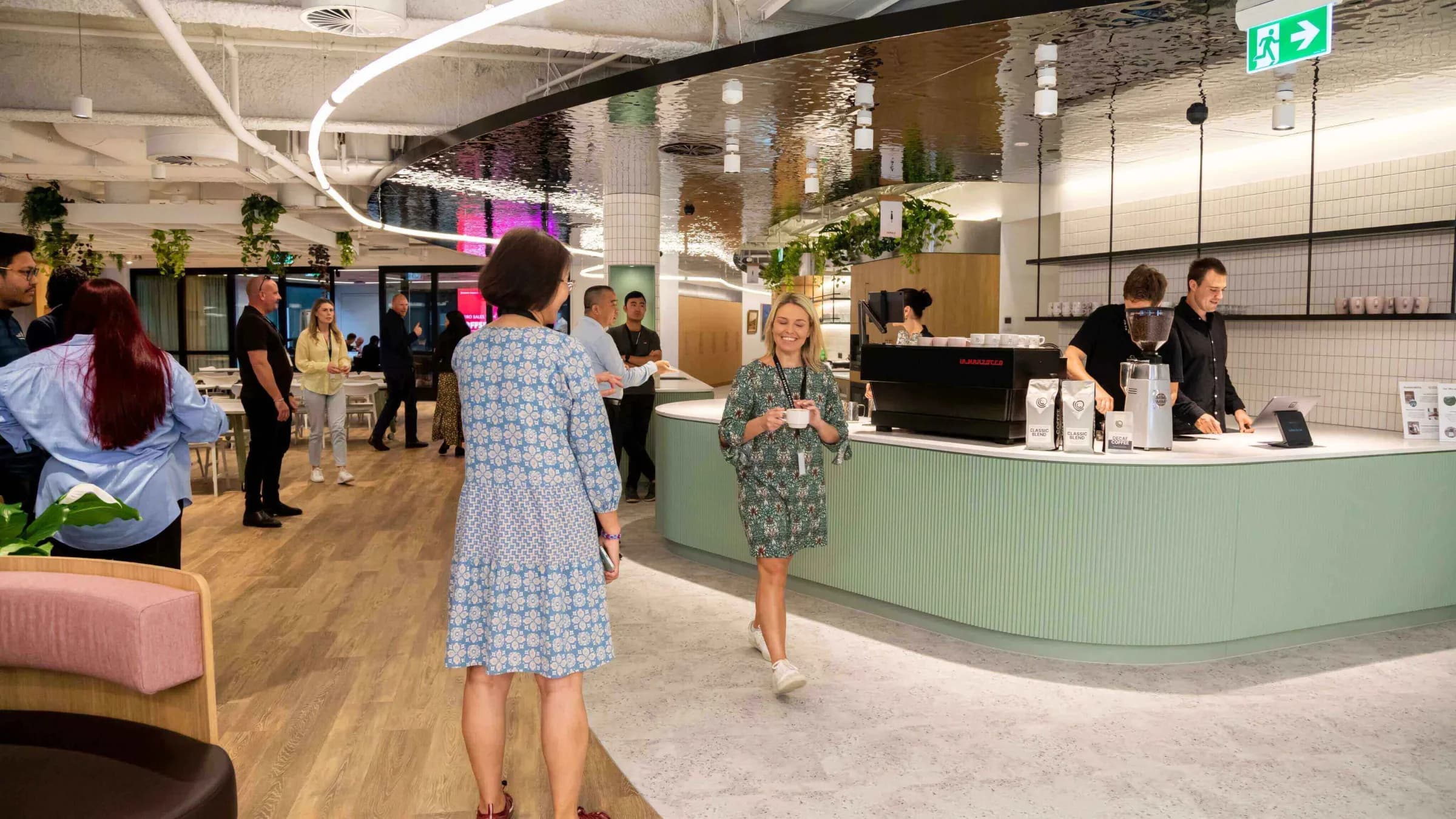
A fit-out is one of the biggest single investments most workplaces make in how their team feels day to day. Get it right and the space quietly does work for you, drawing people together, supporting focus, signalling that the company actually cares about the people in it. Get it wrong and an expensive renovation ends up feeling no different to the office it replaced.
Here is where the attention is best spent.
Build in genuine flexibility
Not every task needs the same kind of space. Multipurpose areas with modular furniture or moveable walls let a room become a workshop one hour and a quiet zone the next. Pairing agile workstations, open collaboration areas beside proper quiet zones, gives people a real choice about how they work, rather than forcing one layout onto every kind of task.
Furniture that actually supports people
Ergonomic, height-adjustable desks and proper chairs are not a luxury line item, they are the baseline for a team spending eight hours a day at a desk. Beyond the basics, a little variety, standing desks, a soft seating corner, somewhere informal to sit, gives people options that suit different moods and different kinds of thinking.
Let technology support the room, not dominate it
Interactive screens and smart automation earn their place when they remove friction rather than add another system to learn. Open-plan tech zones that blend screens and shared tools naturally into the space work better than technology bolted onto a room as an afterthought.
Meeting spaces people actually want to use
A meeting room does not have to look like a meeting room. Casual bleacher seating, a writable wall, a couch instead of a boardroom table: these small shifts change the tone of a conversation and make people more willing to gather informally rather than scheduling everything.
Design for wellbeing, not just output
A dedicated recharge space, whether that is a quiet room, a small gym, or somewhere to decompress for ten minutes, signals that the workplace cares about more than throughput. Biophilic elements, natural light, real plants, timber and stone rather than laminate, do genuine work here too: they make a space feel calmer without needing to say so.
Bring the outside in
Natural light does more for a room than almost any other single choice. Maximise it where the building allows, supplement it with lighting that mimics daylight where it does not, and add greenery generously. Living walls, desk plants, and natural materials all compound the same effect: a space that feels considered rather than assembled.
Save space without making it feel smaller
Multifunctional furniture, desks with real storage, benches that double as shelving, keeps a fit-out efficient without making the room feel cramped. A few genuinely striking design choices, an art installation, a bold colour moment, do more for how a space feels than uniform beige efficiency ever will.
The takeaway
A fit-out is not really about furniture and finishes. It is about deciding, deliberately, what kind of workplace you want people to walk into every morning. Spend the attention on flexibility, comfort, a real gathering point and some genuine care in the details, and the return shows up in how the space actually gets used, not just in how it photographs on day one.