From 1 September 2026, Victorian employees at businesses with 15 or more staff gain a legal right to work from home at least two days a week, a change affecting an estimated 1.3 million people. It is a significant shift, and the compliance side of it is straightforward: confirm eligibility, set the policy, communicate it clearly.
The harder question sits on the other side of the ledger. If your team can legally choose to stay home two, three or more days a week, what makes the office worth the commute on the days they do not have to be there?
The office is no longer the default
According to the Victorian Government, 74 percent of Victorian workers say work-from-home rights matter to them significantly. Attendance data tells a similar story: office attendance has settled well below what most employers still expect, and mandates alone have not closed that gap. When coming in is optional, the office has to earn the visit rather than assume it.
That reframes the whole question. It is no longer "how do we get people back." It is "what do we need to be true about the office for someone to choose it over their kitchen table."
What tends to make the difference
We work inside a lot of Melbourne offices, and the pattern is consistent. It is rarely one dramatic change. It is a handful of everyday things done properly, most of them the kind that only show up if you actually walk the floor and watch where people go.
- Coffee people actually want, not the instant jar nobody touches.
- A genuine break space, not a desk with a view of another desk.
- Reasons to be in the same room, not just the same building.
- Small, daily rituals, the moments that repeat often enough to matter.
Coffee as a genuine gathering point
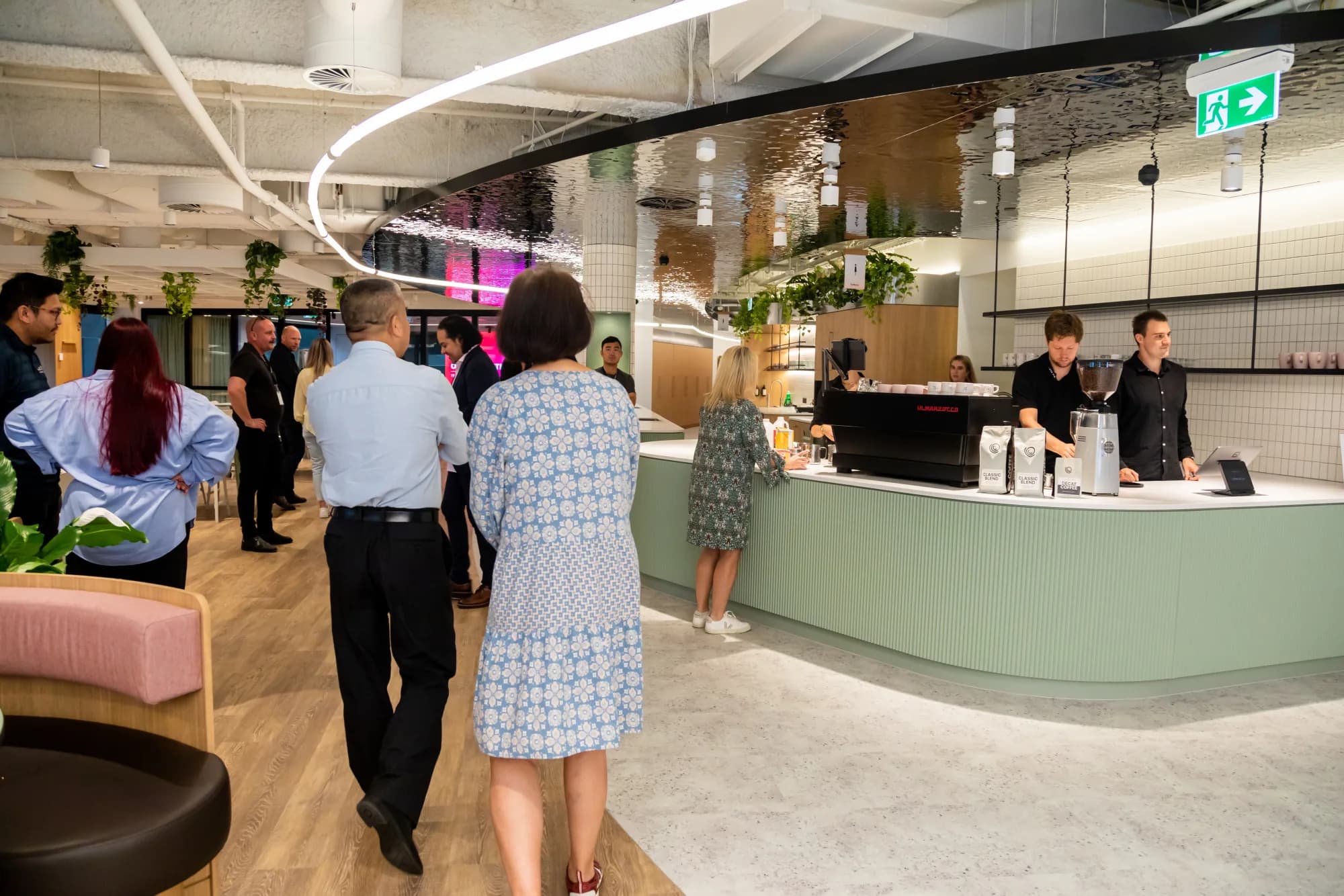
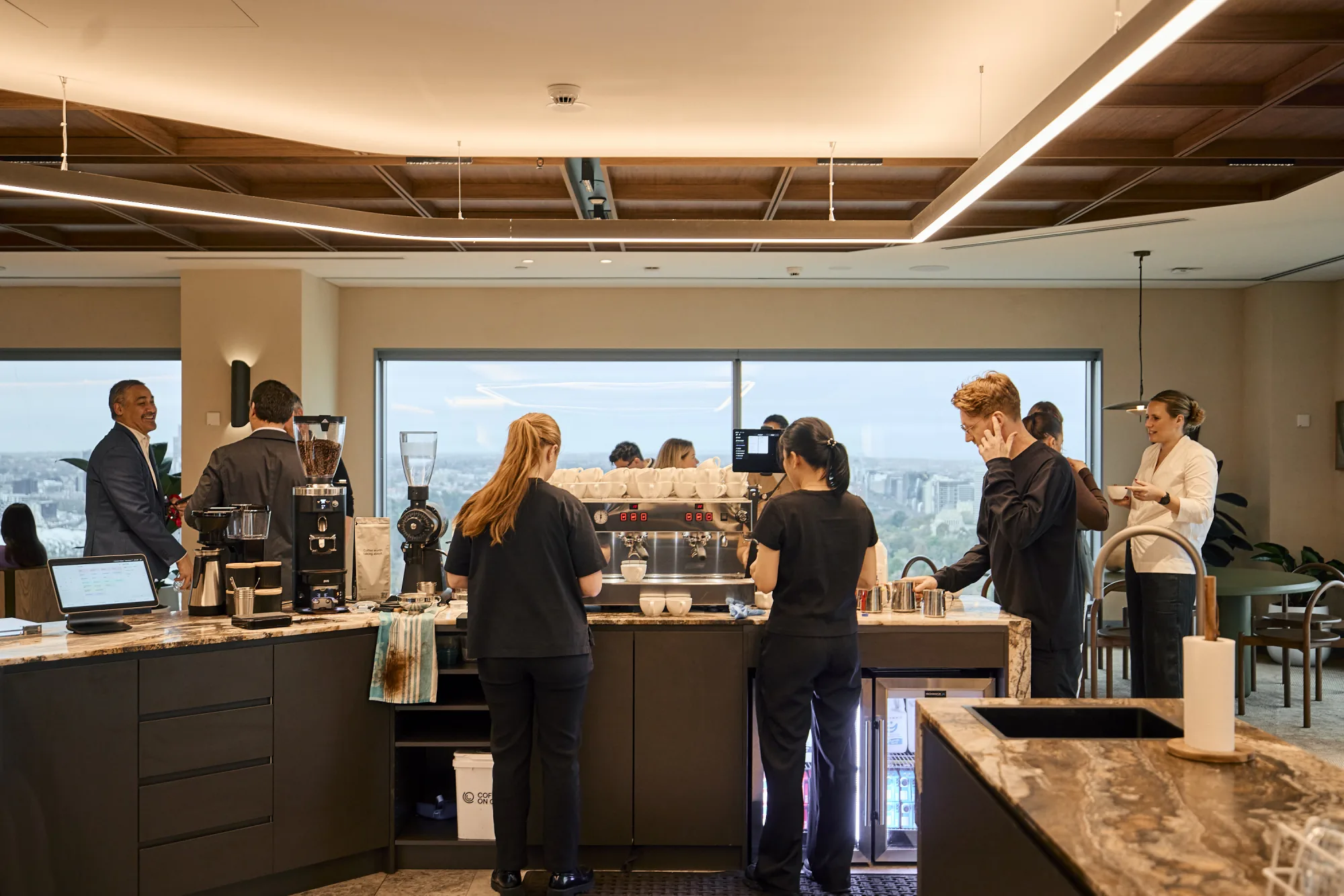
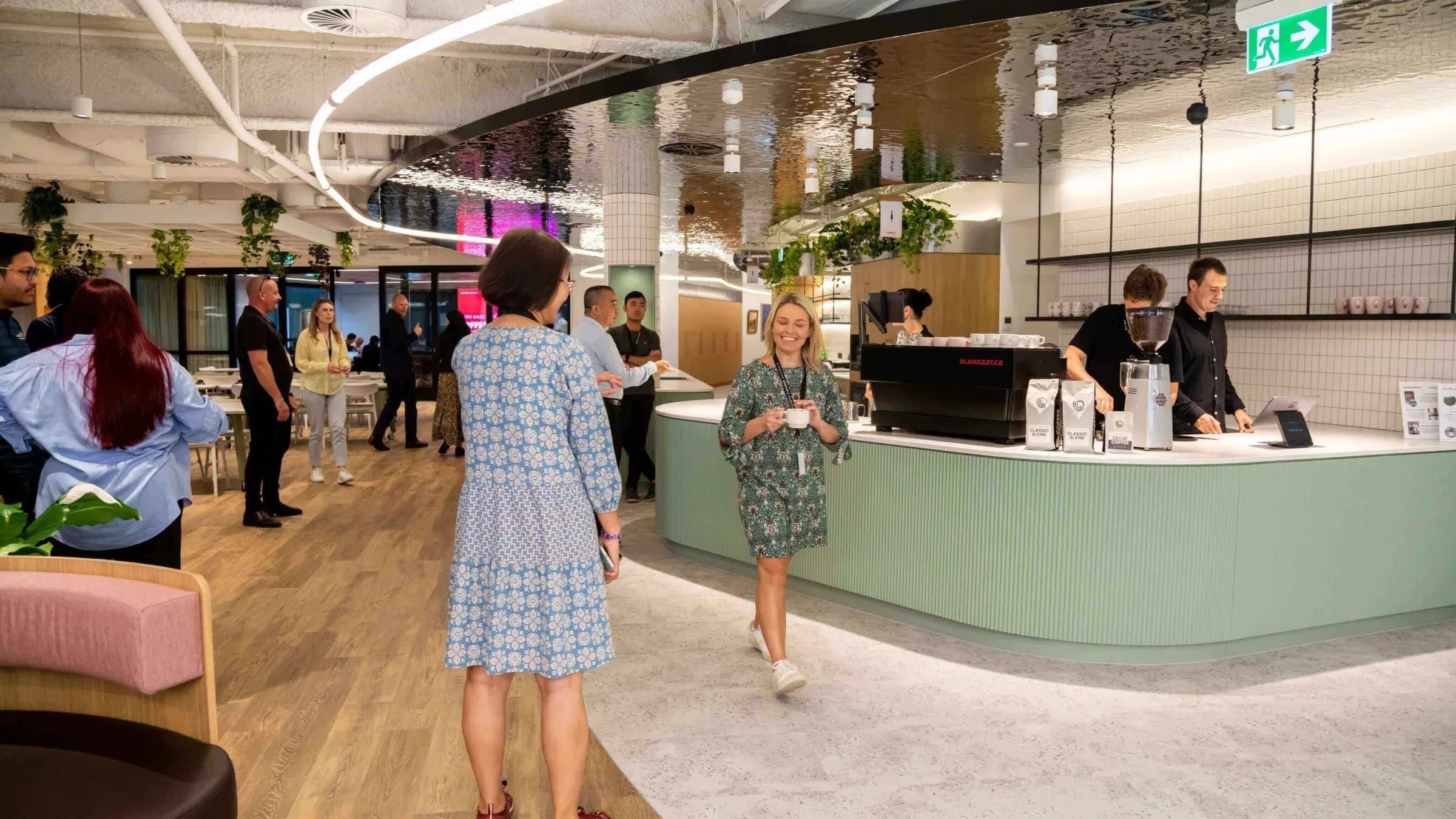
Of everything on that list, coffee is worth calling out specifically, because it is one of the few things people do multiple times a day, every day, without being asked. A break room with a proper barista service gives people a reason to step away from a screen and, more often than not, end up talking to someone from outside their immediate team.
That is not a minor side effect. It is the mechanism. The coffee itself matters, but the pause it creates, and who ends up standing next to whom because of it, is doing most of the real work.
A workplace that people choose, rather than one they are required to attend, has to feel like it was designed for the days people actually show up.
Building around the days people are in
Rather than fighting for five days, the more useful move is designing properly around the two or three days most teams will still gather. A handful of practical steps:
- Walk your own office honestly. Would you choose this over working from home today?
- Fix the daily basics first. Coffee and food get used constantly, so they compound faster than almost anything else you could invest in.
- Build around your team's real anchor days, rather than assuming attendance spreads evenly across the week.
- Trial before committing. A short pilot of any new service gives you real usage data before a longer-term decision.
Where this leaves your office
Victoria's new right to work from home sets a floor, not a ceiling. The organisations that come out ahead will not be the ones that merely comply. They will be the ones that made the days people are in the office genuinely worth the trip. If coffee is part of how you want to do that, our workplace coffee page covers how a tailored service comes together.