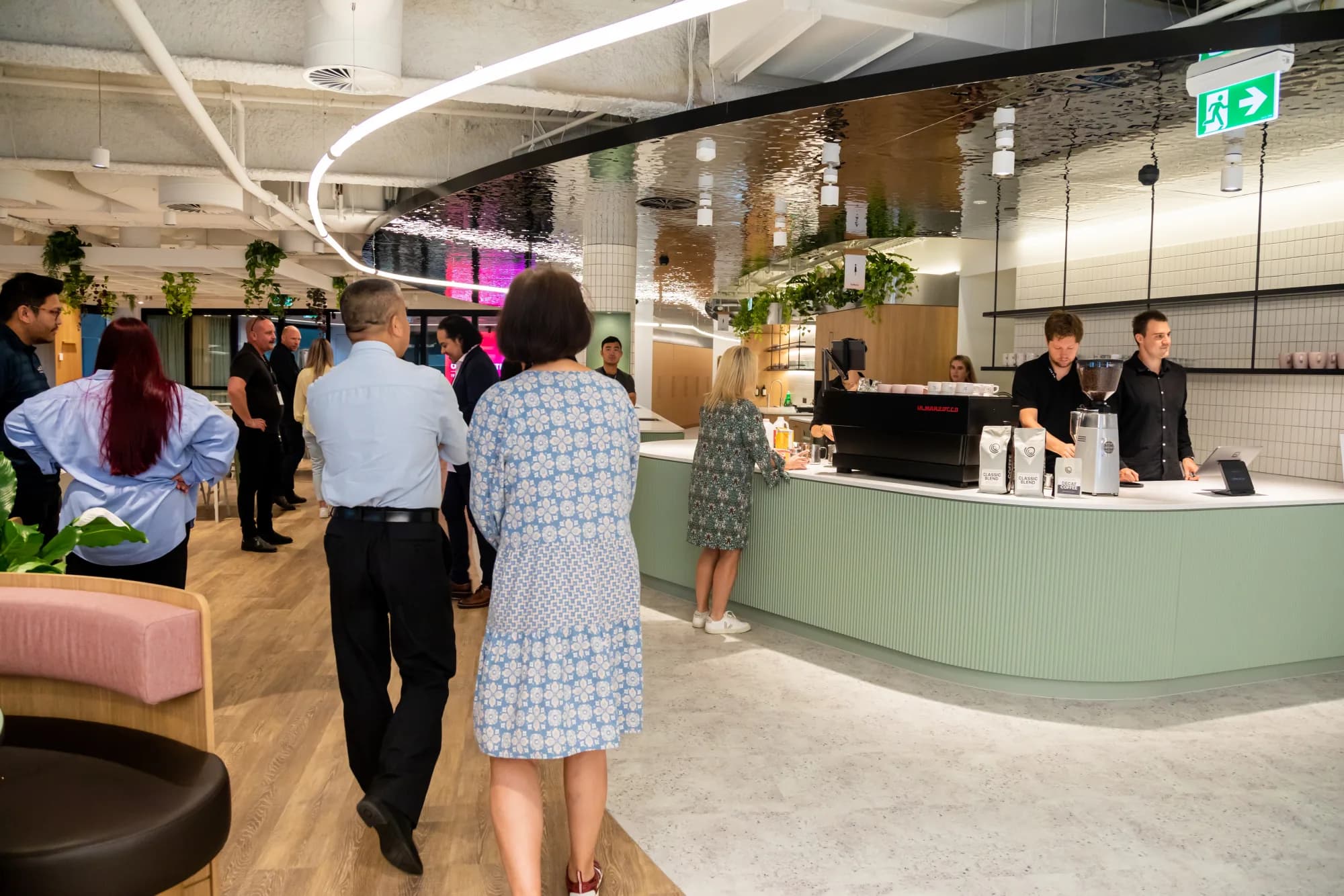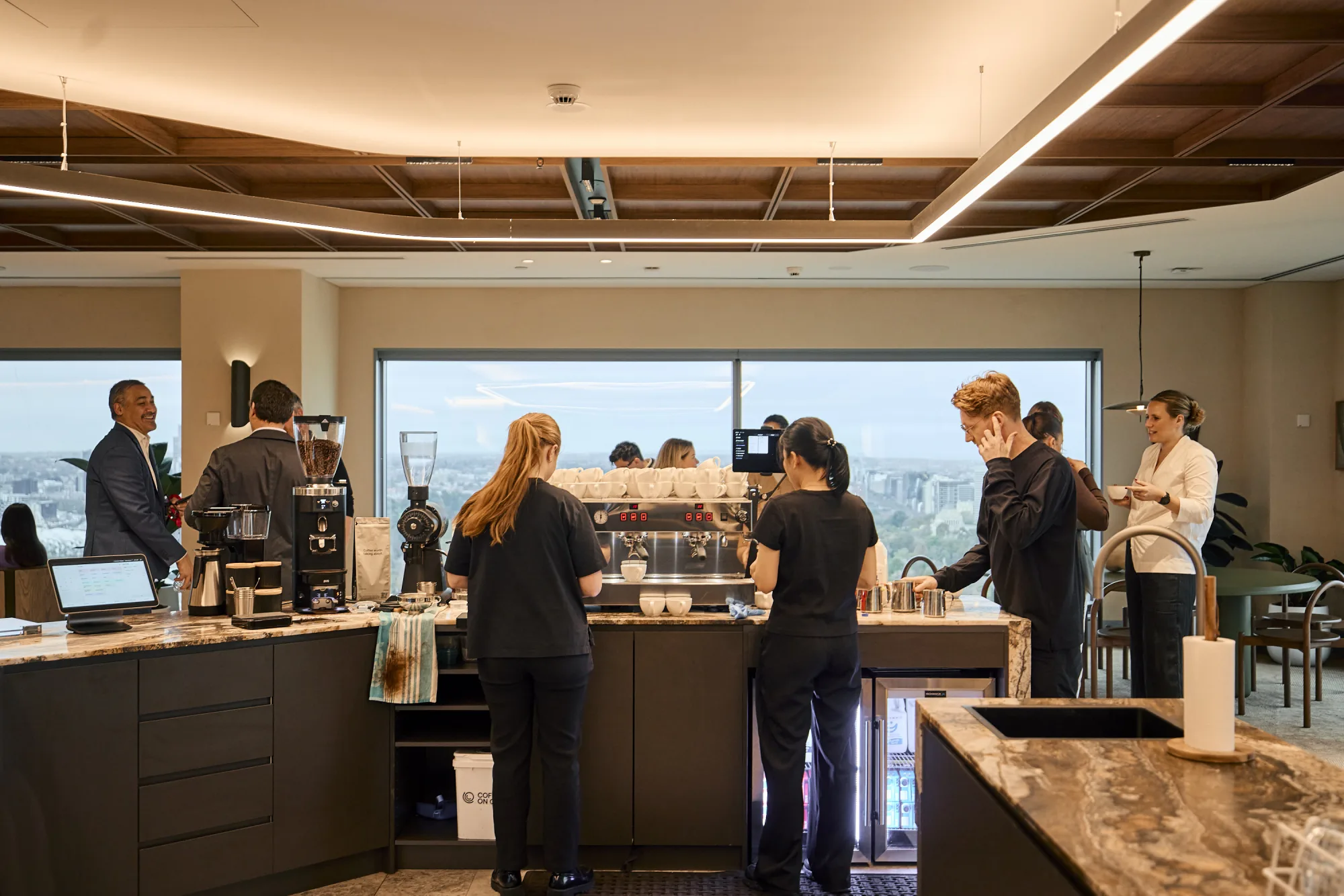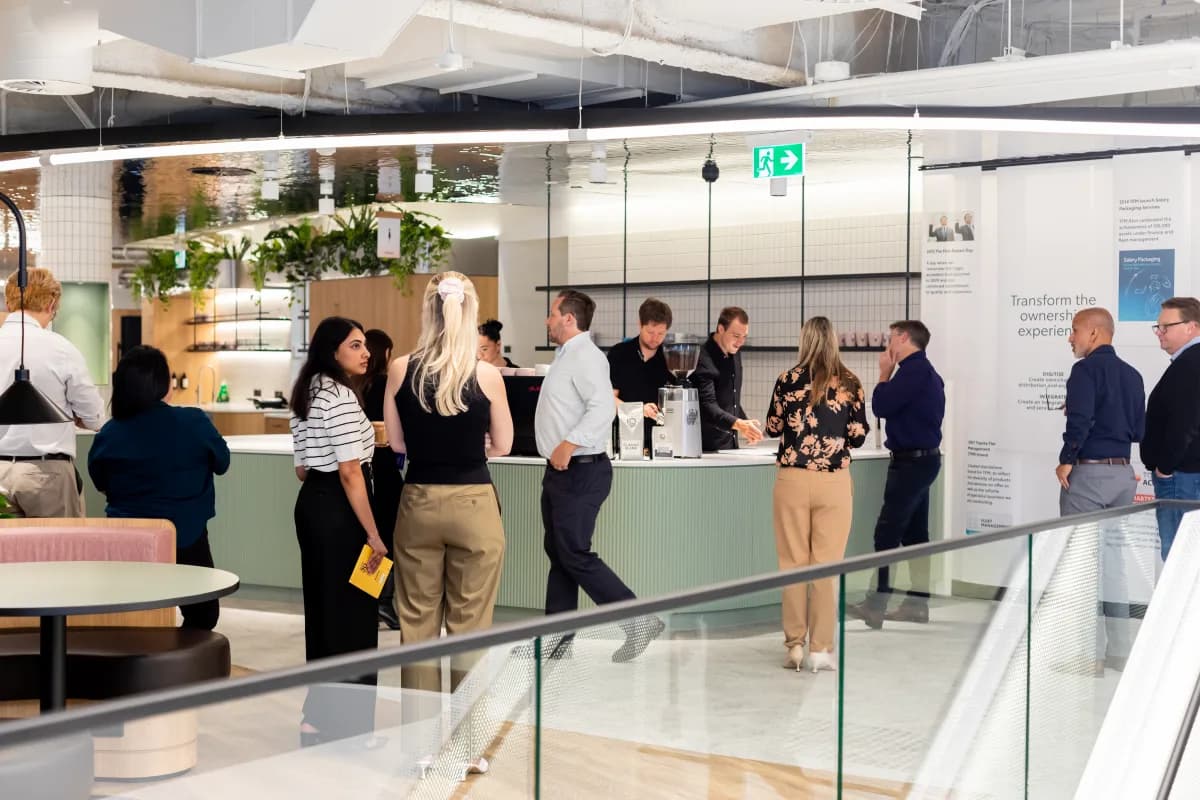
Morning rush hits, the line snakes past the break area, and the instinct is always the same: hire another barista. More hands should mean faster service.
After designing workplace cafes for some of Australia's busiest offices, we have learned that the barista is rarely the actual bottleneck. The workflow behind the counter usually is.
More staff on a bad layout just adds congestion
Adding a second barista to a poorly designed counter is like adding cars to a jammed lane. The road is still the problem. We see the same handful of workflow issues at almost every site before a redesign:
- Baristas walking far more steps than they need to, because equipment is scattered rather than grouped
- Order queues that physically block the pickup point
- A single step in the process that everything else depends on
- Almost no self-service options, so every order goes through staff
- No way for people to order ahead before the peak hits
Fix the layout and the same crew, with no extra headcount, comfortably serves more people in the same window.
Get the workflow right first
Before anything else, we map every step of making a coffee at a site: where the barista stands, reaches and turns, and where the wasted motion is. Moving equipment into a tighter, more logical layout is usually the single biggest lever, and it costs nothing beyond the redesign itself.
Choose equipment built for volume
Not every espresso machine is built for a steady stream of orders. Recovery time, how many shots it can pull at once, and how easy it is to maintain all matter more at volume than they do in a low-traffic setting. Great coffee still depends on great equipment, but the wrong machine will bottleneck even the best barista.
Let people serve themselves where it makes sense
Digital kiosks, QR code menus and integrated payments do not replace the barista, they remove the transactional part of the interaction so the barista can focus on the coffee and the conversation. Removing the payment step alone takes real time out of every order.
Order-ahead only works if the workflow supports it
Order-ahead systems can spread demand across a longer window instead of concentrating it all at 8:45am, which is genuinely useful. But we have seen sites launch an app before the workflow was ready for it: baristas get swamped by digital orders while walk-up customers wait, and the pickup area turns chaotic. Technology amplifies whatever system is already in place. It does not fix a broken one on its own.
Design out the bottleneck before it exists
The best fix is the one nobody notices, because it was designed out before the cafe opened. We study traffic patterns and peak times at a site and shape the layout so people naturally know where to order, where to wait and where to collect, without needing a sign to tell them.
Why it matters beyond the coffee
A workplace cafe that runs smoothly is a reason to come into the office. One that is constantly behind is a reason to stay home, and in a hybrid world that trade-off matters more than it used to. The teams that get real value from their workplace coffee service are usually the ones who treated the systems behind the counter as seriously as the beans in the hopper.
If your cafe feels like it is always behind no matter how many baristas are rostered on, the fix is rarely another barista. It is almost always the workflow they are working inside.