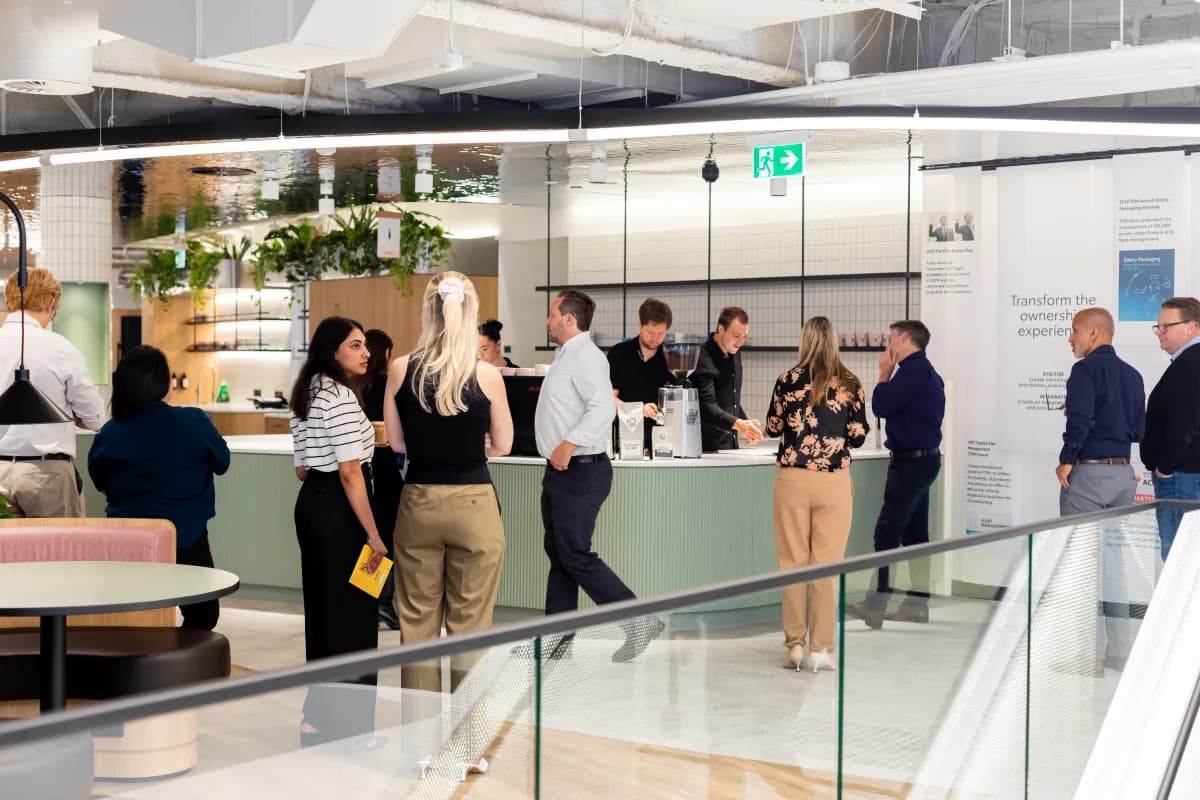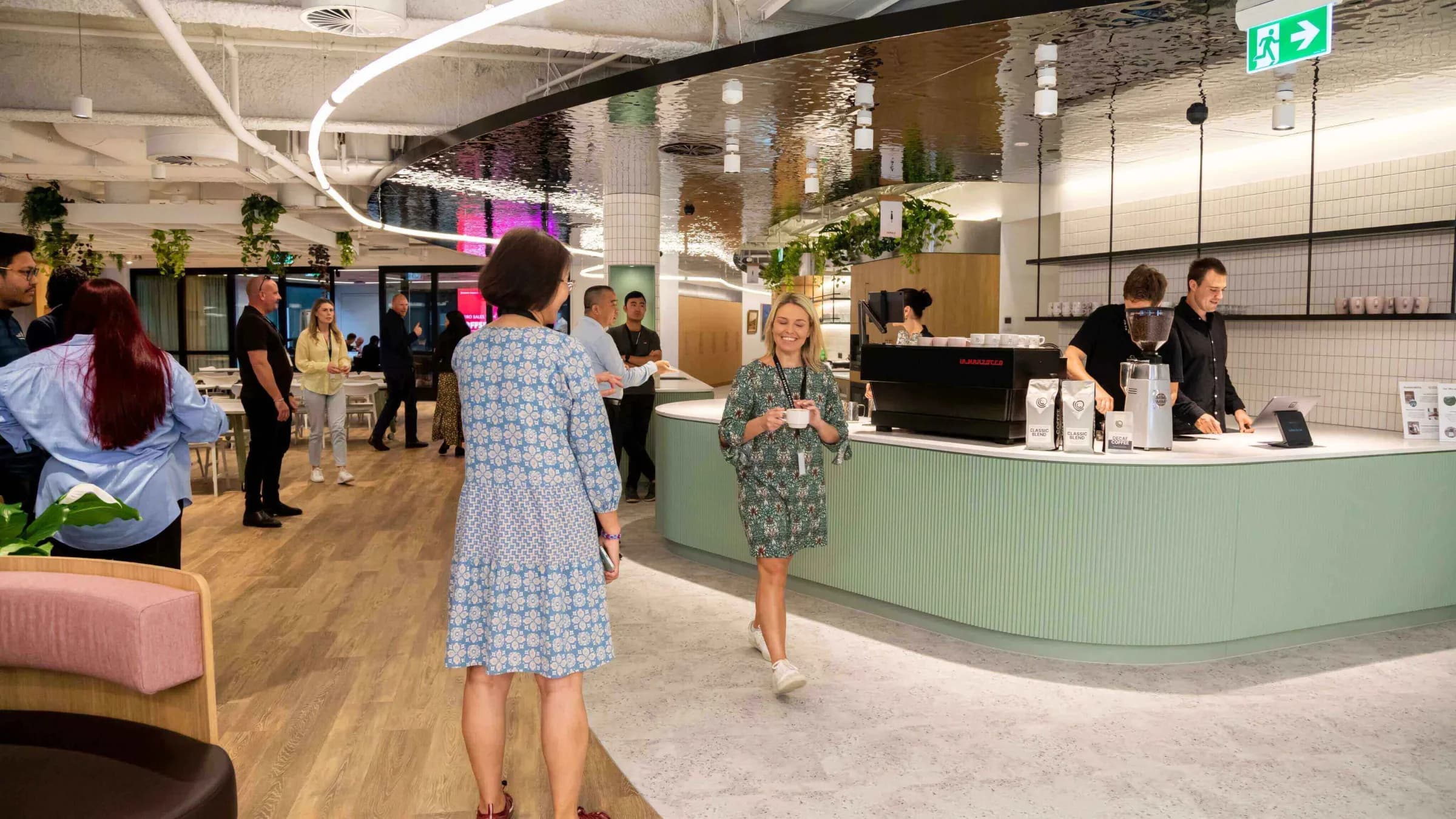
A lot of office cafes get built the same way: a machine, a bench, some signage, and a hope that people will use it. Most of the time they do not, not really. The space sits there half-used, and nobody can quite say why.
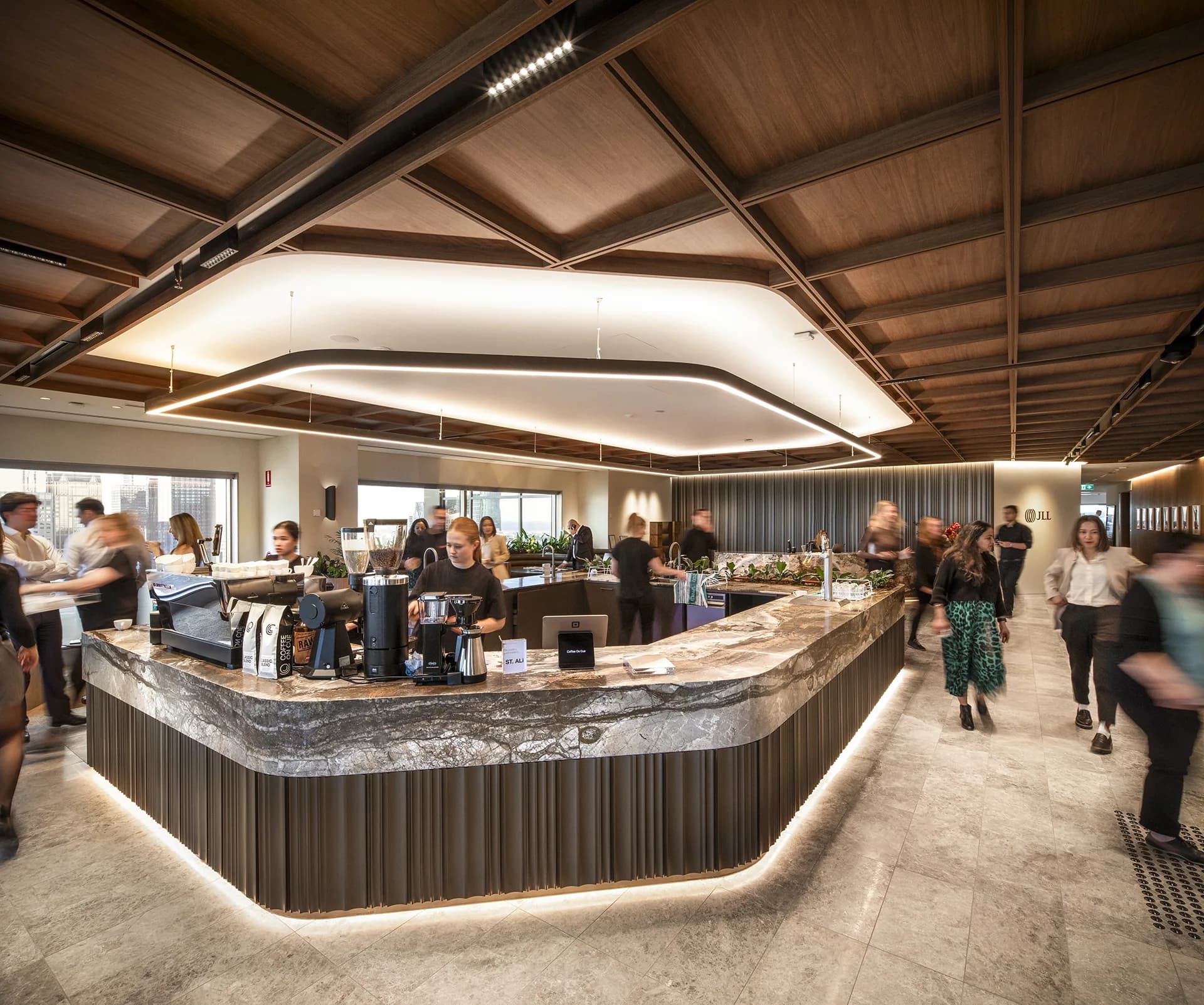
JLL's Melbourne headquarters at 101 Collins Street had a specific version of this problem. Their team was spread across three separate floors, and post pandemic, people had a genuine choice about where to work. A great desk was not going to be the reason someone came in. The floors rarely crossed paths at all.
The difference between a cafe and a gathering point
The distinction that matters is not the machine. It is whether people genuinely want to be there. JLL's strategists built around that idea specifically: a custom-designed cafe bar with full-time embedded baristas who learned people's names, and a fully subsidised menu, so nothing stood between someone and the daily moment of connection.
JLL reports a 500 to 600% increase in personal connections across departments since the cafe launched.
What actually changed
The numbers are the clearest part of the story. In JLL's own survey, average office days rose from 2.9 to 3.4 a week, an 18% lift, with no mandate behind it. Over two years, the cafe served 140,807 cups, growing 12.5% year on year. JLL estimates the space saves roughly 5 FTE a year in time people would otherwise spend leaving the building for coffee.
Over 95% of JLL's people say the working environment improves their wellbeing.
Why quality was non-negotiable
None of this works if the coffee itself is an afterthought. JLL's team was explicit about this from the start: the bar had to compete with the specialty cafes surrounding the building, not just with a pod machine down the hall. A subsidised menu removes the price barrier, but it is the quality of what is actually being served that gives people a reason to come back daily rather than once.
The takeaway for other workplaces
The 500 to 600% figure is specific to JLL, and every building's layout and culture is different. But the underlying pattern holds more generally: a workplace cafe earns its use through genuine hospitality, real quality, and staff who make it feel personal, not through the fact that a machine exists somewhere on the floor. Build for the first, and attendance and connection tend to follow on their own.