An activation has a few minutes to earn someone's attention, and most guests arrive already guarded. A coffee cart changes the terms of that exchange. Guests walk up because they want a coffee, they stand still for a couple of minutes while it is made, and they walk away holding your brand in their hand.
That only works if the cart looks like yours. Here is how cart branding works in practice, how long it takes, and what to send us so the cart on the day matches the activation you designed.
The three ways to brand the cart
We offer three branding options, and they can be combined.
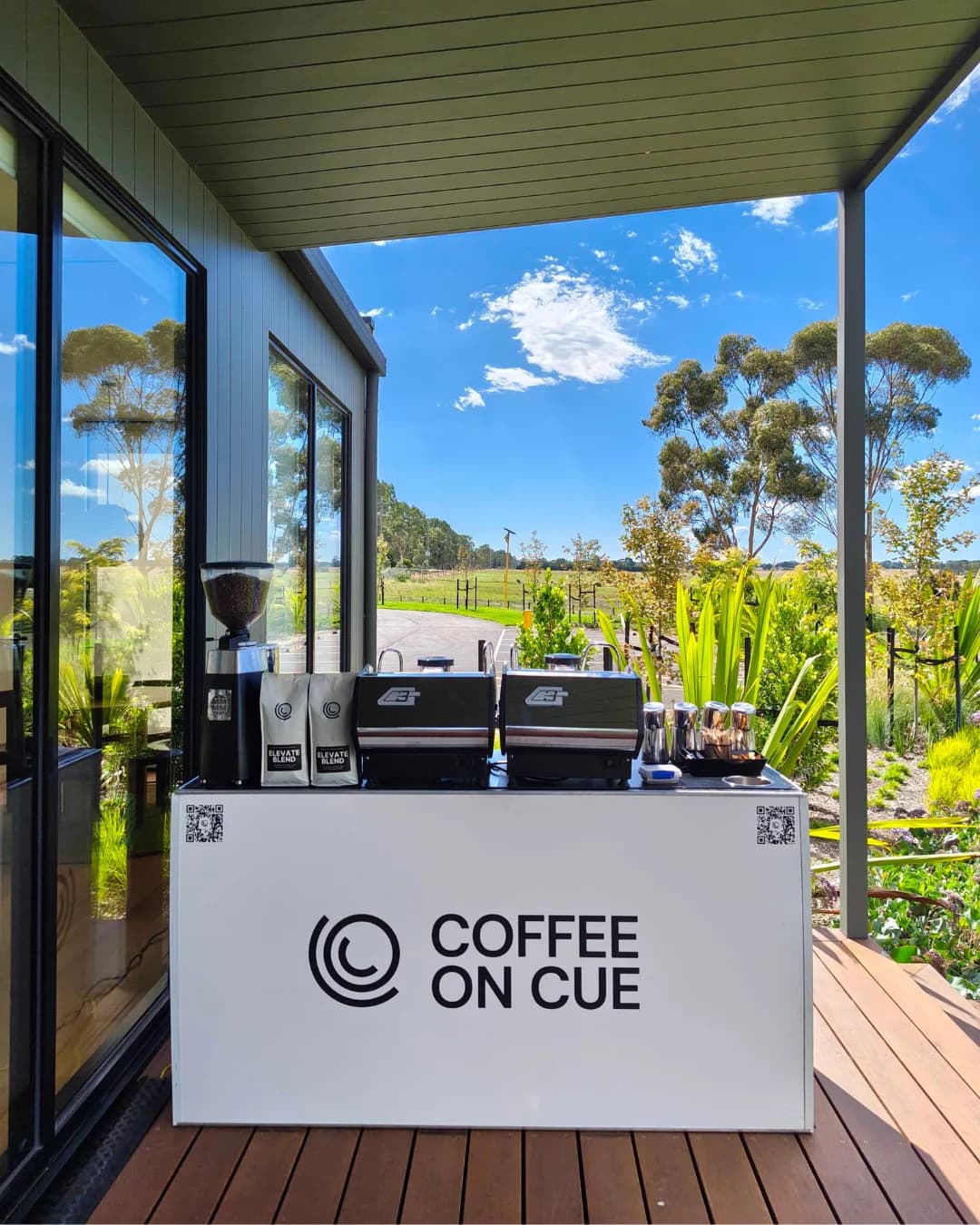
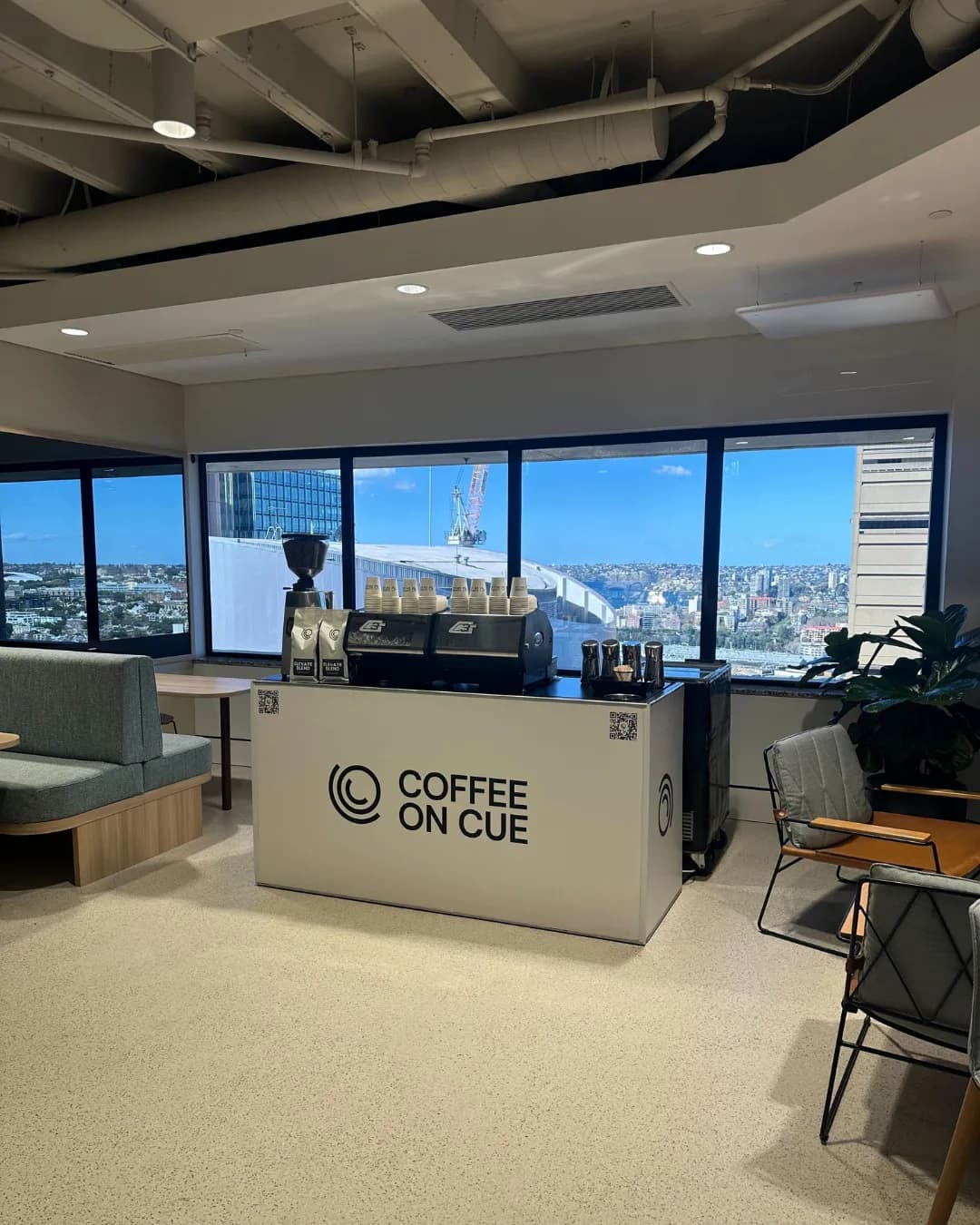
- A full cart wrap. Your artwork covers the whole cart, so it reads as part of the activation set rather than a service station parked beside it.
- A branded front panel. Your artwork on the panel guests face as they order. It suits a cart sitting inside a larger branded space, where it only needs to carry the mark.
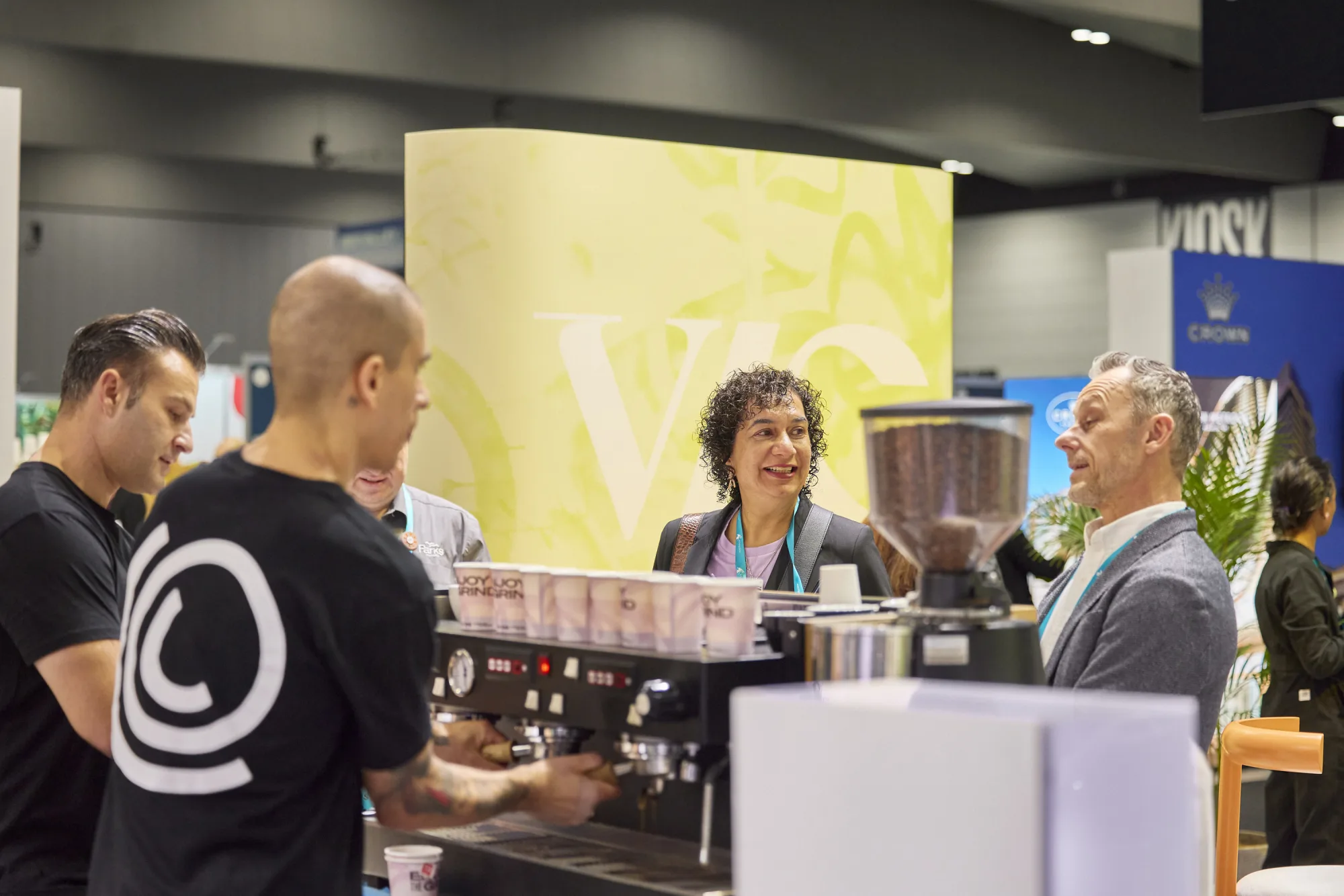
- Branded cups. The piece that leaves with the guest. It goes back onto the floor in their hand, into their photos, and onto their desk afterwards.
For events where a finished look matters more than a logo, we also have timber and subway-tile themed carts. Branded panels are reusable, and so are any leftover custom cups, so if your activation runs as a series, the branding is an investment you make once and carry to the next date.
Give the artwork four weeks
This is the detail that catches people out. Production for branded cart panels and branded cups takes four weeks from the moment we receive your artwork, not from the moment you book. If your creative team is still finalising the campaign look, the booking and the artwork deadline are two separate dates, and the second one decides whether the cart is branded on the day.
If your activation has a sustainability story, Good Edi edible cups are an option too. They are made from wheat, oats and grains, and they do not change the taste of the drink. They are not gluten-free, which is worth knowing before you promote them.
Put the cart where the activation needs attention
Branding only works if people see it. At a conference, a cart on the natural path between sessions pulls people who would walk straight past a stand, which we covered in why a coffee cart beats a booth. At an activation you usually control the whole space, so the question changes: what is the queue looking at while it waits? Make it your product, your demo or your people, not a blank wall.
Plan the volume as well. One barista serves up to 80 coffees an hour, and a second barista doubles that to 160. If your activation has a rush, such as a launch moment or a session break on a show floor, add the second barista or a second cart so the wait stays short and pleasant rather than turning into the thing guests remember.
What to put in your brief
The more we know, the closer the cart gets to what you pictured. A good brief covers five things:
- The branded surfaces. Wrap, front panel, cups, or a combination, with the artwork files and the date they will reach us.
- What the crew wears. Our baristas wear full hospitality blacks with a Coffee on Cue apron by default. They can wear your supplied uniform instead if you send it through in advance.
- The menu. The full espresso range, T2 tea, matcha, chai and hot chocolate are all available, with dairy and alternative milks as standard. A shorter menu keeps a busy activation moving.
- The run sheet. When doors open, when the rush lands, and the name and mobile of your on-site contact for the day.
- Access and power. Two standard 10-amp sockets for the regular cart, or a 20-amp outlet for the larger one, plus a loading route with lift access, because the kit cannot go up stairs.
With those settled, the crew has the cart running within an hour of arriving and packs down within 45 minutes after service, so the bump-in fits around the rest of your build.
What it looks like when it works
Forefront Events run 40 to 50 conferences a year and use one to three of our carts at each, with custom wraps and panels sold to their partners as a sponsorship product. Their Event Operations Manager, Caoimhe Nolan, described the difference plainly: "When we had to do our own cart branding, it was honestly a nightmare. With Coffee on Cue, it is just done."
Retail works the same way. Fig & Bloom brought us in to help launch a new retail store, and Dan Murphy's has run a branded Discovery Bar cart inside one of its stores.
If there is an activation on your calendar, a branded coffee cart for your event starts with two dates: the day itself and the day your artwork is ready. Send us both and we will plan the rest around them.