A latte, a flat white and a cappuccino all start with the same espresso shot. The difference is the milk. A flat white has a thin, silky layer of microfoam that blends right into the coffee. A latte has a little more foam and usually more milk overall. A cappuccino has a thick, airy cap of foam, often dusted with chocolate. The coffee is the same; the texture changes the drink.
That is the short version. The longer one explains why three drinks built from the same two ingredients taste so different, and how to order the one you actually want.
Same shot, different milk
Every milk coffee is espresso plus steamed milk. When a barista steams milk, they do two things with the steam wand. First they let in air, which stretches the milk and creates foam. Then they sink the wand and spin the milk, which breaks big bubbles into tiny ones and folds them through. The result, done well, is microfoam: milk with the texture of wet paint, glossy and smooth, with no visible bubbles.
How long the barista lets air in decides the drink:
- Flat white. The least air. A thin layer of microfoam sits on top, and the milk pours through the coffee in one even, velvety layer. It tastes the most like coffee of the three.
- Latte. A little more air, so a slightly deeper layer of foam on top. It is usually served with more milk, which makes it the mildest and creamiest.
- Cappuccino. The most air. The foam is thick enough to hold its shape as a dome over the cup. Australian cafés often finish it with a dusting of chocolate powder.
If you want the science of why the texture matters so much, our piece on perfect microfoam goes deeper into what happens in the jug.
Why the cup changes the answer
Ask three cafés to explain the difference and you can get three answers, mostly because of the cup. Many Australian cafés serve all three drinks in the same size cup. Some pour lattes in a glass and the others in ceramic. Some serve a larger latte by default.
When all three share one cup, the difference is almost entirely foam depth. When the latte gets a bigger cup or a glass, there is also more milk, so the coffee is more diluted and the drink is milder still.
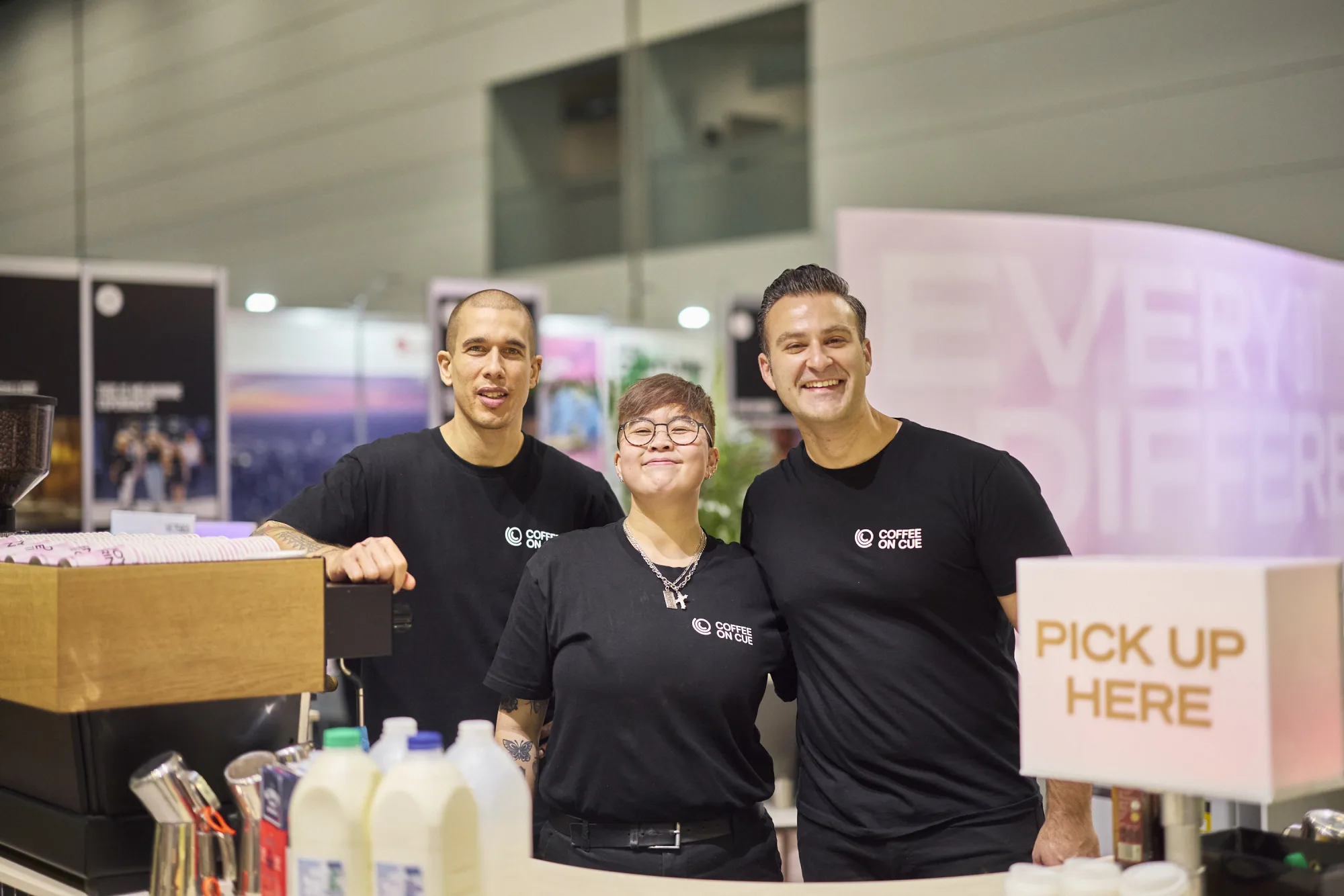
At our events every serve is a standard 6oz size, so the three drinks are told apart by texture alone. That is the clearest way to taste the difference, if you ever want to try them side by side: same cup, same shot, and only the foam changes.
The Australian family of milk coffees
The flat white is the drink most often linked with Australian café culture. Tourism Australia calls it the classic Aussie coffee creation. Around it sits a wider family that confuses visitors:
- Piccolo. A ristretto shot topped with latte-style milk in a small glass. Strong, short and still smooth.
- Magic. A Melbourne order: a double ristretto with flat white milk in a smaller cup. Sweeter and more intense than a flat white.
- Macchiato. An espresso "stained" with a small dollop of foam, served short.
All of them are on the menus we run in workplaces, because the order a person makes every morning is personal, and we would rather pour exactly that than ask them to settle. Our guide to barista lingo covers the rest of the café vocabulary, from "extra hot" to "half strength".
How to order the one you want
Since the names vary between cafés, the most reliable way to get what you like is to describe the texture rather than rely on the name:
- If you like coffee flavour up front and a smooth, thin top, order a flat white.
- If you want something gentler and creamier, order a latte.
- If you like a light, foamy drink, order a cappuccino, and say "no chocolate" if you prefer it plain.
- If the drink tastes too strong or too weak, change the shot, not the milk: ask for an extra shot, or for half strength.
Alternative milks follow the same rules. Oat, soy and almond each stretch a little differently from dairy, so the barista adjusts, but you can order any of the three drinks with any milk.
How we see it
The usual advice treats these three as recipes to memorise, with exact volumes and foam depths. We think that misses what guests actually care about. Nobody at the bar is measuring the foam. They are noticing whether the drink tastes the way it did yesterday, and whether the barista remembered how they like it.
What our crews see in offices is that people rarely switch drinks. The flat white drinker orders a flat white every morning for years, and the person who asks for an extra-hot oat latte means exactly that. So the skill that matters is consistency: the same texture, at the same temperature, every time, in every milk. A cappuccino with a beautiful dome on Monday and a flat one on Tuesday is a worse result than a plain cappuccino done the same way every day.
That is also why we do not think this is a question about machines. A good espresso machine holds pressure and temperature. It cannot tell a flat white from a latte by feel. The barista does that, by ear and by hand, over and over through a morning. When we set up a coffee bar in a workplace, that person behind the counter is the service. If you are weighing up what a workplace barista service looks like for your team, the drinks they already order every morning are a good place to start.