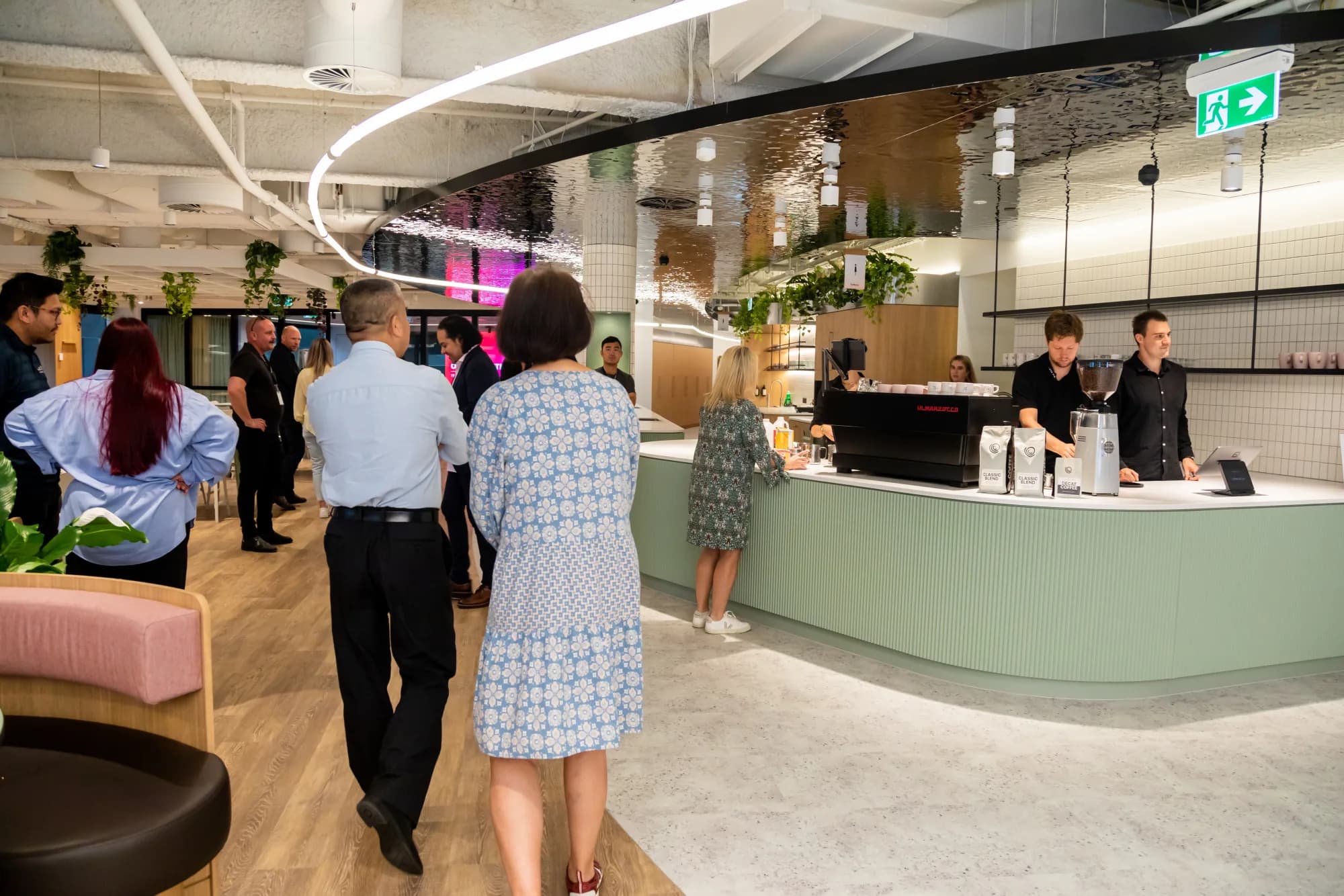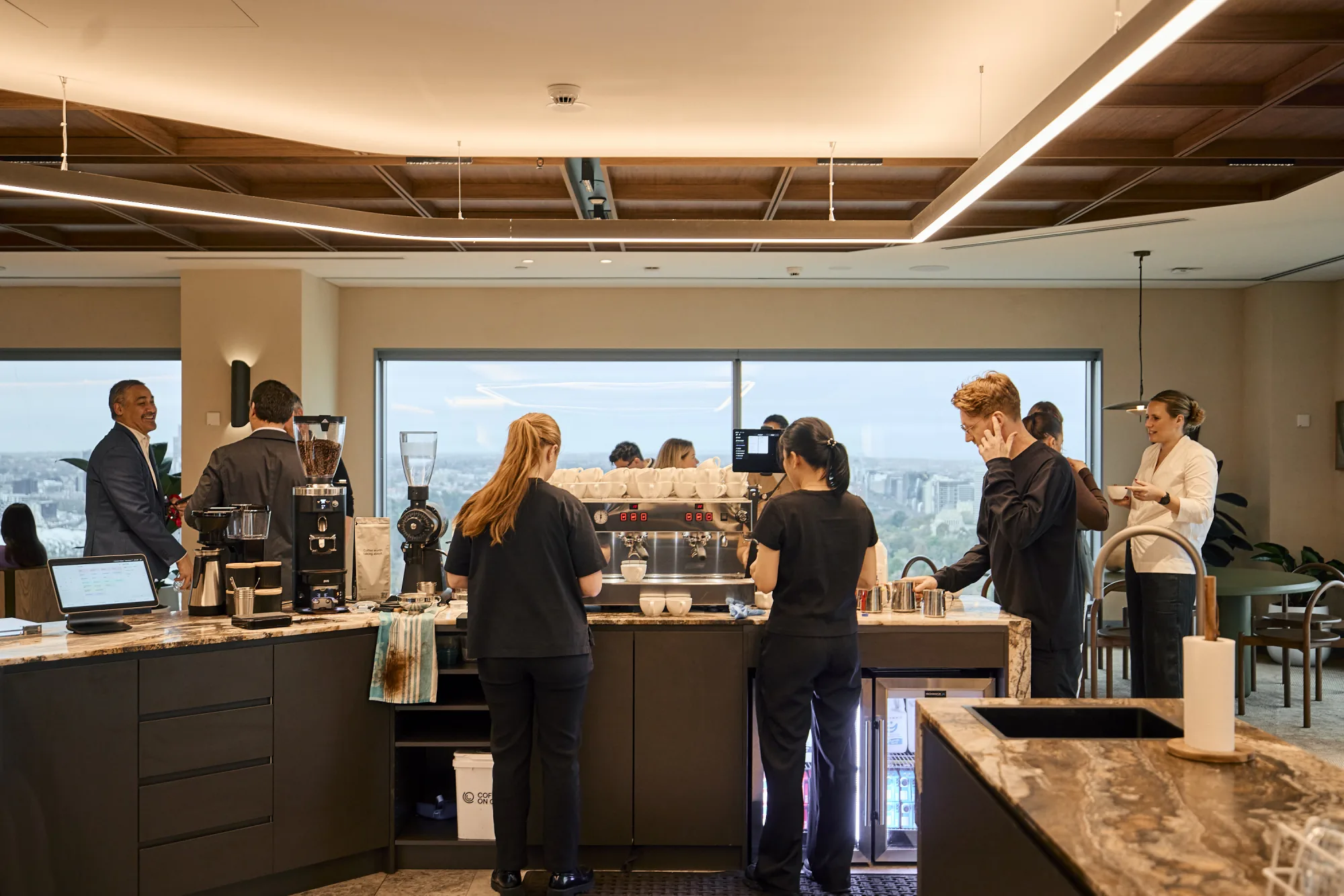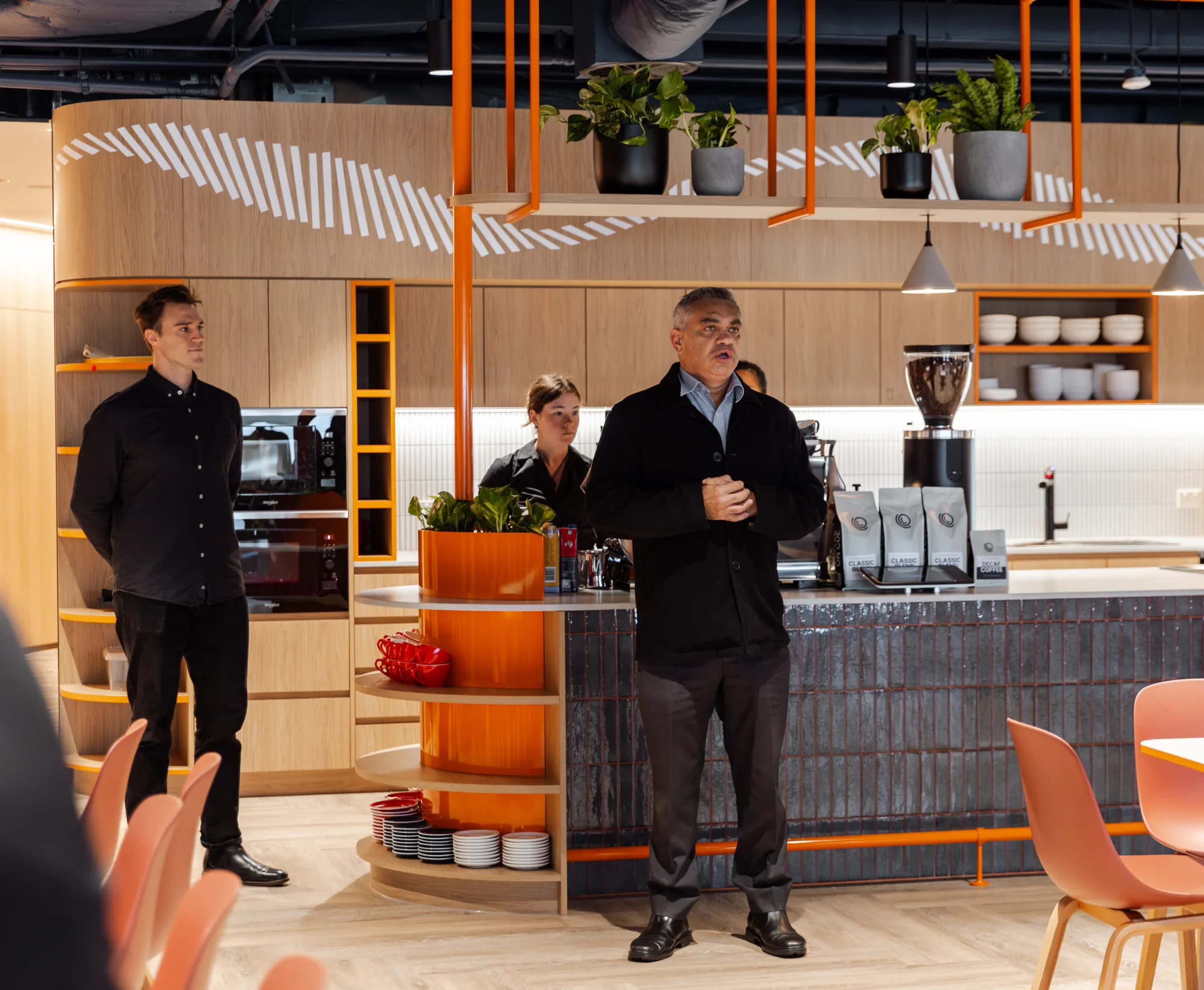
Coffee in the office has stopped being a nice-to-have line item and become something teams actively plan around. That shift changes what "the coffee machine" needs to do. It is no longer about keeping a jar of instant topped up. It is about handling a genuine rush hour without the queue becoming the story of the morning.
Here is what actually separates the machines worth considering, and the question that matters more than any spec sheet: who is running it day to day.
What actually drives office coffee demand
Hybrid work concentrates attendance into fewer, busier days. Most offices now see a real peak, usually the mid-morning stretch, where a large share of the floor wants a coffee inside the same 20 minutes. A machine that copes fine on a quiet Friday can fall over completely on a packed Tuesday.
That is the number worth planning around: not average daily cups, but peak throughput at the busiest ten minutes of the day.
What to look for in a commercial machine
Four things separate a machine that holds up under real office volume from one that only looks good in a showroom.
- Throughput. Can it keep pace through a genuine rush without the quality dropping off on cup 40?
- Consistency technology. Extraction that holds steady as ambient temperature and humidity shift through the day matters more indoors than it sounds.
- Remote monitoring. A machine that flags its own maintenance needs before it breaks down avoids the Monday morning "out of order" sign entirely.
- Energy efficiency. Programmable standby modes matter both for the power bill and for a genuine sustainability commitment, not just the appearance of one.
Why the machine is only half the answer
A serious commercial machine is a meaningful investment, and even the best one still needs the same things every day: fresh beans, a dialled-in grind, clean group heads, and someone who actually knows how to run it. Left unmanaged, a great machine drifts out of adjustment within weeks and the coffee quietly gets worse without anyone deciding that should happen.
That is the gap a managed service closes. Rather than an office owning equipment, maintenance schedules and training internally, the machine, the beans and a dedicated barista arrive as one service, with someone accountable for how the coffee actually tastes on a Tuesday at 9:15, not just on installation day.
Getting the placement and the team right
Two decisions matter almost as much as the machine itself.
Location. Put the bar somewhere people already pass, near the main thoroughfare or close to where meetings break, not tucked into a corner nobody walks past on their way to anything else.
People. A machine is only as good as whoever is running it. Train whoever operates it properly, and if you are running it in-house, put someone on basic troubleshooting so small issues do not become service calls.
The best office coffee setups we see are not the ones with the most expensive machine. They are the ones where someone is genuinely accountable for how the coffee tastes every single day.
Where this leaves you
If you are weighing up buying a machine outright versus bringing in a managed service, the honest comparison is not machine spec against machine spec. It is: who is responsible for the coffee being good in six months, not just on day one. That is the model we build every workplace service around. You can read how the different service structures work on our workplace coffee page.