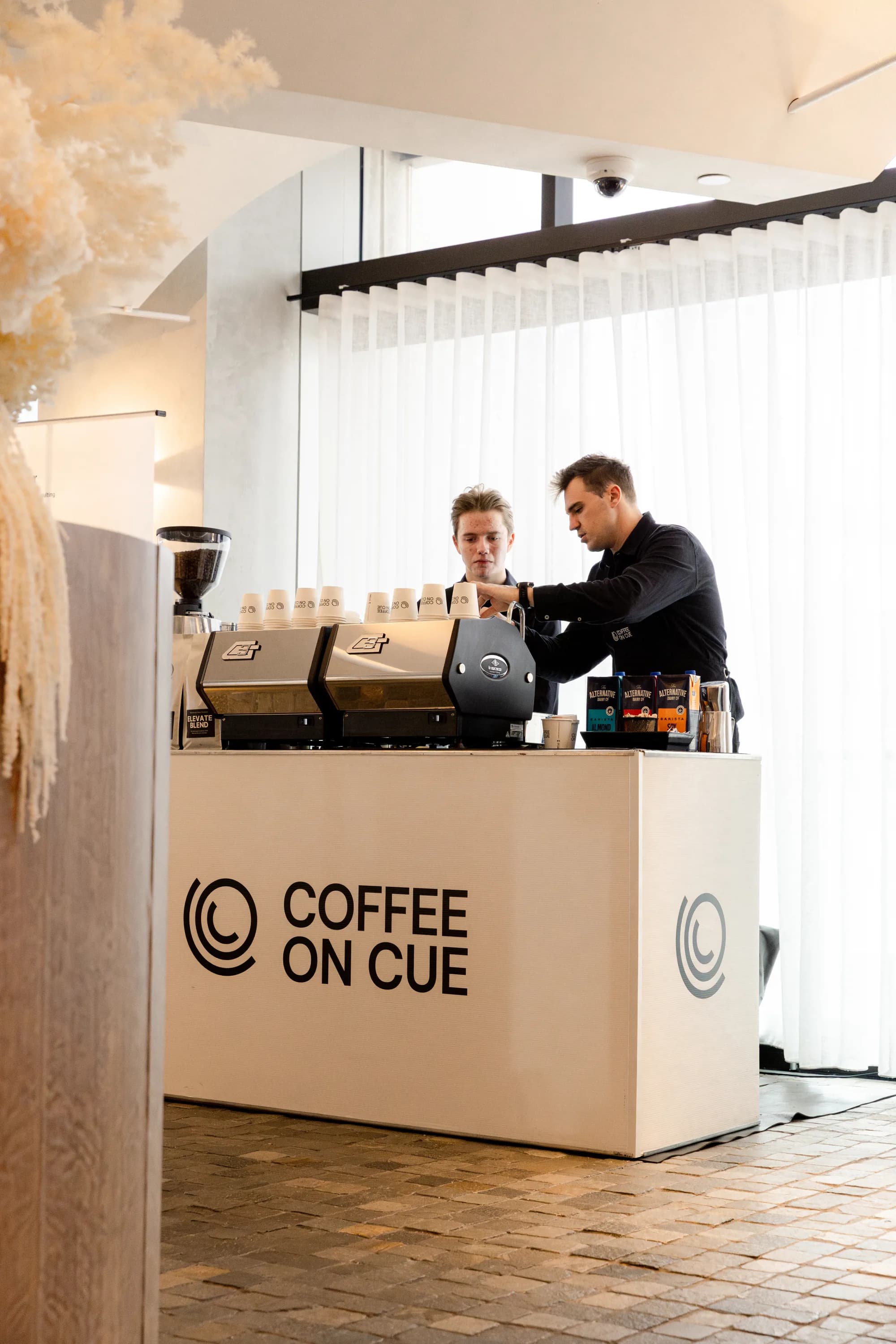
Start with one barista, and add a second only for your busiest hour. One barista pours up to 80 coffees an hour, and two working the same bar pour up to 160. So the number depends less on how many people work in your office and more on how many of them want a coffee in the same hour, usually the first one of the morning, on the days your floor is full.
Why headcount is the wrong starting number
Headcount tells you how many people could want a coffee. It does not tell you how many will want one at once, and the queue is decided by the second number.
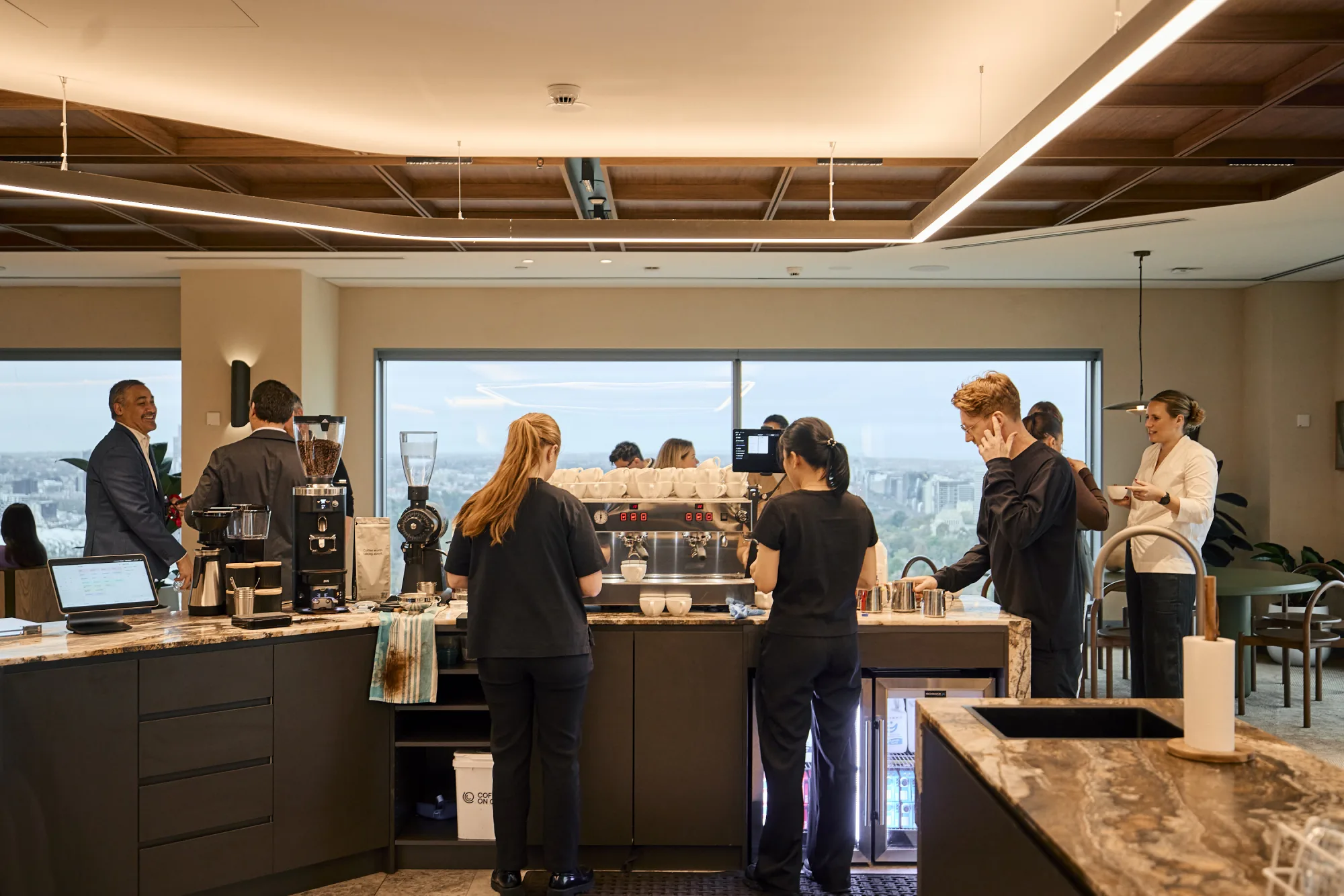
Take the Toyota Finance bar at 225 George Street in Sydney. The office has 308 seats, and the bar serves 170 coffees or more on a regular day. Spread across a day, that is a comfortable pace. The pressure comes when a large share of those orders lands in the hour after people arrive, which is how many offices drink their coffee. You can read how the bar was set up in the Toyota Finance case study.
Three things decide how sharp your peak is:
- Arrival pattern. An office where everyone lands by half past eight has a steeper morning than one with staggered starts.
- Attendance by day. Hybrid weeks are uneven, because the most common arrangement puts people onsite for part of the week, not all of it. The days your floor is full can look nothing like the quiet ones, and Toyota Finance now runs at 100% desk capacity on Tuesdays and Thursdays.
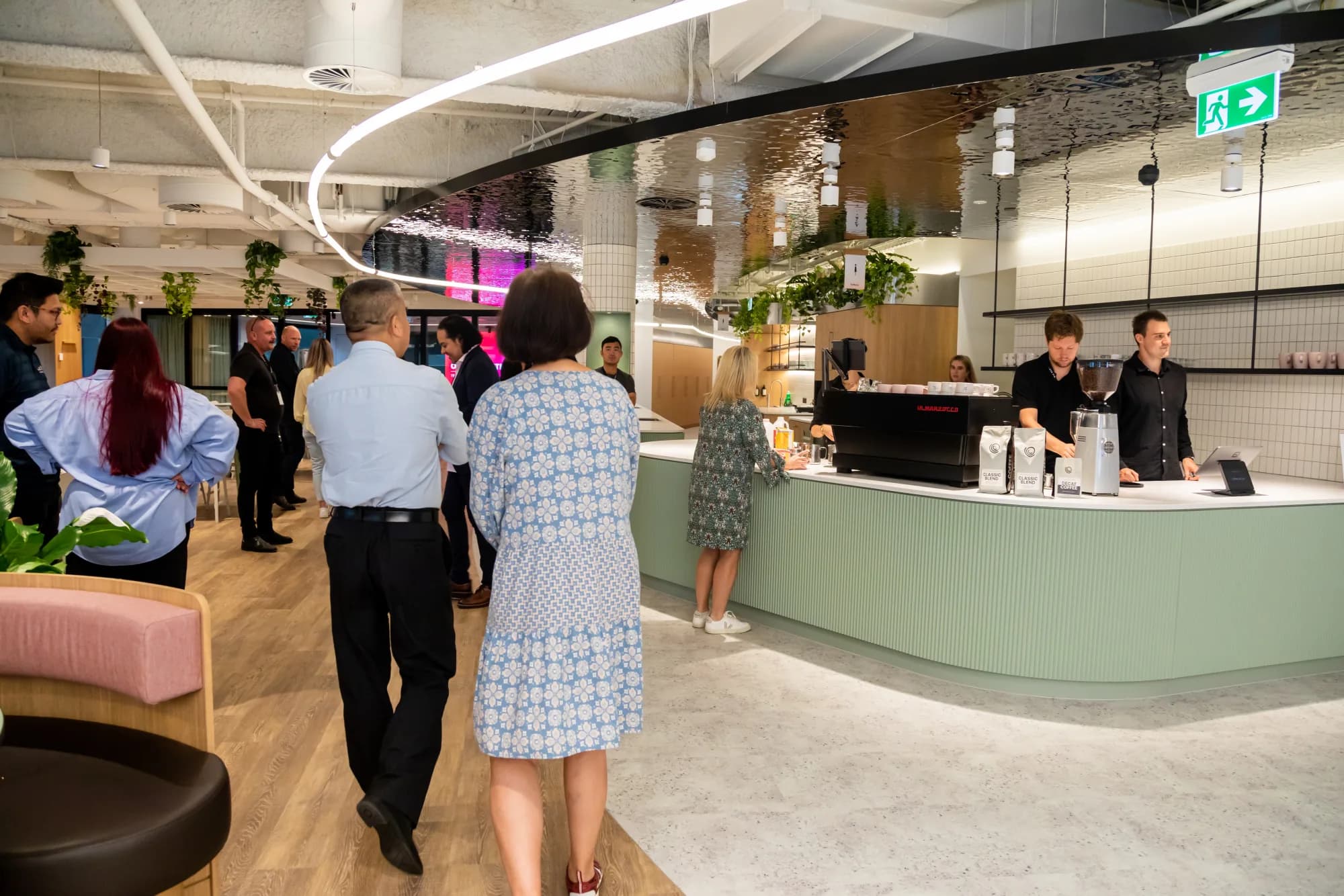
- Layout. A bar on the main path between the lifts and the desks gets a morning rush. A bar tucked into a far corner spreads its orders out, and gets fewer of them.
A simple way to size it
Work from your busiest hour, not from your total.
- Estimate how many people are in on your fullest day.
- Estimate how many of them want a coffee in the first hour after arrival.
- If that number sits comfortably under 80, one barista keeps up. If it pushes past that, plan a second barista for that window, which takes the same bar to 160 an hour.
The afternoon matters too. Many offices have a second, smaller peak after lunch. It rarely needs extra hands, but it is worth checking that your service hours cover it, because a bar that closes at two misses it entirely.
If you are not sure what your peak looks like, you do not need to guess. Our dashboard tracks cups served, peak usage and queue times from the first week, so a pilot gives you the real shape of your day. We cover the service, the pilot and the reporting on the in-house barista page.
When one barista is not enough
The signs are easy to spot once you know where to look:
- People walk up, see the line and walk back to their desks.
- Meetings start late because the coffee run took too long.
- The queue spills into a walkway or a breakout space.
Before you add a second barista, check the workflow behind the counter. A cramped bar, a slow ordering step or milk stored in the wrong place can hold one barista well under their real pace. We wrote about this in your cafe queue problem isn't your baristas. Ordering ahead also helps: when people order from their desk and collect when it is ready, the peak flattens without another person behind the machine.
How we see it
We are wary of any rule that turns headcount straight into a barista count. It sounds precise, and it usually puts too many people behind the bar on a quiet Friday and too few on a full Tuesday. Our starting point is one barista as the base, with a second added for the hours and days that need one.
We would rather start lean and add than start heavy and cut. A pilot with one barista shows within a few weeks whether the morning queue is a real problem or a first-week novelty. If the data shows people walking away from the line, we add a second barista for that window. If it does not, your investment goes into the coffee and the experience instead of idle hours behind the machine.
We also think the barista count is the wrong thing to obsess over. What your team remembers is whether the coffee is good and whether the person making it knows their name. Two rushed baristas serve that worse than one barista with a bar laid out properly and an ordering flow that spreads the morning out. Get the layout and the hours right first, then size the crew to what your floor actually does.
If you would like help sizing it for your office, see our workplace coffee service or the questions we hear most on the FAQ page.