Most people asking how an office barista service works are really asking two things. What do we have to do, and what happens if it does not take? The short answers are: not much, and you walk away with no fees. The longer answer is a sequence of four steps, a pilot, and then a service that keeps getting adjusted to how your floor actually behaves.
Here is how it runs with us, from the first call through to the months after the pilot.
Step one: a conversation about your floor
It starts with you telling us about your office, your team and how the floor already runs. When people arrive, where they gather, how many days a week the building is busy. We listen first, then map the options that suit your space.
This is also where we confirm fit. It is worth a conversation if you want to lift attendance or culture and you have kitchen or breakout space. Opening a new office or renovating is the ideal moment, because the bar can be designed in rather than squeezed in later.
There is no obligation at this stage. The aim is a clear picture of what a barista in your office could look like, and whether it makes sense for you.
Step two: a setup designed around you
Next we tailor the service model to your floor: the machine, the menu and the commercial model. That last part matters. Some workplaces cover every cup, some ask their people to pay a small subsidised amount, and some agree a minimum revenue per barista hour and only cover a shortfall. We build it into a proposal your stakeholders can sign off, which usually means some mix of Workplace Experience or Facilities, HR, Finance and Operations.
Before any contract, our install team walks the site. The bar needs power to spec, water and drainage, storage, refrigeration and dishwashing, plus secure access for our crew and delivery access for milk and sundries. If your site needs electrical or plumbing work, we can recommend trades.
Step three: install, then the pilot
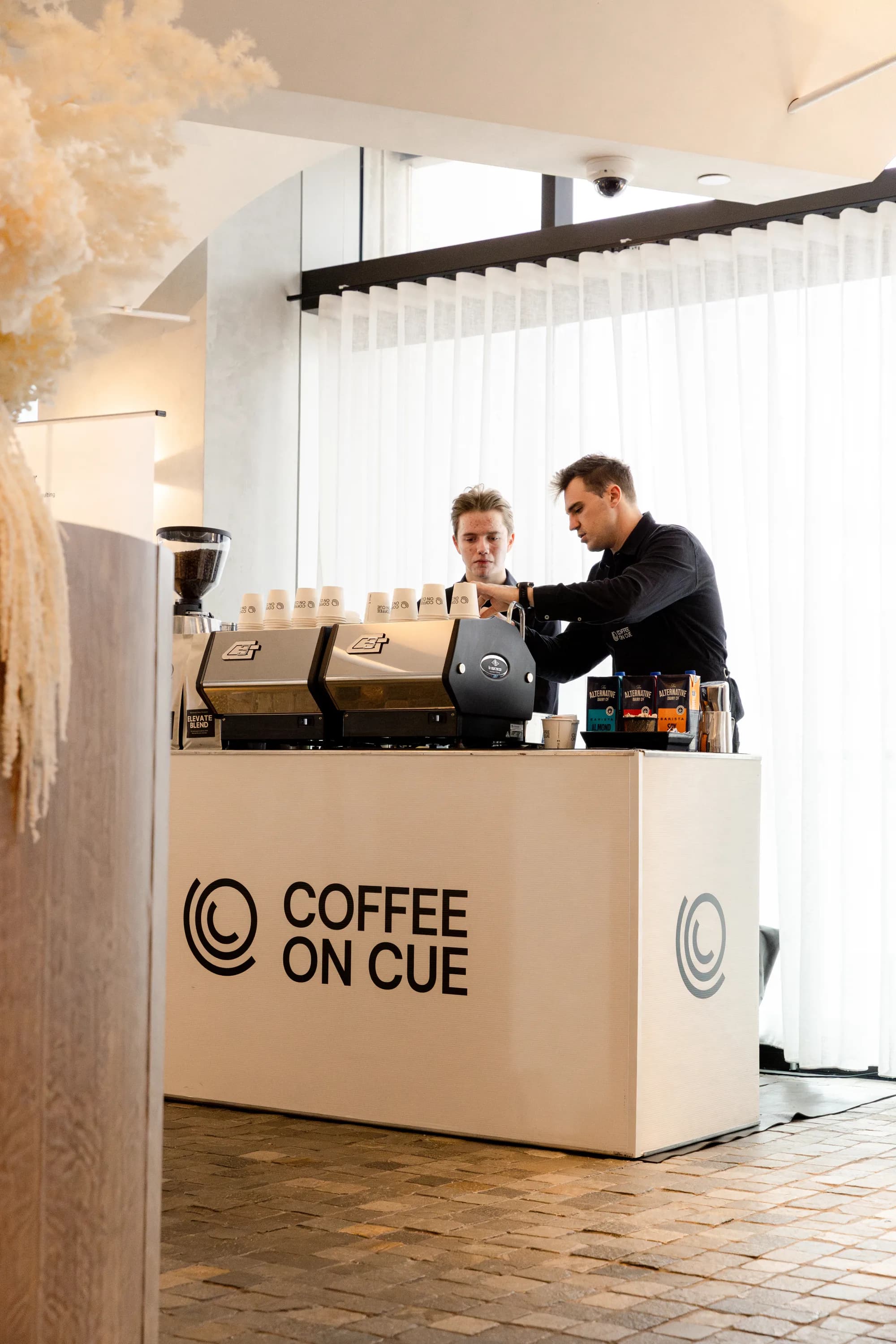
There are two ways in. A cart-based trial setup is a self-contained mobile bar with no construction required, live one to two weeks from approval. It is the way most workplace bars begin. A fully integrated custom bar is designed with your team and builder and takes four to six weeks from approval to activation.
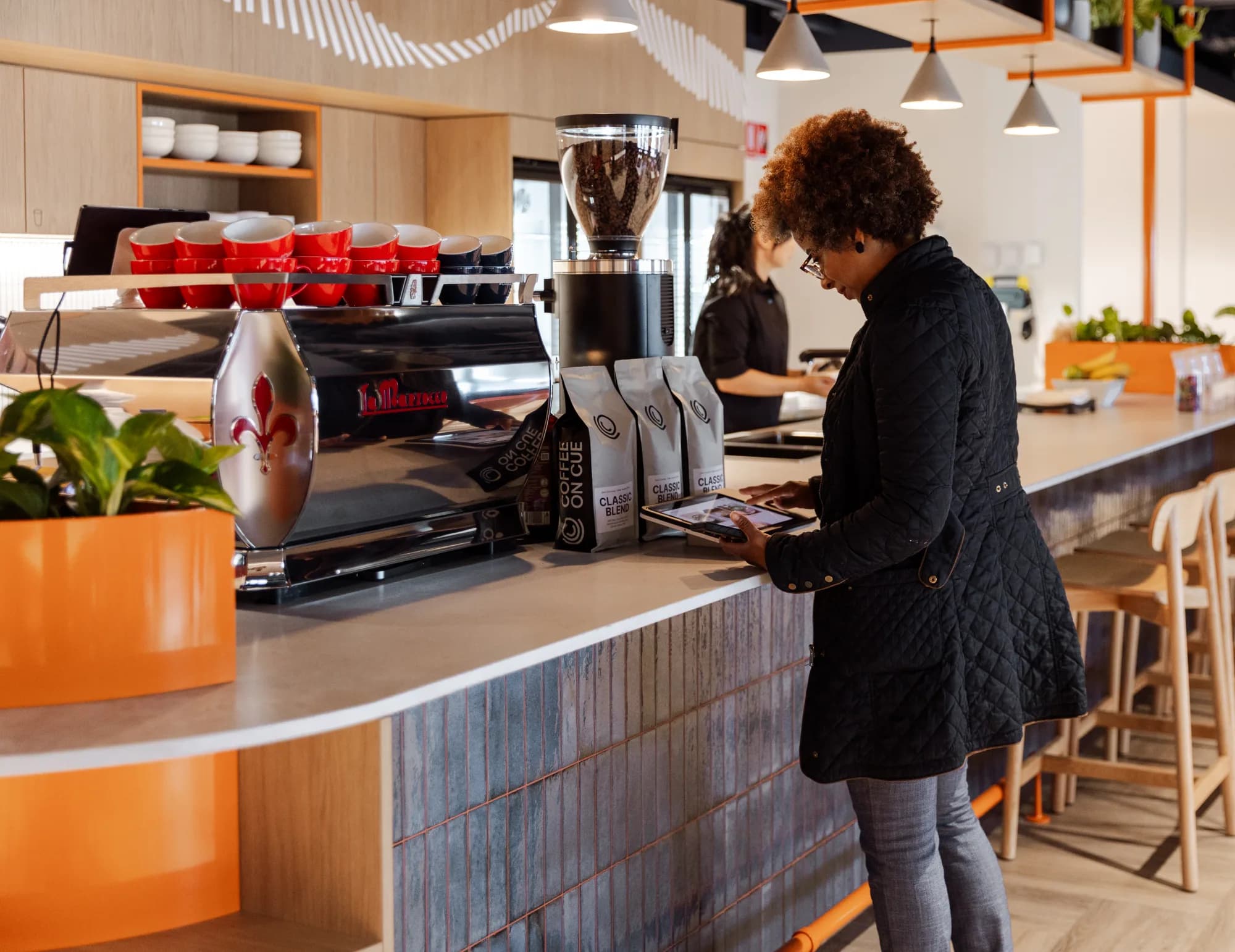
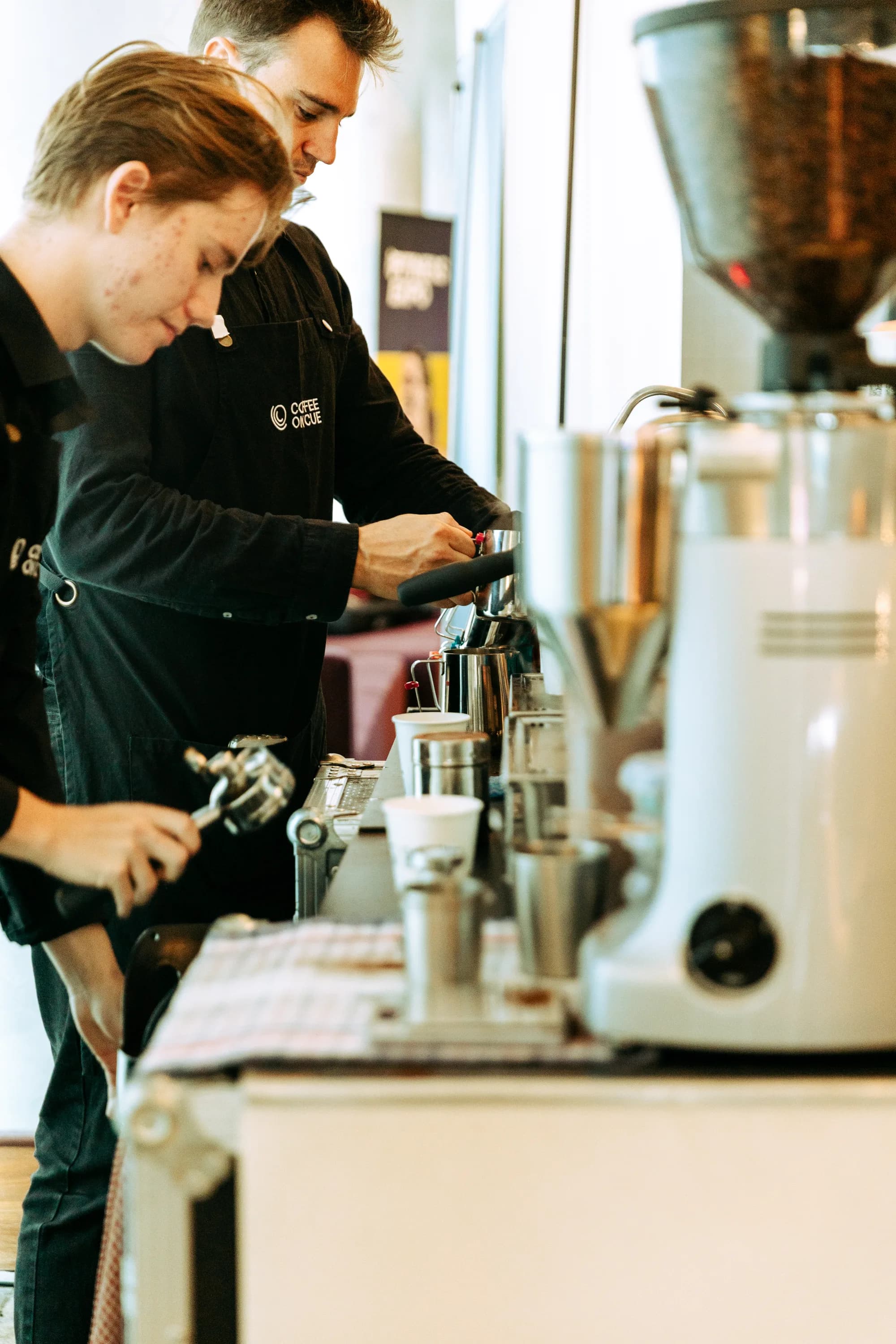
Either way, your barista learns the space, the regulars and the rhythm of the floor before the first cup goes out. Then the pilot runs for four to ten weeks, with no lock-in. It is the full service, not a sample: a dedicated barista, a La Marzocco machine, our house blend and rotating single origins, alternative milks, and reporting from day one through our Square partnership, so you can see cups, peak periods and popular drinks as adoption builds.
If your people love it, we continue. If not, there are no setup fees and no cancellation fees. That is the point of a pilot: you decide on evidence from your own floor, not on a proposal.
After the pilot: refine, then keep refining
Most pilots move into an ongoing agreement, typically 12 to 24 months. From here, the fourth step takes over: we gather feedback on site and tune the menu and service so the bar keeps earning its place.
By month six you have several monthly reports behind you, and the service usually looks different from week one. Barista hours sit where your peaks actually are, not where anyone guessed they would be. If usage runs consistently above your package, we flag it in the monthly report and suggest scaling up. If attendance patterns shift, hours and headcount shift with them. The crew stays the same, which is what lets them learn your regulars by name, and when someone is away we arrange cover.
Behind the counter, nothing lands on your desk. Servicing, calibration and restocking run on our schedule, and one invoice arrives at the end of each month. Queues are usually the first thing a growing bar has to solve, and it is rarely a staffing question; we wrote about why the workflow matters more than headcount.
What that looks like in practice
Toyota Finance's Sydney team runs a fully managed bar with a flat one-dollar menu. Toyota Finance reports Monday attendance rose from 80 to 180-plus once the bar went in, and the bar serves 170-plus coffees on a regular day. That is their own data, observed alongside the service, and every floor is different.
What stays constant is the shape of it: a conversation, a tailored setup, a pilot you can walk away from, and a crew who keep adjusting once it is running. If you want to see how an in-house barista cafe would sit on your floor in Melbourne or Sydney, the first step is that conversation.