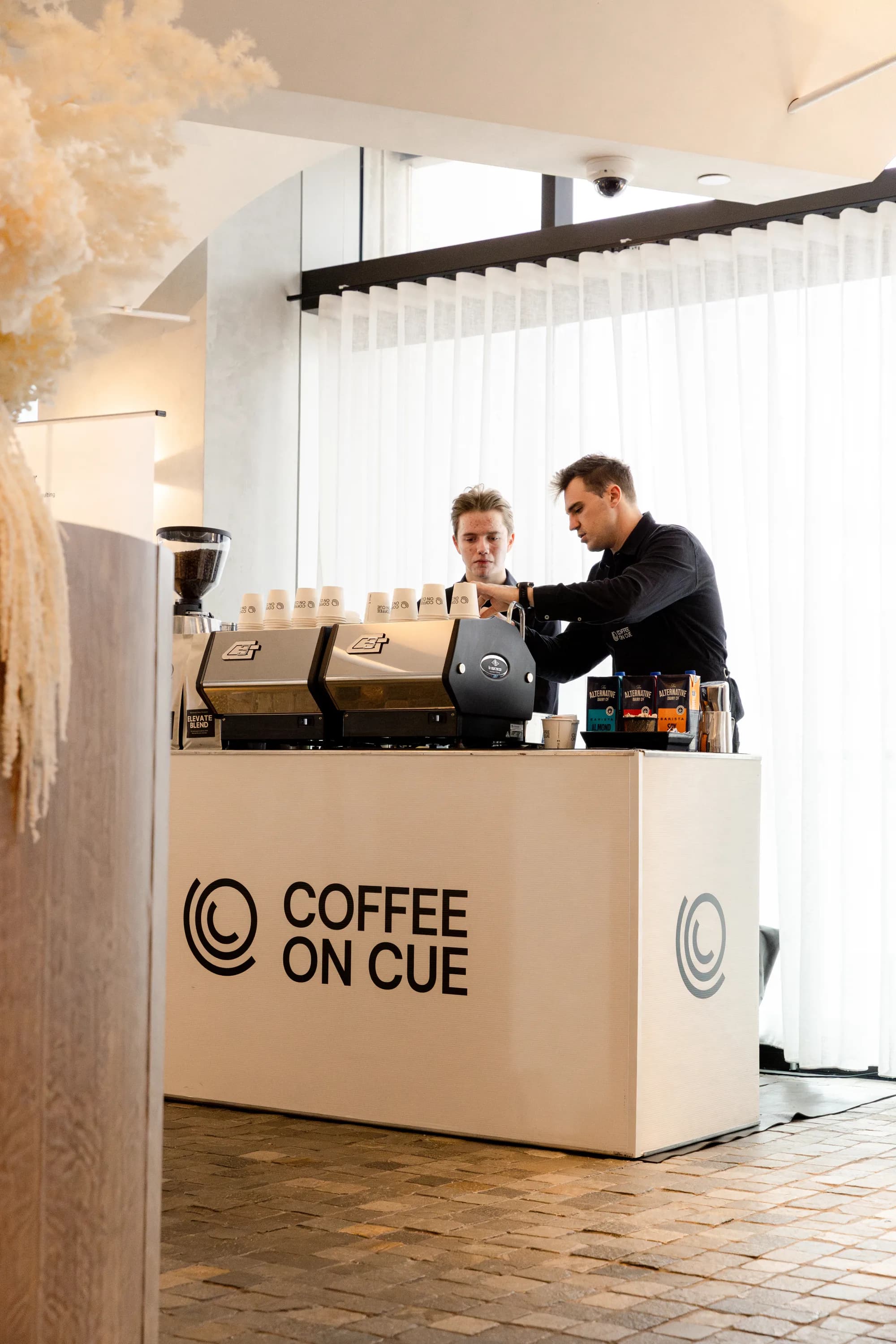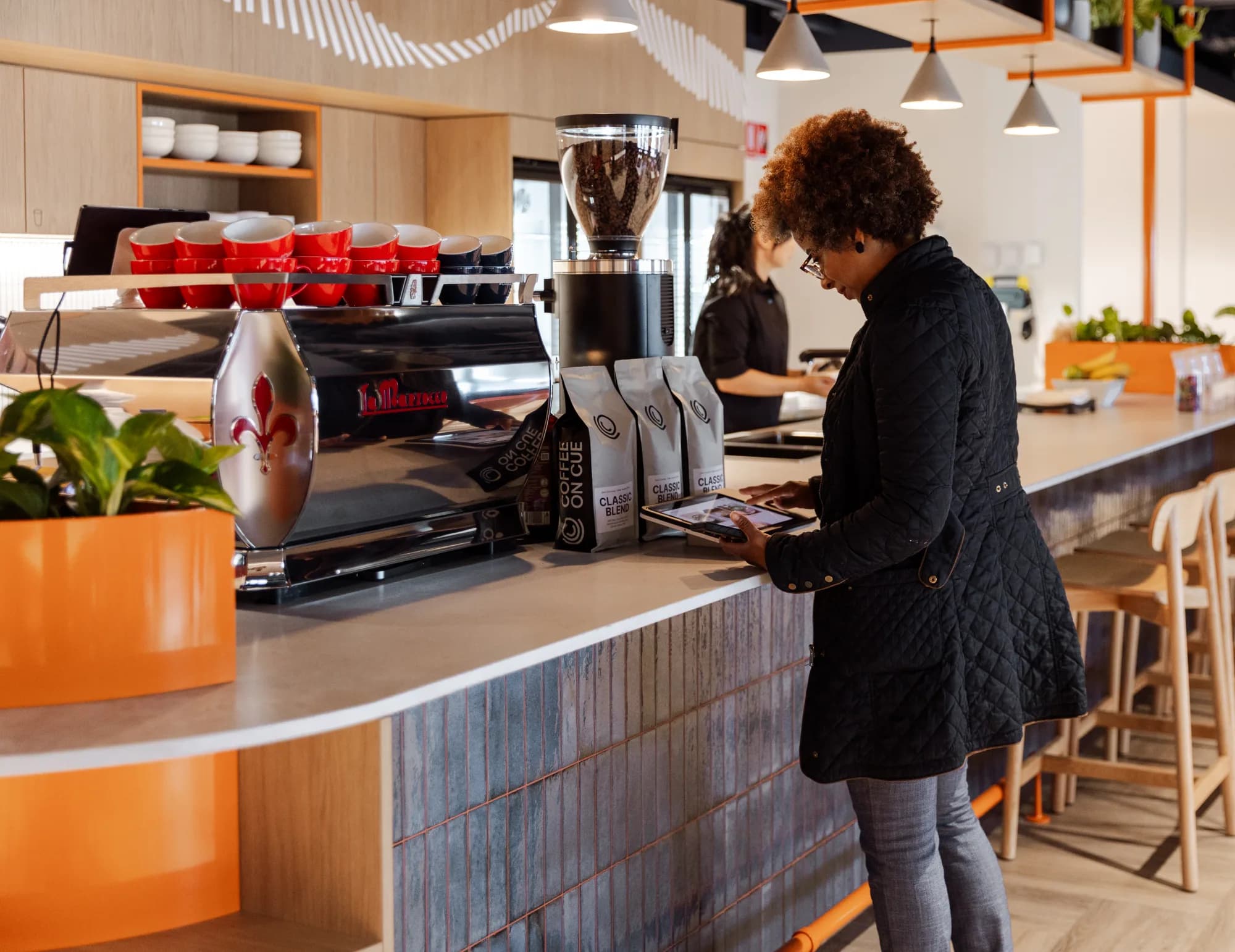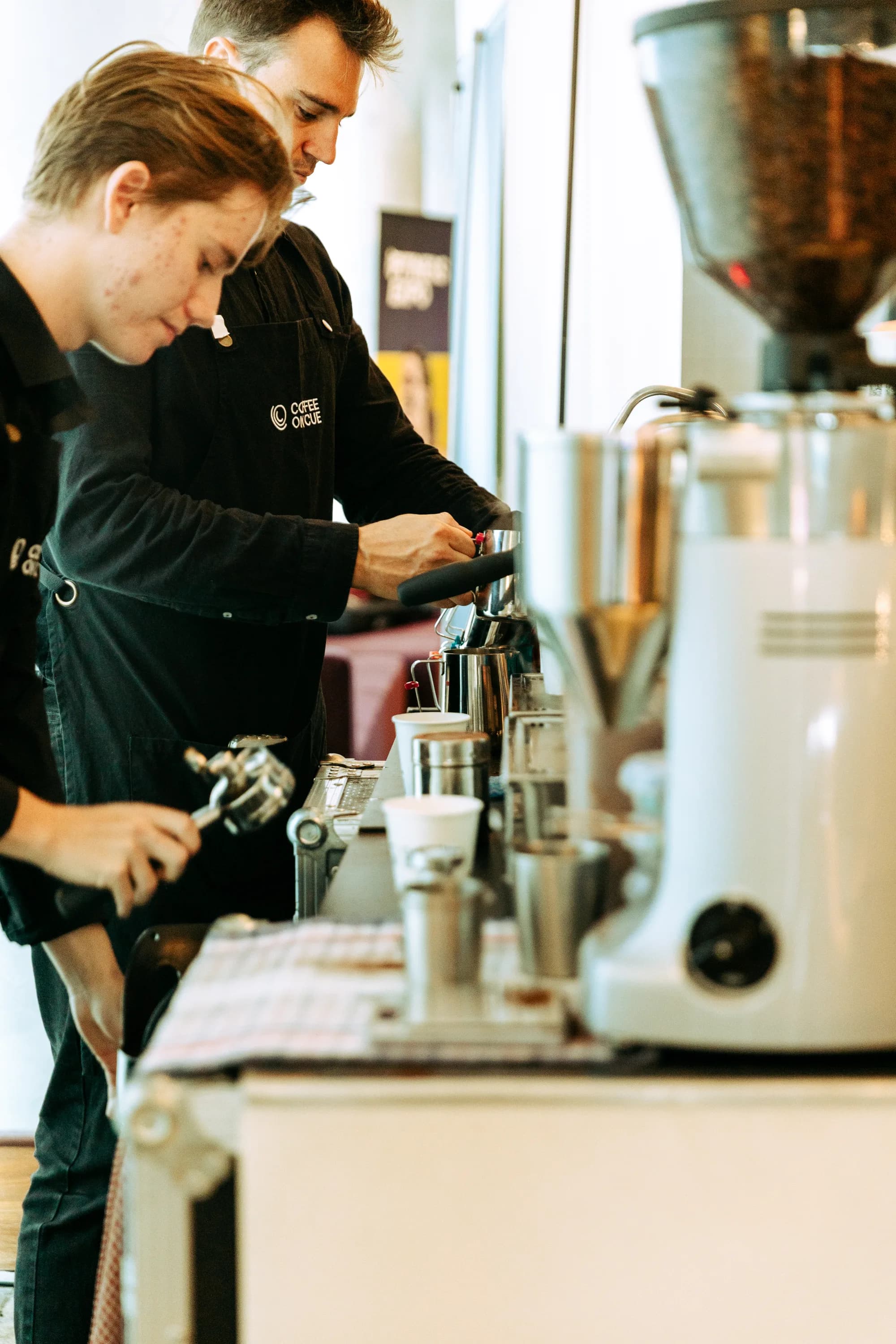
We should say this up front: we do not sell or lease office coffee machines. Our service is a barista in your office, run by our crew, and nothing else. If you want a push-button bean-to-cup machine, we are not the right fit, and a good machine will serve you well.
Treat this as a way to work out which of the two your office actually needs. They are built for different jobs.
What a machine does well
A self-serve machine is consistent. The cup at 3pm tastes like the cup at 8am, and there is no roster behind it. It needs no crew, no breakout space designed around it, and very little thought once it is installed.
For a lot of workplaces that is exactly the brief. If your team mainly needs coffee to be available between meetings, and the office is not something you are trying to make people choose, a machine does that job without fuss. Pod machines in particular are simple to run, though at three to five dollars a cup with single-use pods they are neither the cheapest nor the lightest option.
The honest limit is that a machine is a machine, not a moment. It dispenses a cup. Nobody commutes for it, and it does not give colleagues from different teams a reason to be in the same place at the same time.
What a barista changes
A staffed bar does something a machine cannot: it creates a gathering point. The queue becomes the conversation, and colleagues who rarely cross paths end up talking in the line. A barista who knows the regulars by name is the part people remember.
That is where the outcomes our clients report come from. Toyota Finance reports Monday attendance rose from 80 to 180-plus once the bar went in, and 60% of its people report more interaction outside their own team. JLL reports a 500 to 600% increase in personal connections across departments at 101 Collins Street. Those are each client's own figures, observed alongside the service rather than caused by it, and a machine in the corner is not designed to produce them.
You also get what the menu needs a person for: latte art, alternative milks steamed properly, a menu that moves with the season, and a bar that can serve a team day or a launch as well as a Tuesday.
Five questions that decide it
Do you want coffee available, or a reason to come in? If it is the first, a machine is enough. If attendance and culture are on your agenda, that is what a barista bar is for.
Do you have kitchen or breakout space? A bar needs space, power to spec, water and drainage. Without it, a machine is the practical answer.
Who manages it? A machine still needs someone to own the restocking, cleaning and repairs. A managed barista service puts all of that on us: servicing, calibration, restocking and cover when a barista is away.
What will it cost per cup? Closer than people expect. Subsidised barista coffee typically lands at one to four dollars a cup, and there is no capex because the equipment is ours.
Do you need to show it working? A machine tells you very little. A barista service with Square reporting shows cups, peak periods and popular drinks on a live dashboard, the kind of reporting that proves the investment to your board.
Which one fits your office
If the honest answer is that your team is small, busy at their desks, and mostly needs a decent coffee within reach, buy a good machine. We have written about what separates a good office coffee machine from a great one if you are weighing options.
If you want the office to be somewhere people choose, and you have the space for a bar, a barista is the stronger fit. You do not have to decide on paper, either. We run four to ten week pilots with no lock-in, starting with a cart-based bar that is live one to two weeks from approval, so your own team's usage answers the question. If a barista in your office in Melbourne or Sydney sounds like the right direction, that pilot is the place to test it.