Start with what you want the coffee to do for your office, then choose the kind of service, and only then the company. Corporate coffee companies sell one of four things: a machine, a cafe tab, an event cart or an in-house barista. Once you know which fits your goal, judge each partner on six things: the crew, cover, quality at the peak, reporting, plain terms and a real trial.
The four kinds of corporate coffee solution
Most searches for corporate coffee solutions return a mix of very different services under one name. They solve different problems, so it helps to separate them before you compare prices.
- A machine in the kitchen. Pod or bean-to-cup, bought or leased. It is cheap to start and needs no one to run it. Pod coffee runs $3 to $5 a cup, the quality depends on whoever pressed the button, and it does little to draw anyone out of their desk.
- A tab or vouchers at a nearby cafe. Good coffee, but it costs more again and sends your people out of the building, one small group at a time.
- A coffee cart for an occasion. Right for a town hall, a launch or a client event. It is a one-day answer, so it suits the days you plan for, not the ordinary Tuesday. We run coffee cart hire for corporate events as its own service.
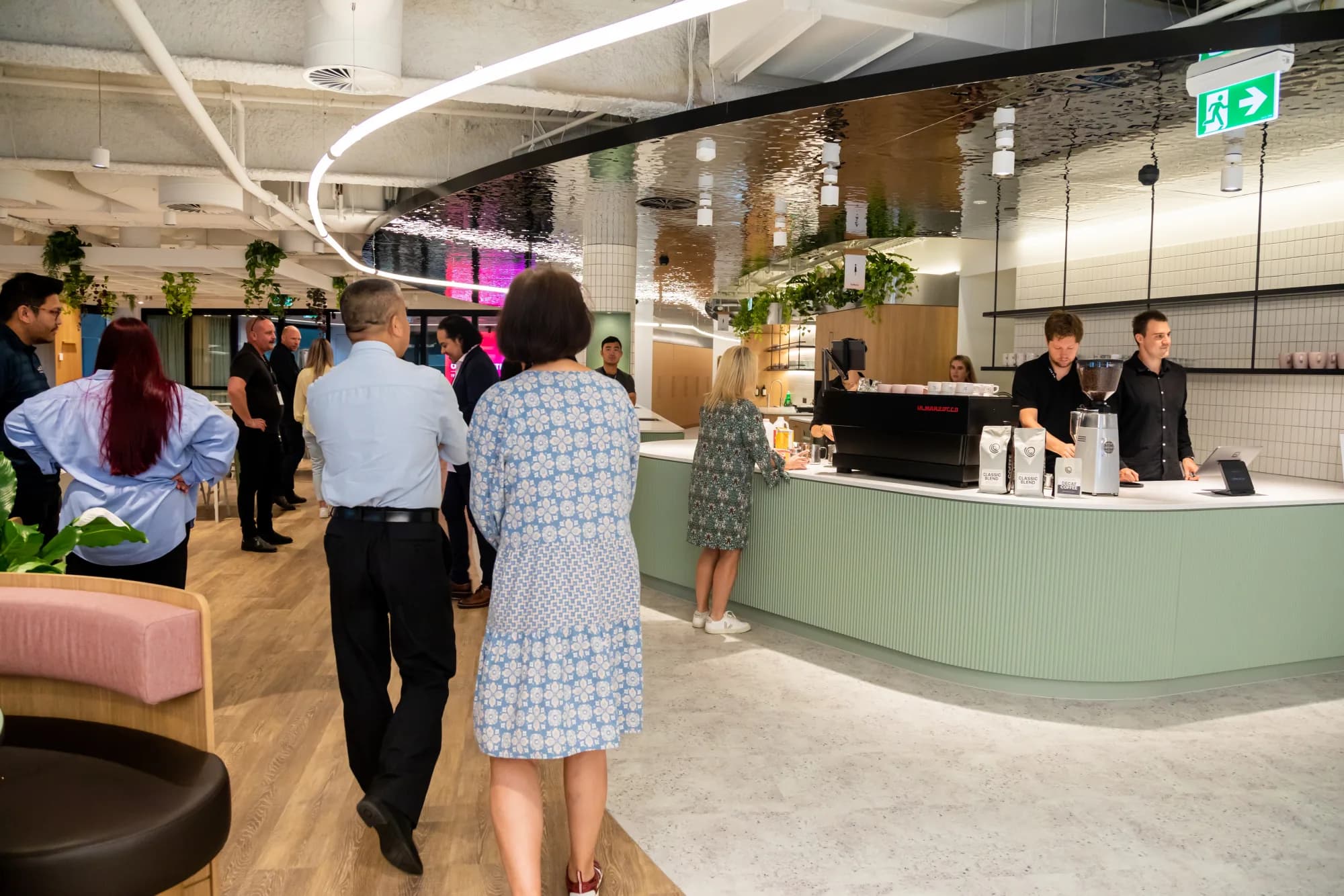
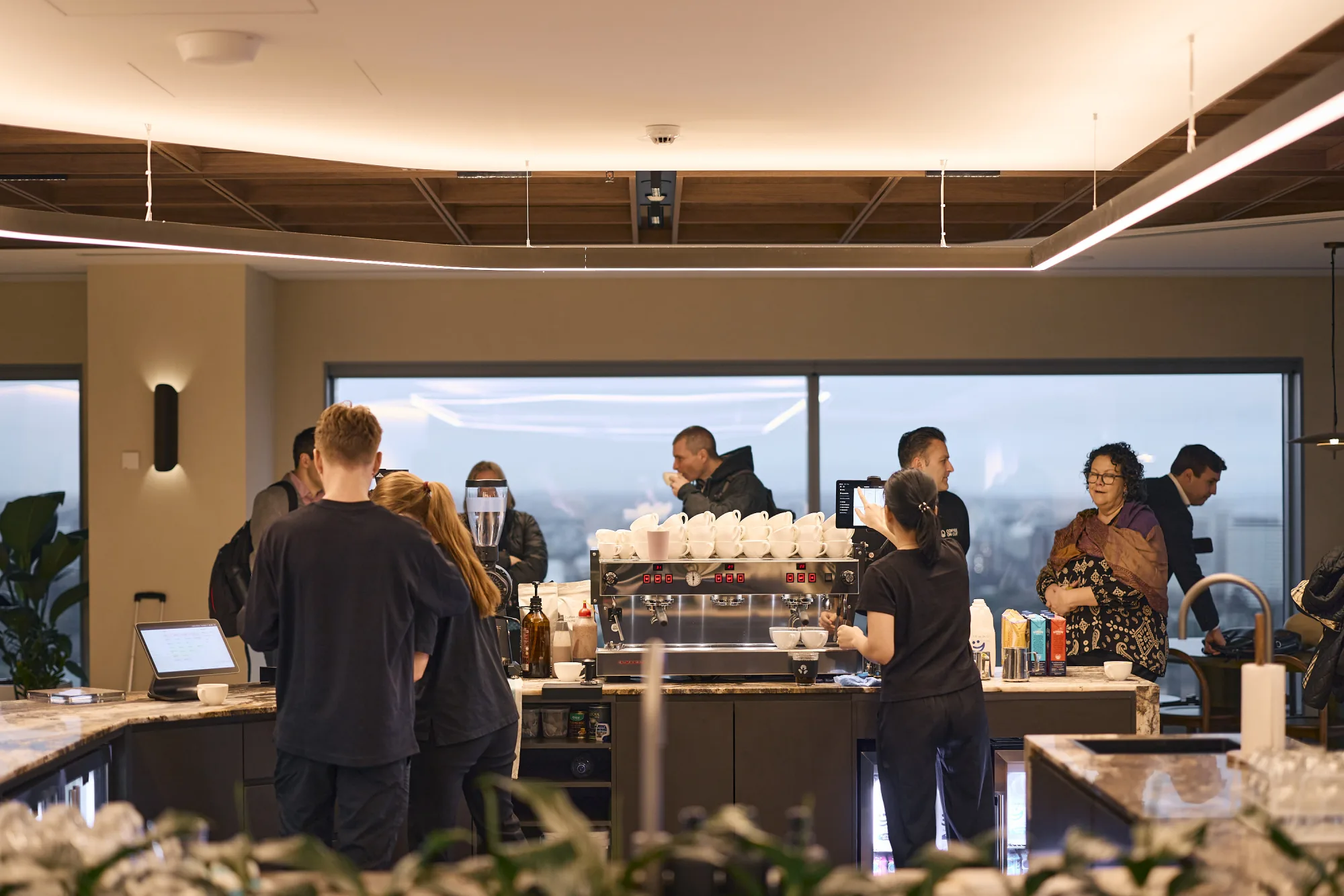
- An in-house barista. A trained barista runs a bar inside your office on the days you choose. Your people get cafe coffee without leaving, and the bar becomes the place they meet.
If the goal is simply caffeine, a machine will do. If the goal is a reason to gather on office days, or a place to host clients, the barista is the option built for it.
Start with the job the coffee has to do
The right partner depends on the problem you are solving. The four we hear most often from facilities and workplace teams:
- Office days that feel worth the trip. Hybrid weeks are now the norm, and the most common arrangement puts people onsite for part of the week. On those days you want people together, not scattered across three cafes down the street.
- Hosting clients. A lobby or floor bar that serves your guests well says something about your business before the meeting starts.
- Lost time on coffee runs. Every trip out of the building takes people away from their desks and from each other.
- A fit-out or move. Opening or renovating an office is the easiest moment to plan a bar, because power, water and space are being decided anyway.
Write your one or two goals down before you speak to anyone. They become the test for every proposal you read.
Six things to check in any corporate coffee partner
- Who makes the coffee. Ask whether the barista is the provider's own employee, trained and managed by them. Ours are, so leave, rosters and performance are our job rather than yours.
- What happens on a sick day. The answer should be specific. We keep a relief barista pool, so your bar is covered when someone is away.
- Quality at the busiest hour. One barista pours up to 80 coffees an hour and two pour up to 160. Ask how the provider will size the crew for your peak, not for your headcount.
- Reporting you can take to budget meetings. Our dashboard shows cups served, peak usage and popular drinks from the first week, with monthly reporting.
- Terms in plain English. The day rate, the cup price, the term and the notice period, written down before you sign.
- Insurance and compliance. We carry $20 million public liability, plus products liability, professional indemnity and workers compensation, with certificates on request.
We wrote up the full list, with our own answers, in questions to ask a corporate barista service.
What good looks like after a year
The best evidence is a client's own figures, not the provider's claims. At JLL's 101 Collins Street office in Melbourne, the bar we run served 140,807 cups across two years. Over the same period JLL measured voluntary office attendance up 18%, in its own data. We report that alongside the service, never as caused by it, and you can read the detail in the JLL 101 Collins case study.
Ask every provider on your shortlist for a site like yours, and for the client's measurement rather than a quote from their own marketing.
How we see it
We think the word that matters in this search is partner. Plenty of coffee companies drop off a machine and an invoice. A partner learns how your floor works, who arrives first, which days fill up and what your clients notice when they walk in, then shapes the service around it and changes it when your attendance changes.
That is why we lead with hospitality and use the numbers to prove it. The coffee has to be very good, and the barista has to know your regulars by name, because that is what turns a bench in the corner into the place people meet. The dashboard and the reporting are how you show the investment working at budget time, never the reason the bar exists.
We also think the honest comparison is with "good enough". Most offices already have coffee that nobody complains about. The question is whether it gives your people a reason to be in the room together. If it does not, an in-house barista service for your office is where we would start, with a pilot so your own data makes the case.