Yes, it can help, but as a reason to come in, not as a mandate. A staffed coffee bar gives your people a daily ritual and a place to meet colleagues they would not see at home. At the two workplaces where we have the clearest numbers, attendance rose alongside the service in the clients' own measurement. It works best when the office has other reasons to be there too.
What the numbers from our own sites show
Two of the bars we run have attendance figures the clients measured themselves. They are worth reading closely, because they show what coffee can sit alongside, not what it causes.
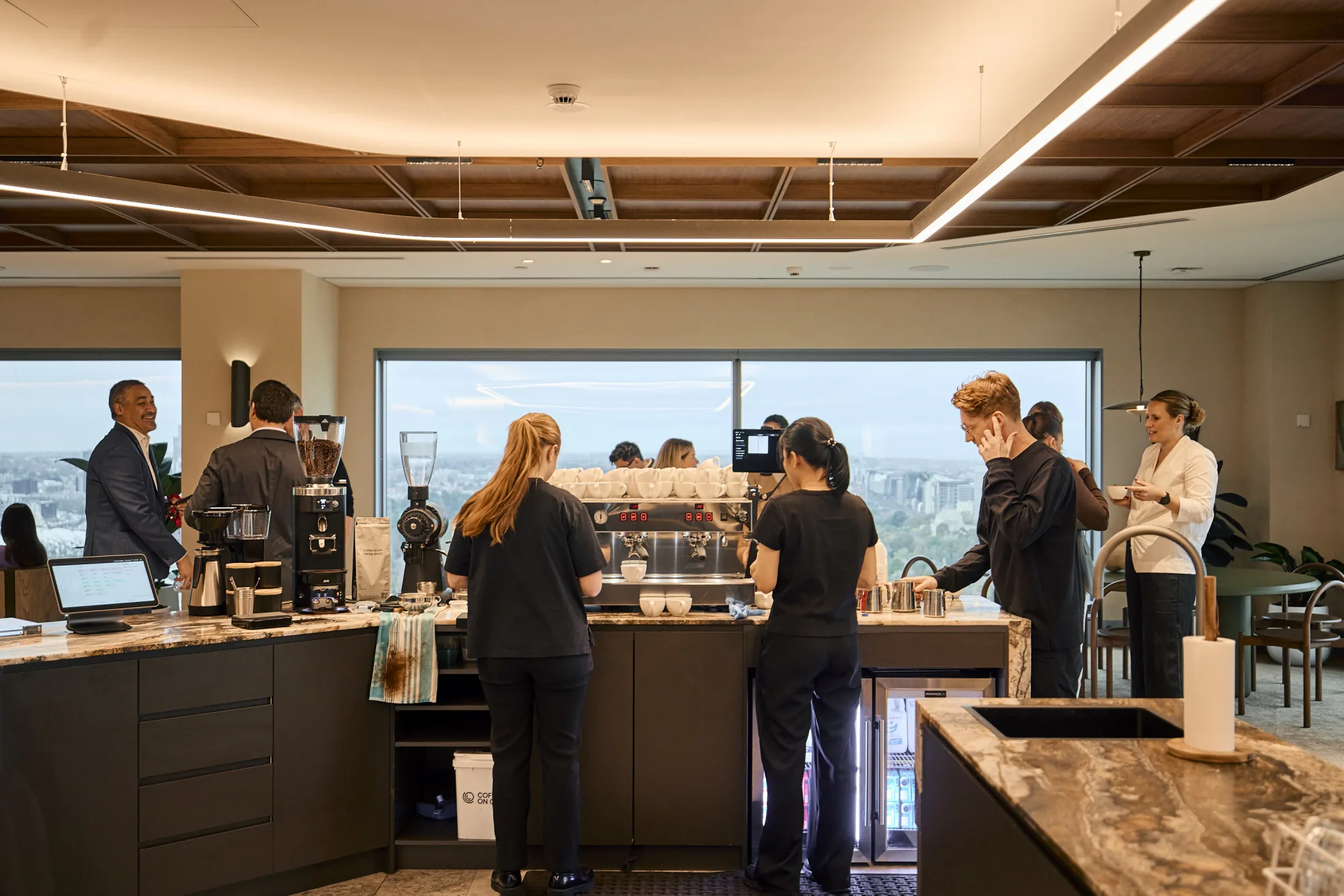
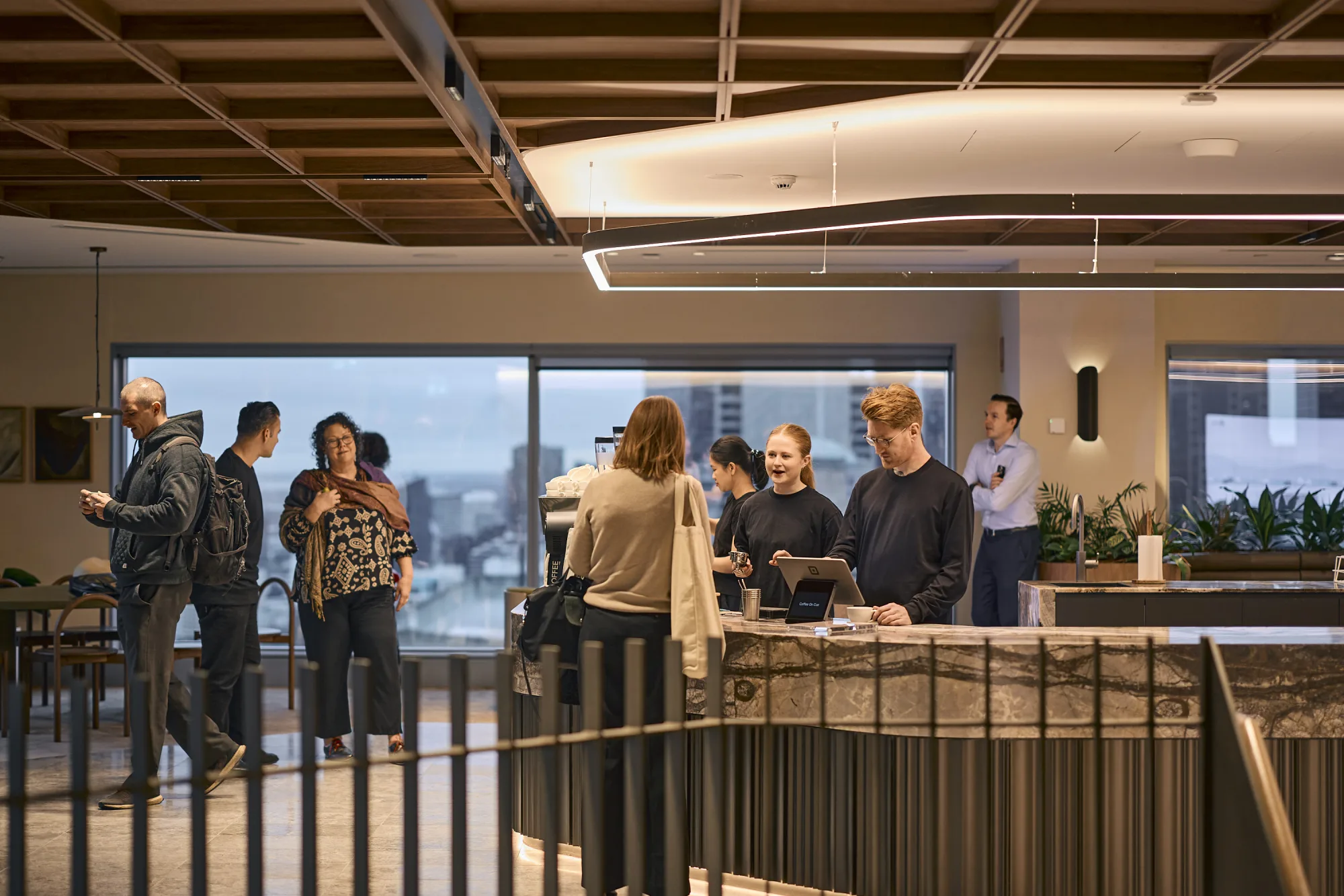
At JLL's Melbourne headquarters at 101 Collins Street, the team was spread across three floors and wanted a social anchor in one place. In JLL's own survey, average office days rose from 2.9 to 3.4 a week, an 18% lift with no mandate. The same team reports personal connections across departments are 5 to 6 times what they were before the bar opened, and more than 95% of people say the working environment improves their sense of wellbeing.
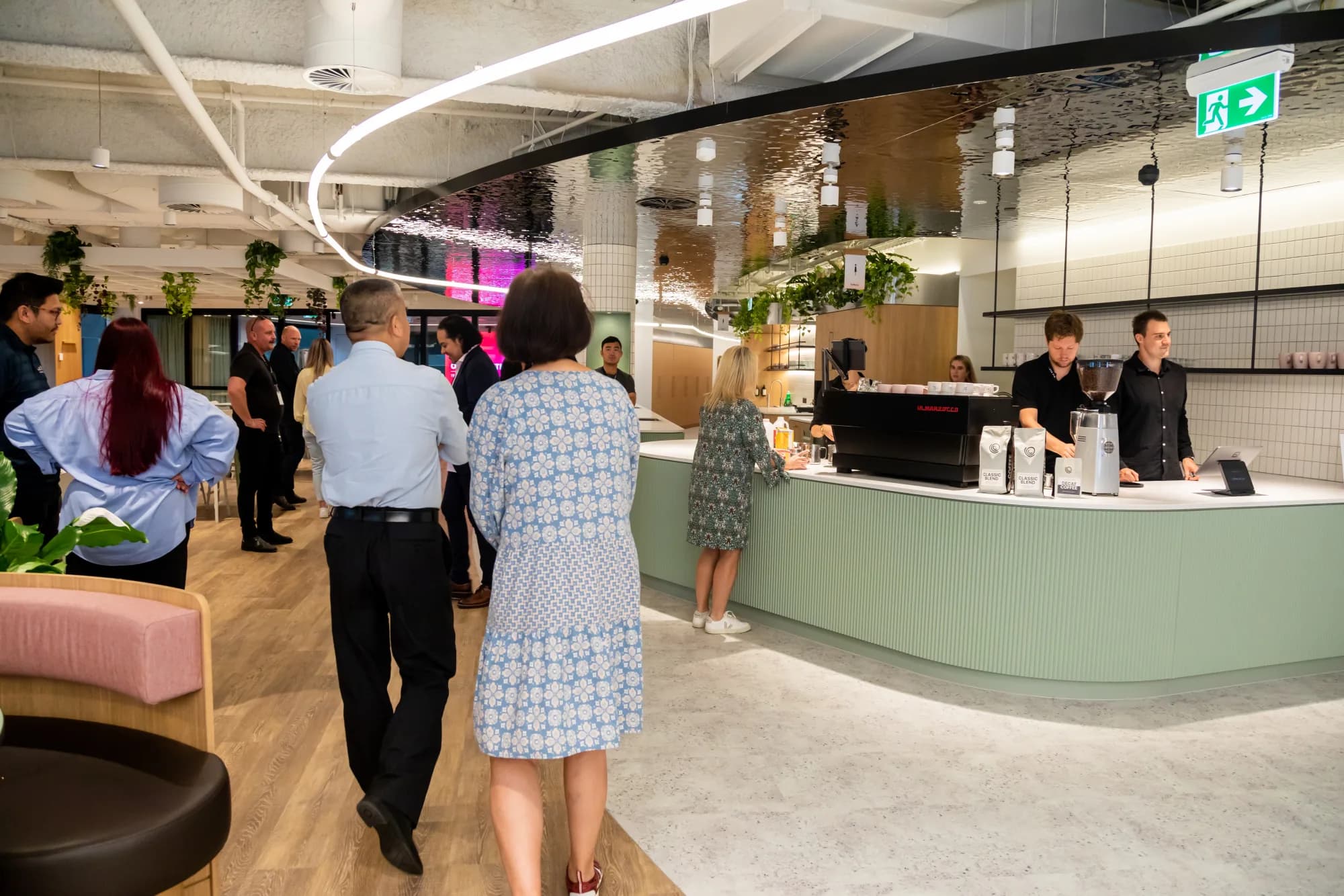
At Toyota Finance in Sydney, Monday was the quiet day. Monday attendance rose from 80 to more than 180 once the bar went in, and Tuesdays and Thursdays now run at 100% desk capacity across 308 seats. Toyota Finance also reports that 60% of staff have more interaction outside their own team.
Neither client relied on coffee alone. Both had a deliberate workplace strategy, a good fit-out and leadership who wanted people in by choice. The bar became the place the floor passed through. That is the honest way to read these numbers: the service was part of a plan, and attendance moved while it was running.
Why a coffee bar works where other perks stall
Hybrid work is now the normal pattern, not the exception. The Australian HR Institute found fewer employers now require three to five office days a week than in 2023, and in Victoria, people who can work from home now have a legal right to do so two days a week. When attendance is a choice, the office has to offer something home cannot.
A coffee bar has three things most perks lack:
- It happens every day. A morning coffee is a habit people already have. Moving it from the kitchen at home to the bar at work is a small step, and it repeats.
- It puts people in the same place. One bar on the main path means colleagues from different teams queue together. A fruit bowl does not start a conversation.
- There is a person behind it. A barista who knows your order and says good morning is hospitality, and that is hard to replicate with a machine or a voucher.
What to plan for if attendance is your goal
If you want the service to support your attendance goals, a few decisions matter more than the coffee itself:
- Put the bar where people pass. Between the lifts and the desks, not in a far corner. The bar works as a meeting point only if people walk past it.
- Take price out of the decision. Subsidy is yours to set, from nothing to all of each cup. A low or zero price at the bar removes the moment where someone decides the coffee is not worth it.
- Match service to your week. Start with the days you most want full, then adjust hours and baristas as the pattern settles.
- Measure from the start. Agree what you will watch before the bar opens: badge data, desk bookings or a short survey. Our dashboard adds cups served and peak times, so the two can be read side by side.
We cover the service, the pilot and the reporting on the in-house barista page. If attendance is the wider question, our guide on how to improve employee attendance looks at policy, space and the rest of the picture, and our piece on Victoria's work-from-home law covers what the new right means for your in-office days.
How we see it
We think people come back to the office for people, ritual and comfort, in roughly that order. A great barista who knows your order gives you a reason to leave the house that a video call never will. That is not a small thing for a business trying to rebuild its culture after years of empty floors.
It does not need to start big. One workplace leader asked us for exactly that: one barista, one day a week, four hours, making everyone coffee, to invite people back. We like that brief, because it treats the coffee as an invitation rather than a reward for compliance.
Where we part ways with some of the usual advice is on mandates. A coffee bar on a floor people are forced onto becomes another perk nobody notices. On a floor people choose, it becomes the reason the morning feels like a team again. We would rather you start with a pilot on the days you most want full, read the numbers with us, and let your people tell you whether it is working by turning up.
If you would like to talk it through for your office, see our workplace coffee service or the questions we hear most on the FAQ page.