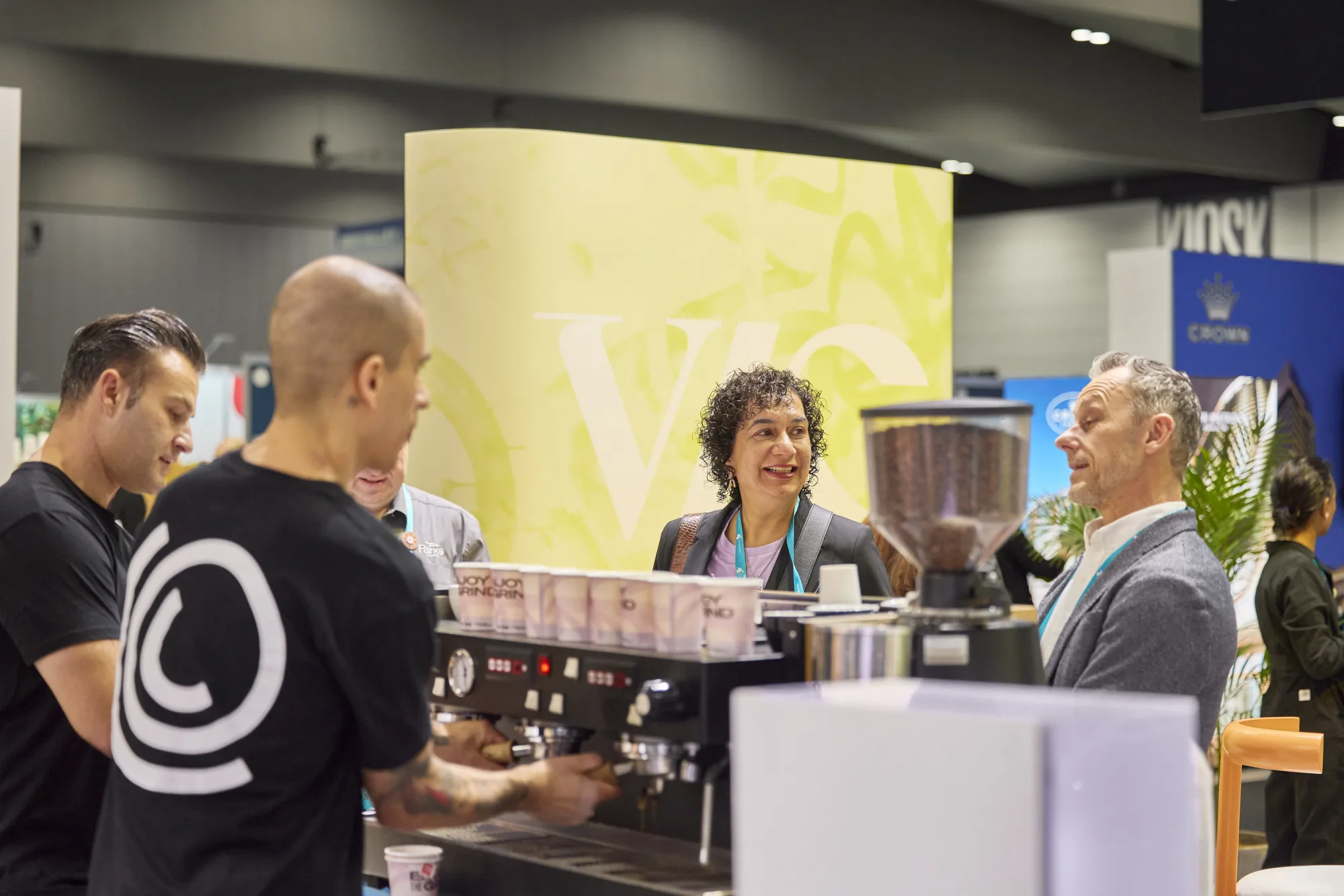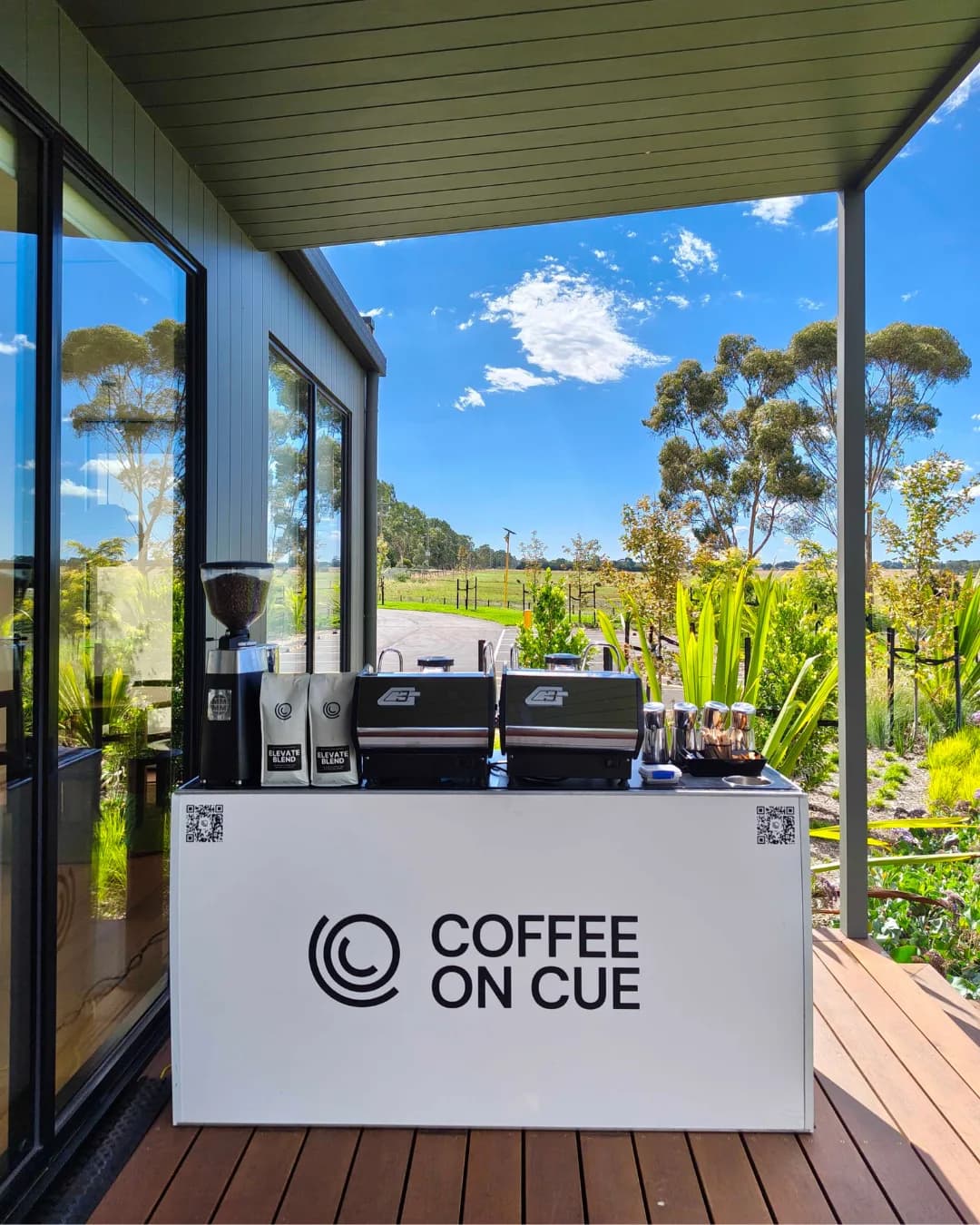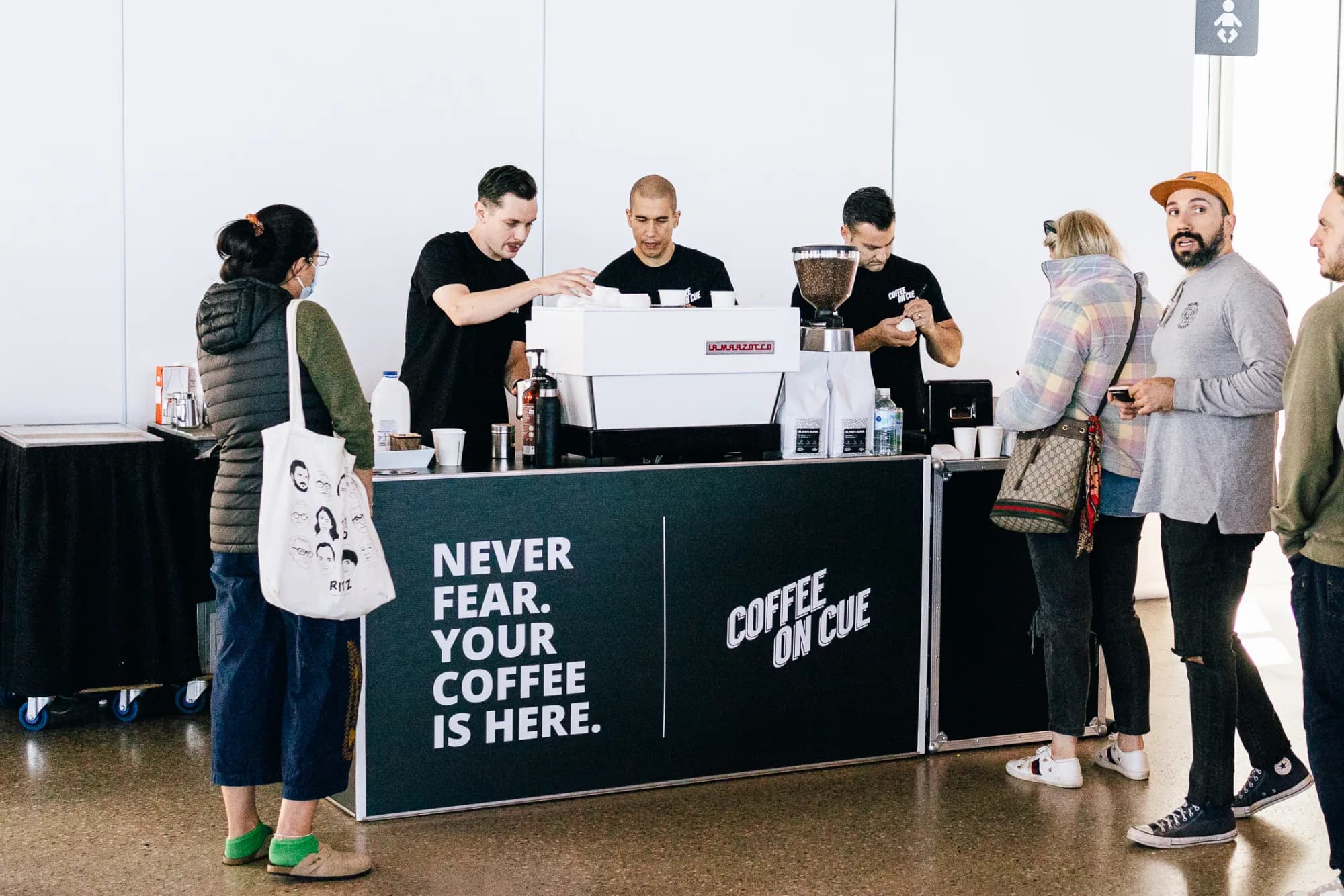
For a 500-person conference, plan on two to four coffee carts, each with two baristas. One barista pours up to 80 coffees an hour, so a two-barista cart serves up to 160 an hour. Two carts suit a program with a long arrival window and staggered breaks. Three or four carts suit a single short break where most of the room wants a coffee at once.
The rest of this post shows how to work out which end of that range your event sits at, using your own program rather than a rule of thumb.
Count the break, not the headcount
Five hundred delegates across a full day is not the problem. The problem is the fifteen to thirty minutes when the plenary session ends and most of the room heads for coffee at the same time. That window decides your cart count.
The working is simple:
- Estimate how many delegates will want a coffee in your busiest window. Arrival and the first morning break are usually the peaks.
- Each barista pours up to 80 coffees an hour. A cart with two baristas pours up to 160 an hour, or about 80 across a 30-minute break.
- Divide the first number by what one cart can pour in that window. Round up.
Not every delegate drinks coffee in every break, and an open coffee service during registration pulls some of the demand forward. Your own numbers from past events are the best guide. If you have none, plan for most of the room and let us adjust once we see the program.
For the wider planning around the coffee (placement, menu, branding), our guide on how to plan the coffee for a conference covers the decisions in order.
Three common shapes for a 500-person day
These are the patterns we quote most often at this size.
| Program shape | What we usually suggest | Combined pace |
|---|---|---|
| An hour of registration, then staggered breaks across two streams | Two carts, two baristas each | Up to 320 an hour |
| One plenary room, a 30-minute morning break | Three carts, two baristas each | Up to 480 an hour |
| One plenary room, a 15 to 20 minute break | Four carts, or a longer break | Up to 640 an hour |
The last row is the one worth questioning. Four carts serving a 15-minute break spend most of the day standing idle. Stretching that break by ten minutes, or opening the carts during the session before it, often does more for the queue than another cart.
For a sense of real volumes, a conference organiser we have partnered with since 2019 sees around 270 coffees at a typical conference and up to 700 at a dual summit, served from one to three carts. The full numbers are in our conference coffee case study.
What changes when you add carts
More carts is not only more coffee. Each one brings its own planning:
- Positions. Each cart needs its own spot on the delegate flow, with room for a queue in front of it. Ask the venue for a floor plan early.
- Power. A standard cart needs two 10-amp sockets, or one 20-amp outlet for the larger cart. Three carts means three sets of outlets, one at each position, plugged straight into the wall rather than a power board, as NT WorkSafe advises for high-current appliances. We bring our own water.
- Bump-in. Each cart is running within an hour of arrival and packed down within 45 minutes of service ending. Our road-cases fit through standard doorways and lifts.
- Venue rules. Large convention centres set their own terms for external caterers, and some apply a loss-of-revenue charge. Confirm the current terms with your venue before you finalise numbers.
On budget, every cart is quoted on its own package. The Unlimited package, from $1,499 per cart, suits most conferences of this size because the serve count is an estimate and the break arrives all at once. Weekend events add 15% and public holidays 30%. The full rates sit on our coffee cart hire page, and the common booking questions are answered on our FAQ.
How we see it
The usual advice is to divide the guest list by a fixed number and book that many carts. We think that gets it wrong in both directions. A 500-person conference with a relaxed program can be served well by two carts, and the same headcount pushed through one short break can swamp three.
So before we talk about carts, we ask for the run sheet. When does registration open? How long is the first break? Does everyone leave the same room through the same doors? Those answers set the number, and they often change it by more than the headcount does.
We would also rather put a second barista on a cart before we add another cart. Two baristas on one machine is the cheapest extra capacity there is, and it keeps the floor clear. Only when the pace or the layout calls for it do we spread out.
What our crews notice at conferences is that delegates do not remember the coffee count. They remember whether the break felt like a queue or a conversation. Getting the cart number right is how you give them the second one.