Melbourne offices that run coffee well on their busiest days plan for the busiest hour of the fullest day, not for an average week. They roster a second barista on the days the floor fills, open the bar before the first wave arrives, let people order ahead from their desks, and scale back to one barista when the office is quiet. One barista pours up to 80 coffees an hour, and two pour up to 160.
Why the busiest days are so much busier
Most Melbourne offices no longer have an even week. Hybrid work means people come in on some days and not others, and Victorian workers who can work from home now have a legal right to do so two days a week. In the offices we serve, the result is not a smaller office every day. It is a few quieter days and a few full ones, usually the days teams agree to be in together.
That pattern shows up clearly behind the bar. On a full day the morning queue forms in the hour after people arrive, because most of the floor lands at once and everyone wants their first coffee before the first meeting. On a quiet day the same bar has a gentle trickle. The coffee is the same. The demand is not.
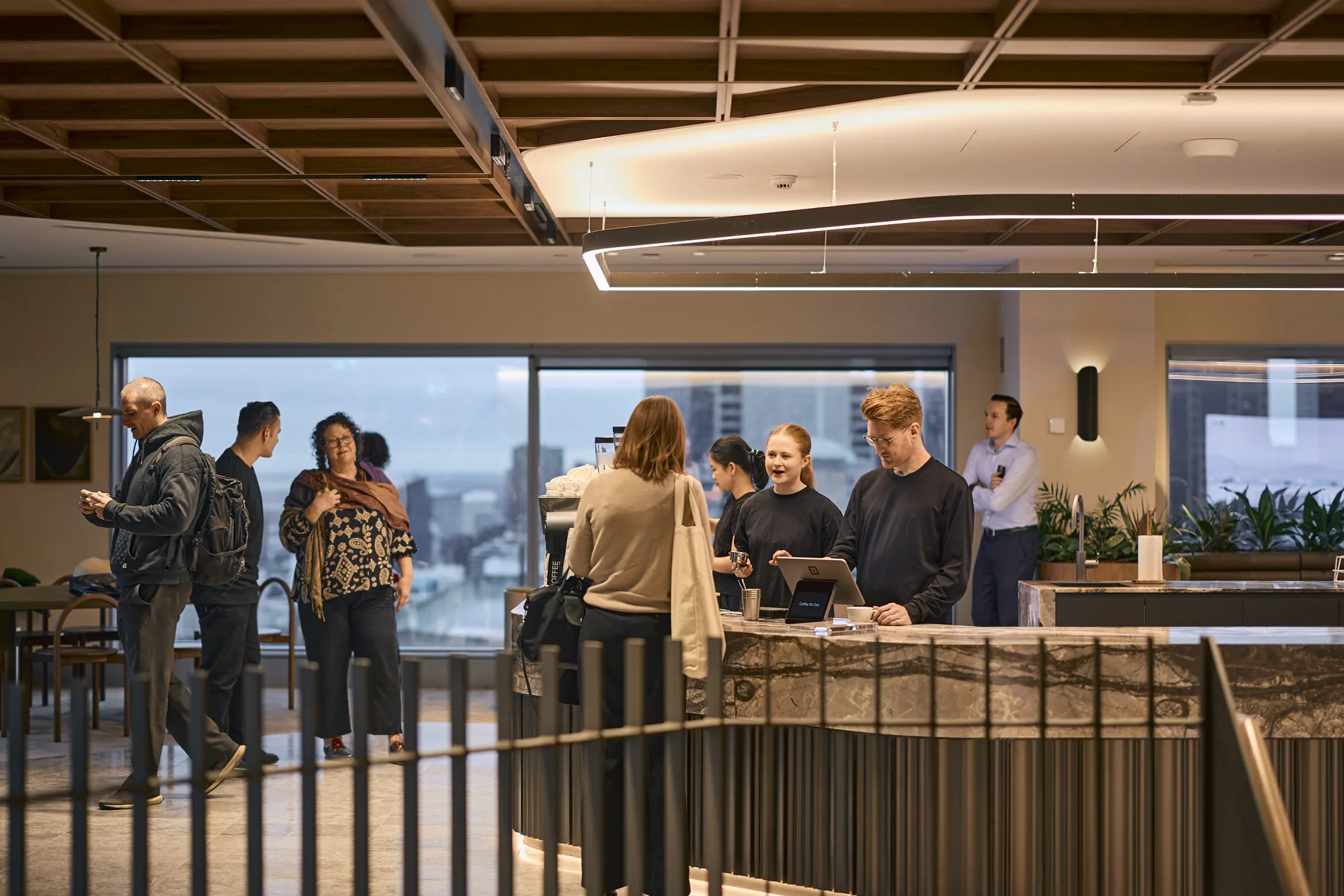
You can see how sharp the swing gets at the Toyota Finance bar we run in Sydney. Monday attendance went from about 80 to 180 people or more once the bar went in, and the office now runs at 100% desk capacity on Tuesdays and Thursdays. A bar sized for the average day would struggle on those mornings.
What changes on a peak day
The offices that handle their full days well do a handful of things differently from their quiet ones.
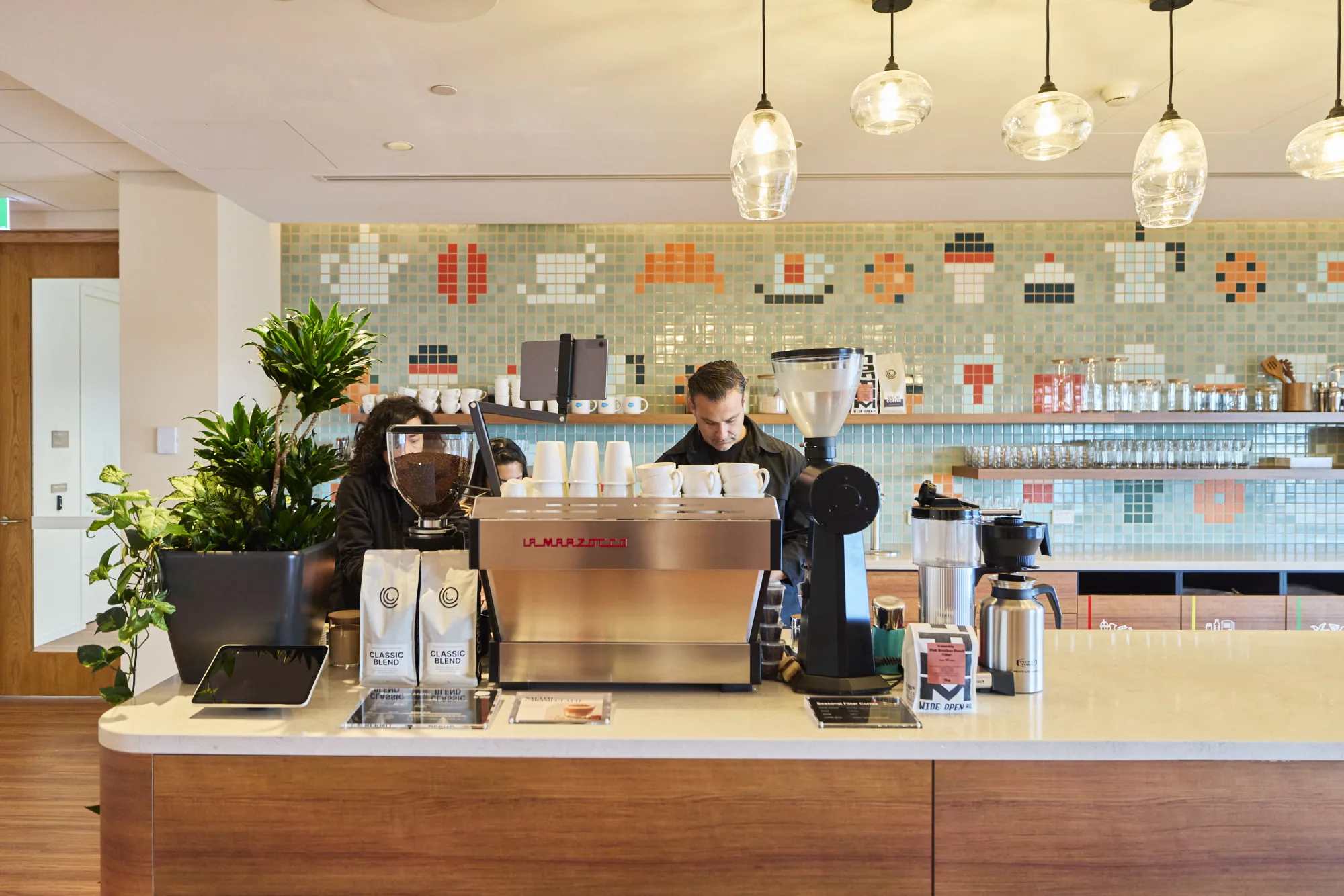
- A second barista for the peak window. Work out how many coffees your busiest hour asks for. If it sits comfortably under 80, one barista keeps up. If it pushes past, a second barista on those days takes the same bar to 160 an hour. We wrote about the sizing in detail in how many baristas an office needs.
- An earlier open. On a full day the first wave arrives sooner. Opening the bar a little before it means the machine is hot, the milk is cold and the first orders do not wait on setup.
- Ordering ahead. When people order from their desk on the app or at a tablet and collect when it is ready, the rush spreads out and the line at the counter shortens.
- Stock for the day you are having. A full floor drinks more milk, more alternatives and more takeaway cups. The bar is stocked for the peak days, so nobody hears that the oat milk has run out at ten.
None of this needs a bigger bar. It needs the roster, the hours and the stock to follow the shape of your week. A good layout behind the counter matters too, because a cramped bar slows even an experienced barista, which we covered in your cafe queue problem isn't your baristas.
What the quieter days are for
The quiet days are not wasted. They are when your barista has time to talk, to learn names and orders, and to make the bar feel like a place people want to come back to. One barista is usually right for them, and the service hours can be shorter.
This is where a flexible service earns its place. With us, the number of baristas, the hours and the menu can change as your attendance does, across the week and across the year. You are not paying for a full crew on a Friday that only half fills, and you are not short on a Wednesday when everyone is in.
At JLL's Melbourne headquarters at 101 Collins Street, one bar serves three floors. In JLL's own survey, average office days rose from 2.9 to 3.4 a week, an 18% lift with no mandate, observed alongside the bar becoming the place people meet. As more people come in, the busiest days get busier, and the bar has to keep up with them. You can see how we run in-house bars like it on our in-house barista page.
How we see it
We think the usual advice about office coffee is built for an office that no longer exists. It assumes the same people at the same desks five days a week, and sizes everything to that. Melbourne offices in 2026 do not work like that. They have two or three days that matter most, and the coffee has to be at its best on exactly those days.
So we plan from the peak backwards. On a pilot, we start with one barista, watch the first few weeks of data and see where the queue really forms. If people are walking away from the line on Tuesday morning, we add a second barista for that window. If the line clears in ten minutes, we leave it alone and put the investment into the coffee and the experience instead.
We also think the busiest day is the one that decides what your people think of the bar. A good coffee on a quiet Friday is nice. A good coffee on a packed Wednesday, made by a barista who still has time to say good morning, is what makes people choose to come in the following week. That is the day we staff for.
If you are planning coffee for a hybrid office, see our in-house barista service or the questions we hear most on the FAQ page.